I Use AI. Here’s Why That’s Exactly the Point.
How an independent media critic uses the machine to expose the machine.
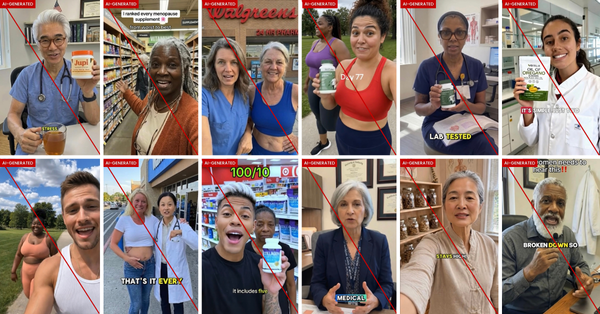
I use AI to break down how technology manipulates you. Here’s why that’s not a contradiction. It’s the entire point.
Every single day, quiet decisions are made about what millions of people see, believe, and care about. They aren’t made in open public forums or transparent debates; they are made inside opaque algorithms, automated systems, and computational tools designed to hold human attention at all costs.
The reality of modern digital media is simple: technology has drastically outpaced our collective ability to understand it. Most people are left navigating a digital environment that actively shapes their views, beliefs, and behaviors without ever being given the blueprint for how it actually works.
A few years ago, I had an experience online that was disorienting enough that I needed to understand how it had happened. It was the kind of experience that doesn’t leave you — and it fundamentally altered the way I see things. So I started learning — about how these platforms operate, who builds them, and what they are actually optimized for. The more I learned, the harder it became to look away. I realized that people aren’t failing to understand these tools because they aren’t smart enough; they’re failing to understand them because they have been deliberately denied the context required to see the full picture.
If we are going to bridge that gap, the solution cannot be slow, gatekept, or buried behind paywalls.
The algorithmic systems engineering your attention operate at an overwhelming, continuous scale. For an independent media critic, breaking down those systems in real time — and keeping that information completely free and accessible — requires a radical strategy.
There is no media company behind Safe Online Futures. There is no production staff, no research team, no corporate budget, and no ad revenue driving what I do. It is just me.
Without leveraging AI as a force multiplier for research, organization, and drafting, I could not produce the volume or depth of analysis required to match the speed of modern media. I use these tools deliberately so that I can deliver free, high-density media literacy directly to you without ever having to take corporate sponsorships or compromise the independence of this work.
That's not a contradiction. It is the only way a single independent voice can compete with corporate scale.
There's a meaningful difference between using a tool and being directed by one. I am clear on which side of that line I stand.
AI can process large datasets, help structure ideas, and accelerate research. But it cannot exercise critical judgment, ethics, or real-world experience. That responsibility sits entirely with me.
My background in writing, years working as a professional photographer, and mentoring and teaching photography online shape every piece of content published here. I bring a trained eye to digital manipulation, an understanding of technical pipelines, and a human commitment to accuracy. I use AI as a thought partner, research accelerator, and writing partner across my essays, scripts, captions, and carousels.
It is equally important to be clear about where that tool starts and stops. While AI helps process, organize, and structure my text, every video is edited in CapCut and every graphic is built in Canva — manually, by me. I do not use synthetic voiceover generators, AI avatars, automated video pipelines, or visual manipulation filters. When you see a video or swipe through a post, you are looking at work that was manually built, reviewed, fact-checked, and published by a human being. In other words, I am directing the tool; the tool is not directing me.
The people and platforms engineering our digital landscape benefit enormously from a public that feels helpless — a public that views technology as something that just happens to them, too complex or embedded to question. They rely on the assumption that you will remain a passive consumer in a system you cannot see into.
My goal with Safe Online Futures is to dismantle that asymmetry.
This project is built on a simple premise: people make sound decisions when they are given accurate, unvarnished information. What I’m building here, piece by piece, is a body of work designed to give you what the platforms and the people who profit from them have never wanted you to have — context. It’s completely free. No sponsorships, no ads, no paywalls, no hidden corporate interests.
I don’t expect everyone to agree with every tool I use or every angle I take. But I will always be transparent about how my work is made, why it exists, and who it serves. I have opinions. I’ll share them when they’re relevant. But my job is not to tell you what to think. It’s to give you the context you’ve been deliberately denied so you can see the system clearly and decide for yourself.
Safe Online Futures exists on its own terms. That isn’t changing.
Safe Online Futures is free. Always. No ads, no affiliations, no sponsored content. Just information.