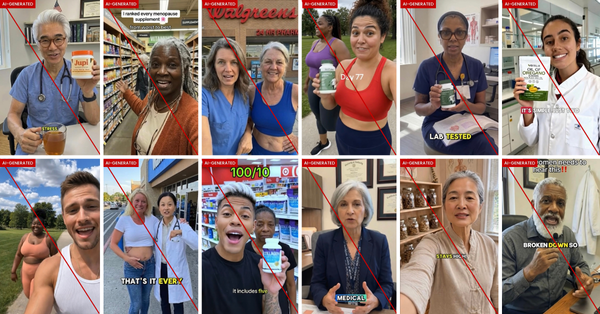
A School Full of Children. And We Can’t Even Trust the Pictures.
Four major outlets published it. Here's what none of them told you about where it came from.
This is part two of a two-part series on AI disinformation and the Iran war.
In part one of this series, I laid out the scale of AI-generated disinformation flooding the Iran war. Over a hundred fakes. 145 million views. A coordinated network of tens of thousands of inauthentic accounts pushing synthetic war footage across every major platform. Researchers called it “a tool of war.”
That’s the backdrop for what follows. Most people, when they see a photo in Reuters, the Associated Press, NBC News, or the New York Times, stop asking questions. The brand is the guarantee. This piece is about what happens when that assumption breaks down — not on the fringes of the internet, but at the institutions that are supposed to be the last line of defense. And when the failure happens there, it doesn’t look like a viral fake with millions of views. It looks like a caption, a photo credit, or a sourcing decision that most readers will never think to question.
What Happened in Minab
On February 28, 2026, the same day the U.S. and Israel launched strikes on Iran, a missile hit the Shajarah Tayyebeh elementary school in Minab, Iran. At least 175 are dead, according to the Iranian Red Crescent, though Reuters has not independently confirmed that number. According to Iranian officials, 110 of the victims were children.
Reuters investigated the strike and verified, using satellite imagery and footage of the aftermath, that it occurred on February 28, 2026, and is consistent with the location. Four out of five munitions experts Reuters consulted identified the missile as likely a Tomahawk. The U.S. is the only party in this conflict that uses that missile.
This is the single most contested and emotionally significant event of the war, which makes the imagery of it the most powerful narrative tool available to anyone with an interest in controlling how the world sees what happened.
Know Your Source
The imagery Reuters, AP, NBC News, and the New York Times published from Minab shared a common origin: Mehr News Agency. Reuters described it in their investigation as coming from "the semi-official Mehr news agency." When I examined that imagery closely, I found anomalies consistent with known AI failure points. To understand why that matters, you first need some context on Mehr News.
Mehr News Agency is an Iranian state-sponsored outlet, which means it is not editorially independent. It operates within a media ecosystem that serves the interests of the Iranian government — the same government with a vested interest in shaping how this specific event is perceived by the rest of the world.
It is not historically unusual for wire services to source imagery from state-sponsored outlets, particularly in conflict zones where independent access is restricted or impossible. Reuters, AP, and others have done this in Syria, North Korea, and elsewhere. The sourcing alone is not the argument.
The argument is what comes with it.
Reuters’ own published standards state that journalists should “weigh the source’s track record, position and motive” when assessing sources. They also state that “a Reuters journalist or camera is generally the best source on a witnessed event.” And on visual journalism specifically, Reuters is unambiguous: “The use of any AI-generated or AI-modified visual elements is strictly prohibited.”
Those are Reuters’ own words. Worth keeping in mind.
Reuters labeled the visuals as Mehr News and referred to the outlet as “semi-official” in their reporting. That is technically accurate. But “semi-official” is insider language. Most readers will not understand what that means in the context of Iranian state media. There is no explicit statement informing the reader that this imagery comes from an outlet that serves the interests of the Iranian government. That gap between what was disclosed and what a reader would need to know to evaluate the imagery critically is a problem, particularly when it contains anomalies worth examining.
The obvious question is: why would a trusted outlet like Reuters publish imagery with anomalies like these? I don’t have an answer. What I do know is that Reuters’ own standards require journalists to weigh a source’s motive. Whether that standard was fully applied here is a question only Reuters can answer. What I can tell you is that the anomalies are present, the source is state-sponsored, and the verification that was applied would not catch manipulation. The ‘why’ is Reuters’ question to answer. The ‘what ‘is visible to anyone willing to look.
So let’s look at the imagery itself.
The Witness Video
Reuters published a video in their Minab investigation (March 12, 2026). You can view it here.
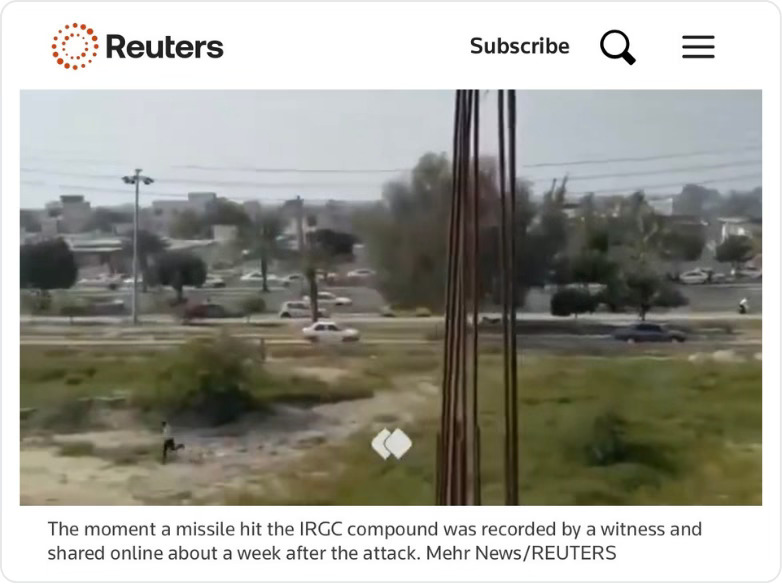
It is important to understand what Reuters verified here. They confirmed the video is consistent with satellite imagery of the location and was taken on February 28, 2026. That is a specific and limited form of verification. It confirms when and where. It does not verify whether the footage itself is authentic or unmanipulated. A convincingly AI-generated video of the right location on the right date would pass that exact test.
I looked at this footage carefully. Here is what I found.
The power lines. Follow them across the frame. In certain places, they simply disappear and then reappear further along. Power lines do not behave that way. This is not a compression artifact or a low-quality camera issue. And before you ask, this is not camera motion blur either. Motion blur causes lines to streak or smear. It does not cause them to vanish mid-span and reappear. Lines either exist in a frame or they don't. There is no innocent optical explanation for power lines that disappear and pick back up. That specific anomaly is a well-documented marker of AI-generated video.
The watermark. There is an unidentified double diamond watermark visible in the frame. It is not Mehr News Agency's watermark. Branded watermarks are atypical for genuine witness videos shot on personal phones. I cannot identify its origin.
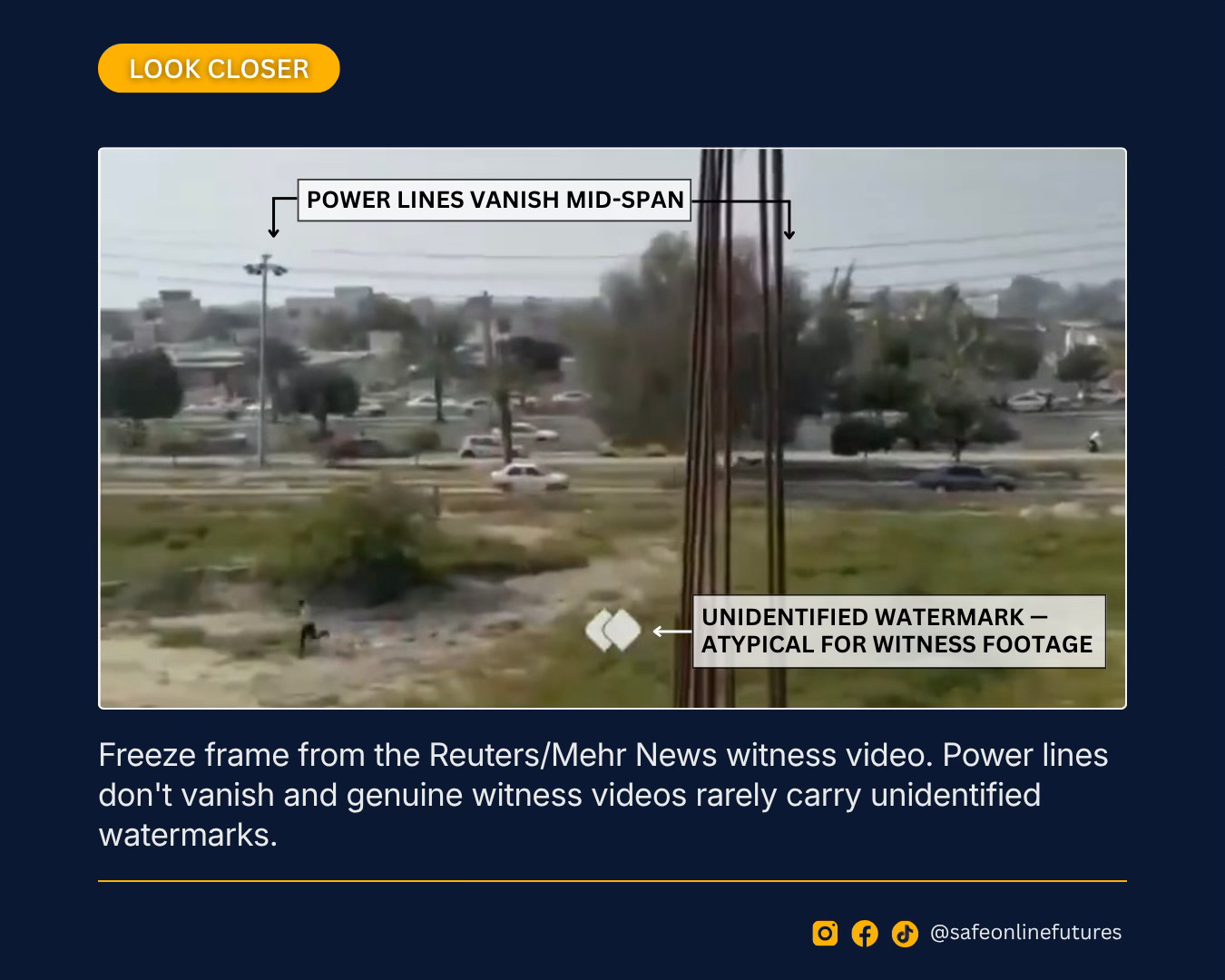
I also ran the freeze frame through three AI detection tools. SightEngine returned a 35% probability of AI generation. Google did not detect a synthetic ID. HIVE returned ‘not likely AI-generated.’ I’m disclosing that because transparency about methodology matters. It also illustrates exactly what researchers mean when they say detection tools are unreliable. Inconclusive results do not confirm authenticity. They confirm that the tools we have are not equal to the problem.
I am not saying this video is definitively AI-generated. What I am saying is that it contains two anomalies I cannot explain away — one visual, one related to provenance — and that it came from a state-sponsored source with clear motive. The verification Reuters applied, legitimate as far as it goes, would not catch manipulation. That combination deserves scrutiny.
The Photos
The witness video is not the only Mehr News content from Minab that raises questions.
A couple weeks ago I published a video examining a photo sourced to Mehr News Agency via Associated Press. The photo first appeared on the Times homepage on February 28, 2026. It was subsequently featured on the Times landing page for their podcast The Daily, in an episode examining the airstrike on the school (March 12, 2026). The photo shows Iranian civilians searching through the rubble of the school. You can view my video here.
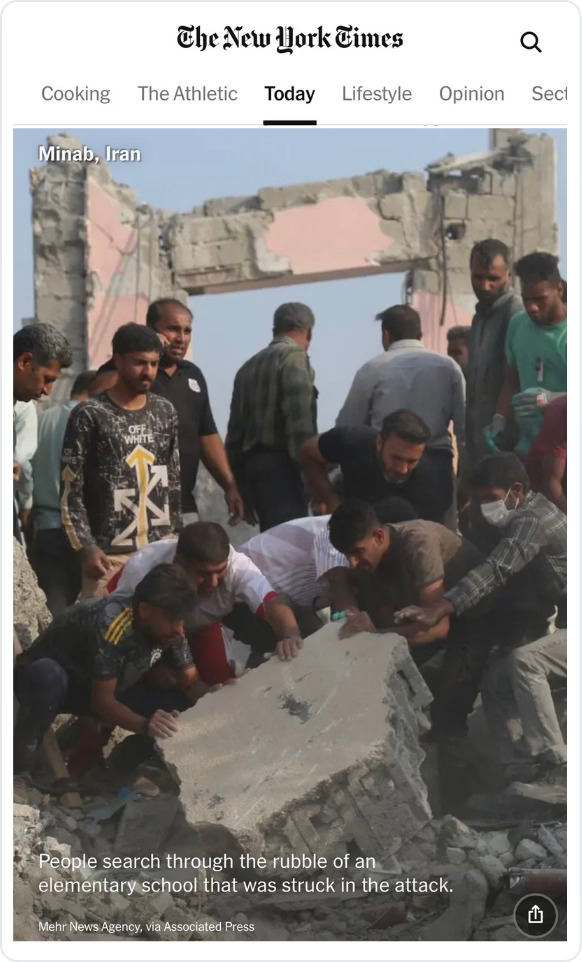
That photo contains anomalies worth noting. The hands of two separate individuals are visibly warped in ways inconsistent with natural anatomy. The logo text on another individual's shirt is distorted and smeared in a way that cannot be attributed to the brand's aesthetic — the letters bleed into each other and appear as an undifferentiated smudge rather than the sharp, defined typography Off-White is known for. Neither anomaly has a straightforward innocent explanation. Both fall within well-documented AI failure zones.
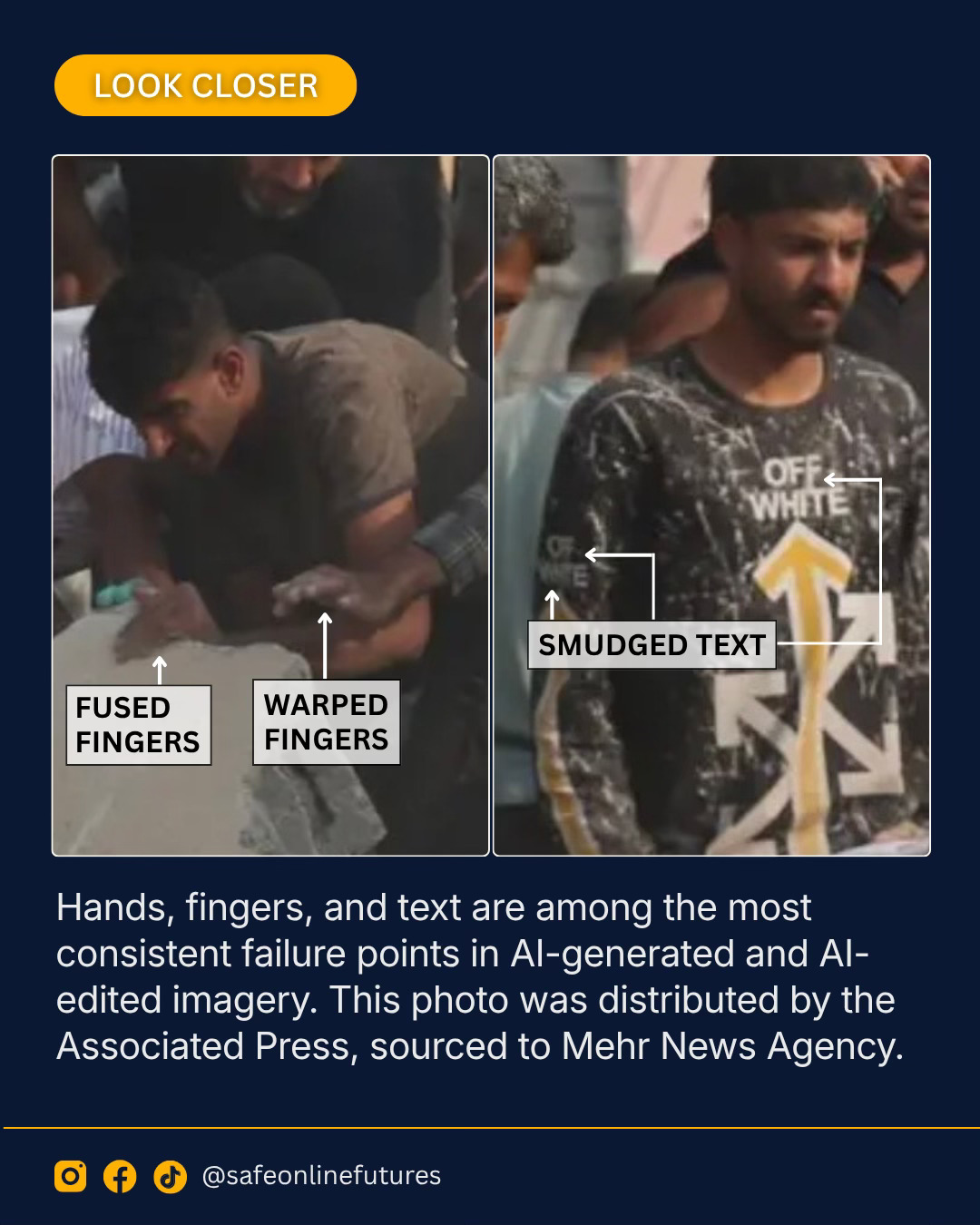
Now, let’s take a look at a second photo. This one was distributed by Reuters, sourced to Mehr News and WANA (West Asia News Agency), another Iranian news outlet, and published by NBC News (March 3, 2026).
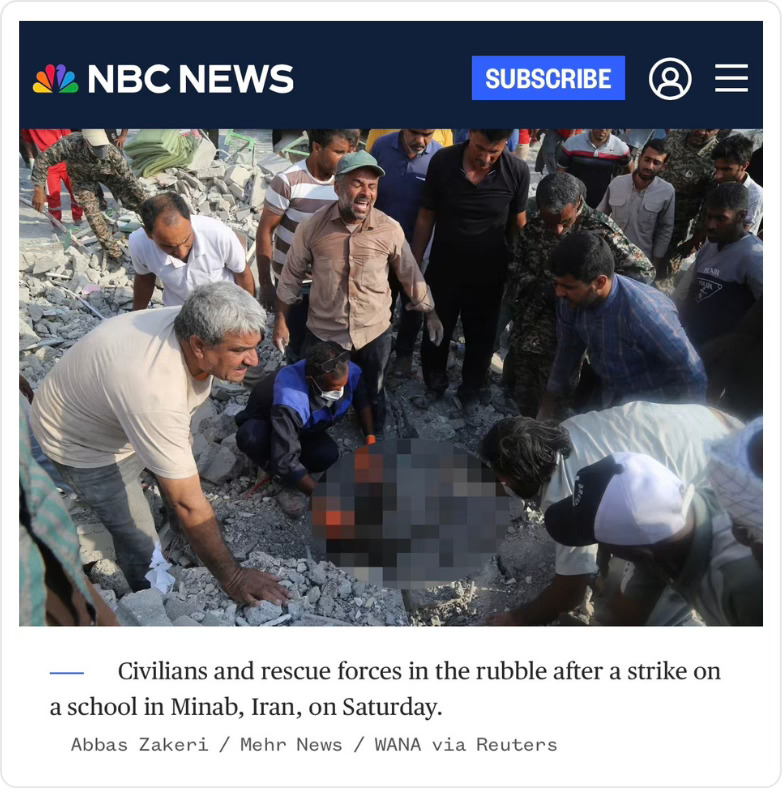
Look at the figure in the upper left wearing camouflage fatigues. The right thumb appears to terminate abruptly. It is not obstructed by another object or cut off by the frame. It simply ends. Now, look at the figure behind him, hand on hip. The fingers are warped and misaligned with the hand in a way that does not correspond to any natural position or angle.
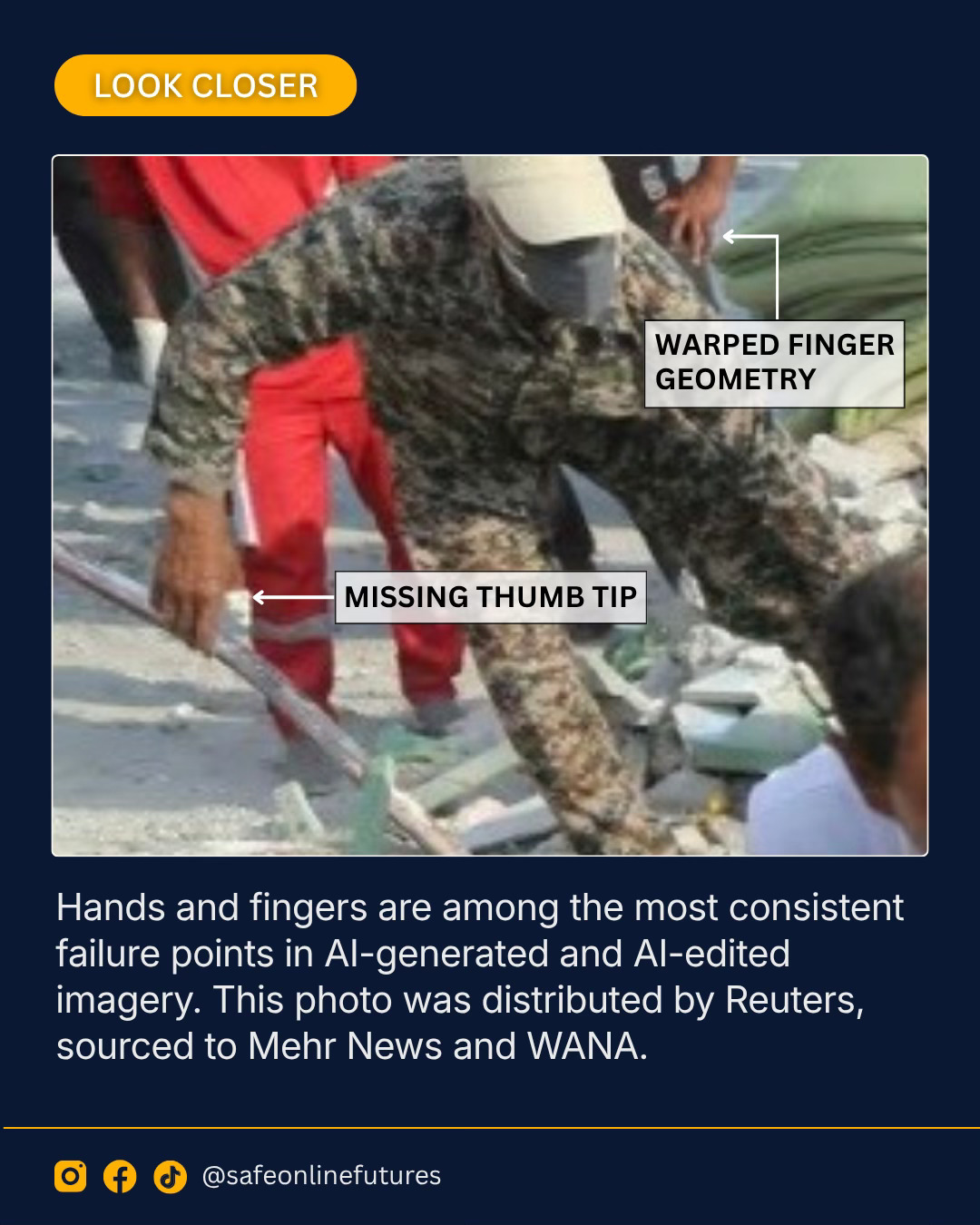
We have seen this before. And here it is again, in a photo Reuters distributed, sourced to a state-sponsored Iranian outlet, from the rubble of a school where 110 children were killed.
What This Actually Means
I want to be precise about my argument because it matters. I am not saying the attack on the school didn’t happen. It did. Reuters’ own investigation confirms the date and location. Multiple munitions experts identified the missile. Nor am I saying every piece of imagery from Minab is fake or manipulated. I cannot make that claim and I won’t.
Here is what I am saying: the imagery coming out of the single most contested event of this war came from a state-sponsored Iranian outlet with every reason to control that narrative. It was distributed by Reuters and AP. It was verified for date and location, but not for authenticity. It contains anomalies consistent with known AI failure points in both fully generated imagery and AI-assisted editing of authentic footage. And it reached millions of readers with insufficient context about where it came from and what that source represents.
That is not a small editorial lapse. It is a breakdown in the verification and transparency process at exactly the moment when it matters most.
In part one, I showed you that over a hundred AI fakes spread across social platforms with no warning label. Here is the harder version of that same problem. The questionable imagery was not only on X. It appeared in Reuters and AP wire photos. It was published by NBC News and the Times. The outlets you’ve been trained to trust instead of social media are distributing content from the same ecosystem that is producing the disinformation. In other words, the backstop is gone.
What You Can Do — And Why It Matters
Knowing that changes nothing about what happened in Minab. But it changes everything about how you should navigate what you’re being shown.
- Always look past the outlet to the original source. Reuters, AP, NBC News, and the Times are not the origin of this imagery. Mehr News is. That one step back changes everything about how you evaluate what you’re seeing.
- When an image is credited “via” another agency, treat that with skepticism. Ask who that agency is, what their interests are, and what exactly the distributing outlet verified.
- Understand the limits of verification. Confirming a date and location is not the same as confirming authenticity. Both matter and they are not the same thing.
- AI detection tools are not a reliable safety net. Inconclusive results don’t mean authentic. They mean we don’t know.
These are not abstract skills. Wars have always been accompanied by propaganda. What’s different now is that the propaganda is moving through trusted institutional channels rather than around them. This isn’t a problem you can solve by avoiding social media. It now follows you to the most credible sources you know.
Every day, you are being asked to form opinions about a war — about whether it’s justified, about who is responsible, about how bad it really is — using imagery that may have been built to guide you toward a conclusion. If that imagery is coming from a government with a stake in what you conclude, and passing through institutional channels without adequate scrutiny, then the picture you’re forming isn’t yours.
It was built for you.
Knowing that is the first step to pushing back.
If you've made it this far, you already understand why this matters. Subscribe so you don't miss what's next. And send this to someone who needs to read it.