AI-Altered Evidence Reached the Senate Floor
An unverified AI-altered image was used in a Senate proceeding
Sen. Dick Durbin (D-Ill.) displayed an AI-altered image on the U.S. Senate floor this week while questioning the Trump administration about the killing of Alex Pretti. He presented it as if it were a real photograph of the event.
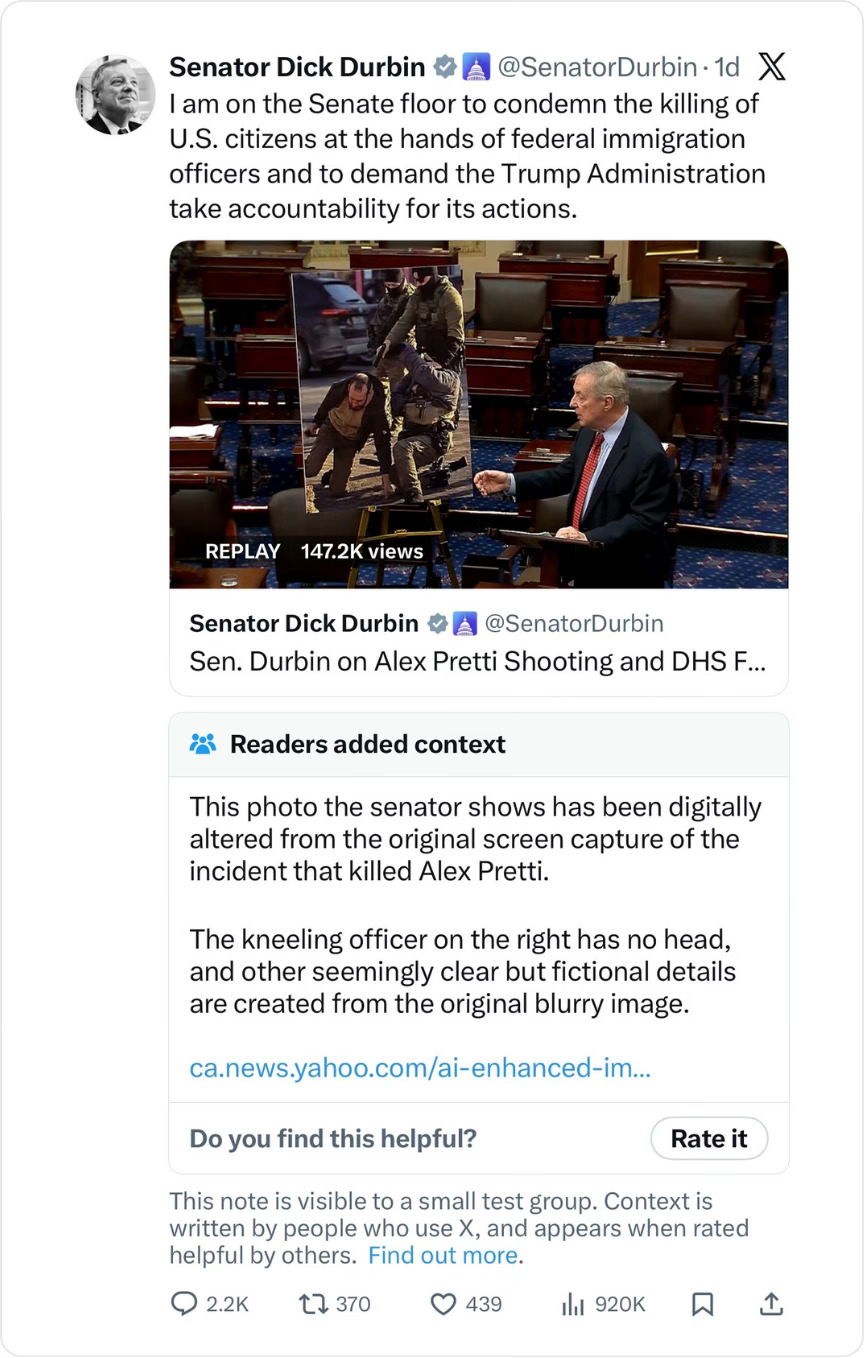
The image — already circulating online — showed obvious signs of AI manipulation, including anatomical impossibilities (one of the agents in the altered image didn’t have a head). It was used as evidence in a formal congressional proceeding. No disclosure was made that it was synthetic.
This matters for one reason: We’ve crossed a line.
AI-altered imagery has now entered the official record of American democracy without verification, authentication, or acknowledgment.
This isn’t about whether the underlying event happened. It’s about whether synthetic images should be treated as evidence of anything.
Once AI-generated or AI-altered visuals enter official proceedings — hearings, speeches, oversight sessions — the line between documentation and fabrication disappears. You can’t unring that bell. The image has already done its work, regardless of later corrections.
What we’re looking at now:
- No authentication standards for images used in government proceedings
- No disclosure requirements when synthetic media is presented as real
- No evidentiary safeguards designed for an AI-saturated media environment
If the people running our institutions can’t reliably tell real images from synthetic ones, democratic accountability becomes vulnerable to systematic distortion.
Seeing is no longer believing. And now it’s influencing governance in real time.
This incident fits a growing pattern we've been tracking in Seeing Is No Longer Believing and Synthetic Tears, Real Consequences: AI isn’t just shaping narratives — it’s contaminating the visual record institutions rely on to judge reality.