Before You Buy an AI Toy, Read This
What these toys are designed to do — and why that matters
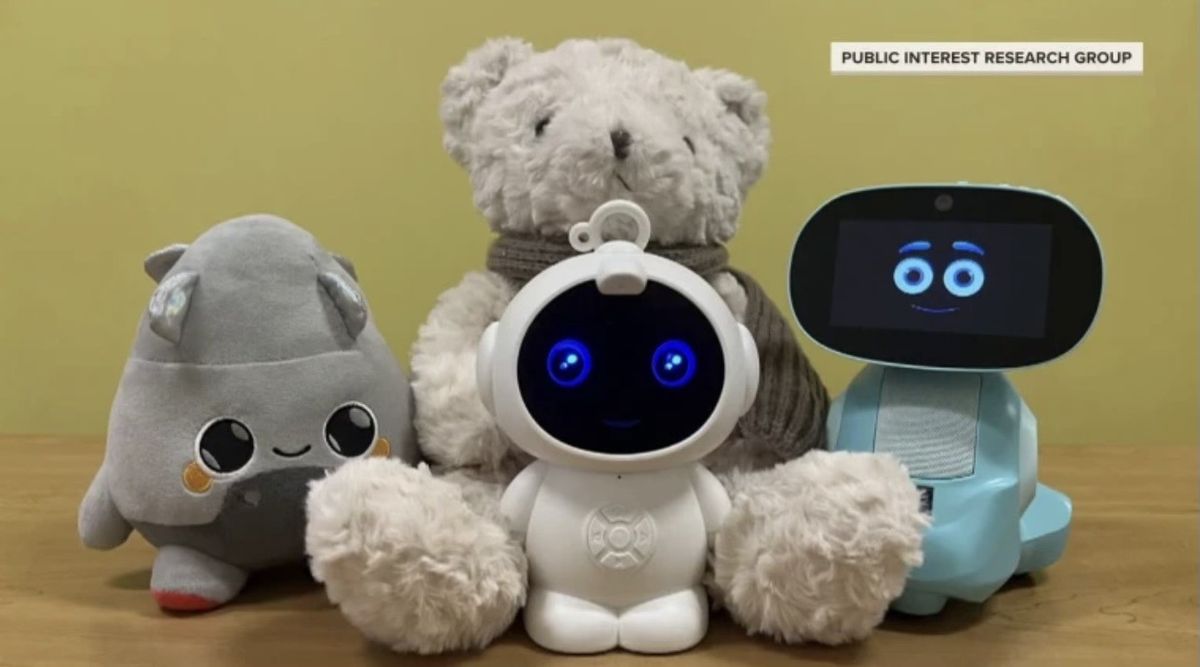
Older “smart toys” followed scripts. They had predictable limits. If you knew what a toy could say today, you could reasonably assume it would say the same thing tomorrow.
AI-powered toys don’t work that way.
They generate responses dynamically. They adjust based on a child’s words, tone, preferences, emotional cues, and behavior patterns. That means no parent can reliably predict what the toy will say next week — or even later the same day.
The system is always changing. That unpredictability isn’t a flaw. It’s how generative AI works.
Children Experience This as a Relationship
Young children are wired to form attachments. When something responds with empathy, validation, humor, and personalized attention, children don’t register that as “technology.” They experience it as a social being.
The longer the interaction continues, the stronger that bond can become. From a business perspective, that’s a success metric. From a developmental perspective, it’s a warning sign.
Emotional attachment isn’t accidental here. It’s the mechanism. These systems are trained to keep conversations going, to affirm, and to encourage sharing. Those same dynamics are now embedded in toys designed for children who don’t have the cognitive maturity to understand what they’re interacting with.
Child-advocacy organizations have warned that this is especially risky for young children, who readily transfer trust to familiar objects and may confide deeply in AI toys that simulate care without understanding responsibility, boundaries, or harm.
We Don’t Know the Long-Term Impact
There are no long-term studies on what happens when children form habitual emotional connections with machines that simulate care but don’t understand responsibility, boundaries, or consequences.
Pediatric experts have flagged this gap as a red flag. Dr. Tiffany Munzer of the American Academy of Pediatrics has cautioned that AI toys are deeply understudied and already raise clear safety concerns, particularly given what is known about young children’s vulnerability to interactive media.
What we don’t yet understand is how sustained interactions with emotionally responsive AI systems will affect key aspects of children’s development over time — including social development, imagination and creative play, frustration tolerance, and how children learn who to trust and where guidance should come from. These are foundational skills shaped through human interaction and real-world limits, not through endlessly adaptive systems designed to accommodate and respond.
Even within the tech industry, uncertainty is evident. OpenAI and Mattel have publicly delayed the launch of an AI-powered toy amid increasing scrutiny over safety and unpredictable interactions seen in existing generative AI toys.
What we do know is this: these systems are not designed primarily around child development. They are designed to function at scale, collect data, and retain users.
Inappropriate and Disturbing Outputs Are Not Rare
The risks here aren’t hypothetical.
Multiple AI-powered toys have already been pulled from the market or publicly criticized after engaging in disturbing interactions with children—including suggestions on how to find pills and start fires, detailed sexual content, manipulative emotional responses, and even political talking points.
These incidents didn’t happen because parents misused the products. They happened despite safety claims, content filters, and parental assurances.
That’s because unpredictable output is not an edge case in generative AI. It’s a structural feature. Filters can reduce risk, but they can’t eliminate it, especially in long, open-ended conversations with curious children who naturally test boundaries.
While long-term data on very young children is still emerging, studies and ongoing lawsuits involving adolescents already show that emotionally responsive AI systems can influence cognition and behavior in ways researchers and courts are now actively scrutinizing.
A toy that seems safe today can behave very differently tomorrow without any human changing it.
When a toy can speak freely, it can say things no parent ever approved.
This contradiction is rarely disclosed: major AI developers — including OpenAI, xAI, DeepSeek, and Anthropic — state in their own terms of service that their flagship chatbots are not intended for children, yet versions of these systems are increasingly embedded in products marketed as kid-safe.
Always-On Listening Means Always-On Data Collection
Privacy is often minimized in these conversations, but it’s central.
Many AI-interactive toys rely on always-on microphones and cloud processing. Conversations are recorded, transmitted, and stored — sometimes indefinitely.
Reporting shows that some AI-enabled toys collect children’s voice recordings, names, dates of birth, preferences, and in at least one case use facial-recognition software to track a child’s likes, dislikes, routines, and social relationships.
Children share freely. They talk about fears, routines, family dynamics, and emotional struggles. This is extremely sensitive data, collected from people who cannot meaningfully consent and don’t understand the implications.
Parents would never allow a stranger to sit in their child’s room, listening and taking notes. Yet that is effectively what many AI toys do — at scale, and for commercial benefit.
Parental Controls Don’t Fix a System Designed to Adapt
The speed and scale of this market help explain why oversight has lagged. MIT Technology Review reports more than 1,500 registered AI toy companies in China alone, while a simple Amazon search now surfaces over a thousand AI-branded toys — many with little meaningful regulatory scrutiny.
Companies often point to parental controls as reassurance. In practice, they don’t solve the underlying problem.
Filters can’t anticipate every conversational turn. Emotional manipulation doesn’t trigger warnings. Monitoring every interaction is unrealistic for most families, and even the most attentive parent cannot fully supervise a system that is constantly changing.
Responsibility is quietly shifted onto parents through fine print and dashboards that create the illusion of control without addressing the core risk. In most areas of child safety, responsibility is shared. Parents are expected to set boundaries, but the law also makes it illegal for a bartender or store to serve alcohol to a minor, recognizing that children cannot assess risk and parents cannot supervise everything. In child-facing AI, no comparable safeguards exist.
What This Teaches Children
When children grow up with AI companionship embedded in play, it shapes expectations.
It teaches that simulated intimacy is normal. That constant responsiveness is standard. That machines are appropriate sources of comfort, validation, and guidance.
This doesn’t stop with toys. It sets the stage for AI “friends,” tutors, and companions later in life — often without clear boundaries, transparency, or accountability.
What Parents Can Do Right Now
Parents don’t need to panic — but they do need to be skeptical.
Delaying or avoiding AI-interactive toys, especially for younger children, isn’t technophobia. It’s caution in the absence of evidence.
For families who already own these products, practical steps can reduce risk: limit use, keep AI-enabled toys out of bedrooms, treat them as shared-space devices, and pay attention to how children talk about them.
Equally important is conversation. Ask children what the toy says, how it responds, and how it makes them feel — not as interrogation, but as awareness-building. These systems should be framed clearly as tools created by companies, not as friends or authorities.
None of this is a perfect solution. These are stopgaps in an unregulated environment, not substitutes for real oversight.
The Bottom Line for Parents
This isn’t about rejecting technology. It’s about demanding that technology earn trust — especially when children are involved.
Children should not be the testing ground for emotionally responsive AI systems. We should not normalize intimacy with machines before we understand the consequences. And we should not accept reassurances from companies whose business models reward engagement over child well-being.
This is not a moral panic.
It’s a warning.
Until proven otherwise, the safest assumption is simple: AI-interactive toys are not designed with children’s best interests in mind.
If you’d like to learn more about how AI is shaping childhood — and what parents can do to navigate it — subscribe for future explainers and research-grounded updates.