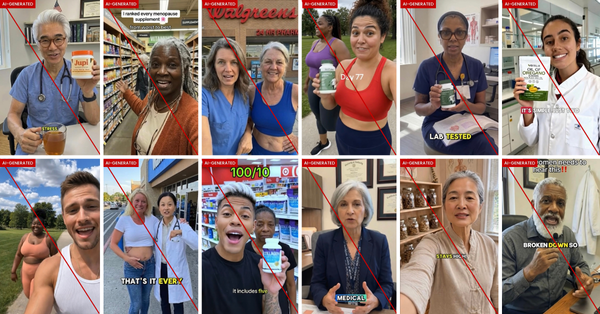
Coldplayed: How a Viral Scandal Manipulated Millions
The Coldplay CEO Scandal: A Case Study in Synthetic Virality
The cheating CEO scandal that exploded across social media and became a viral cultural phenomenon has all the hallmarks of engineered virality. This isn't just another case of someone getting caught on a jumbotron — it's a compelling example of how synthetic narratives can manipulate public perception and reshape reality in real-time.
The story centers around an alleged tech CEO caught with another woman at a Coldplay concert, but the deeper you dig, the more it resembles a carefully orchestrated media experiment designed to test our collective gullibility.
The Technical Evidence: AI Artifacts in Plain Sight
The most compelling technical evidence lies in the viral kiss cam clip itself, which reveals multiple artifacts that current AI video generation technology struggles to mask: overly saturated skin colors, audience hands with fused fingers, unnatural-looking eyes, warped elbows, fingers that blur directly into forearms, and distorted digits. These are classic signatures of AI video limitations.
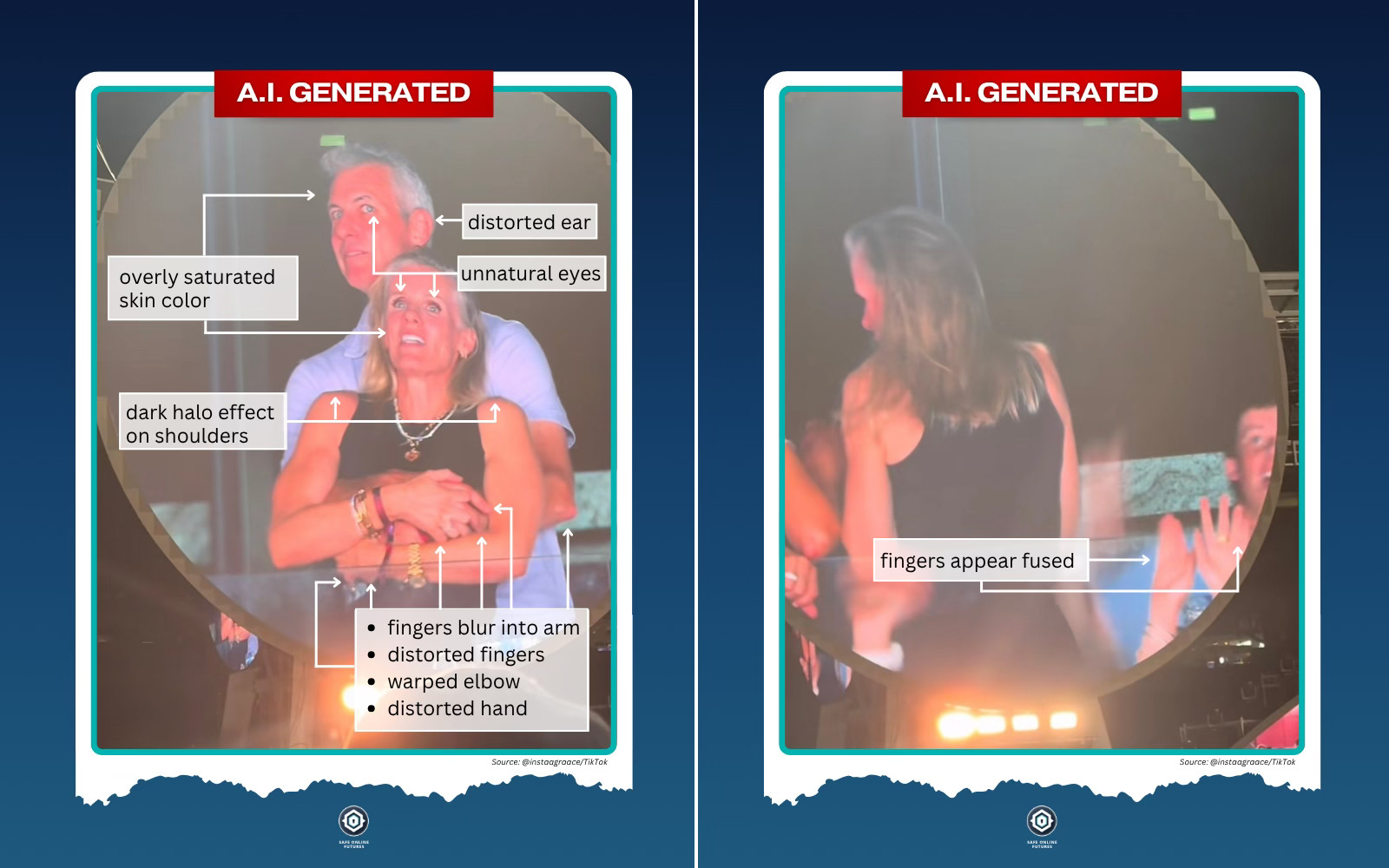
This suggests we're looking at a real concert moment injected with synthetic content — either through a preloaded jumbotron clip or manipulated feed. Chris Martin's reaction ("Uh oh, what? Either they're having an affair or they're just very shy") wasn't incidental — it was the catalyst that made the video go viral.
But here's the complication: thousands of real people attended that concert with smartphones recording. If Martin hadn't actually reacted to a couple on the jumbotron, attendees would have immediately exposed the fake. That scrutiny makes it unlikely the entire scene was fabricated.
Someone on Coldplay's production team either knowingly facilitated this moment or played along without asking questions. The alternative — that synthetic footage randomly appeared on their jumbotron — strains credibility.
Timeline: How a Moment Became a Movement
The video first exploded on TikTok and within days, traditional media outlets including The New York Times and USA Today were running with the story. By the following week, other touring artists were incorporating references into their own concerts, suggesting this had become a replicable blueprint rather than an isolated incident.
Who Actually Benefits?
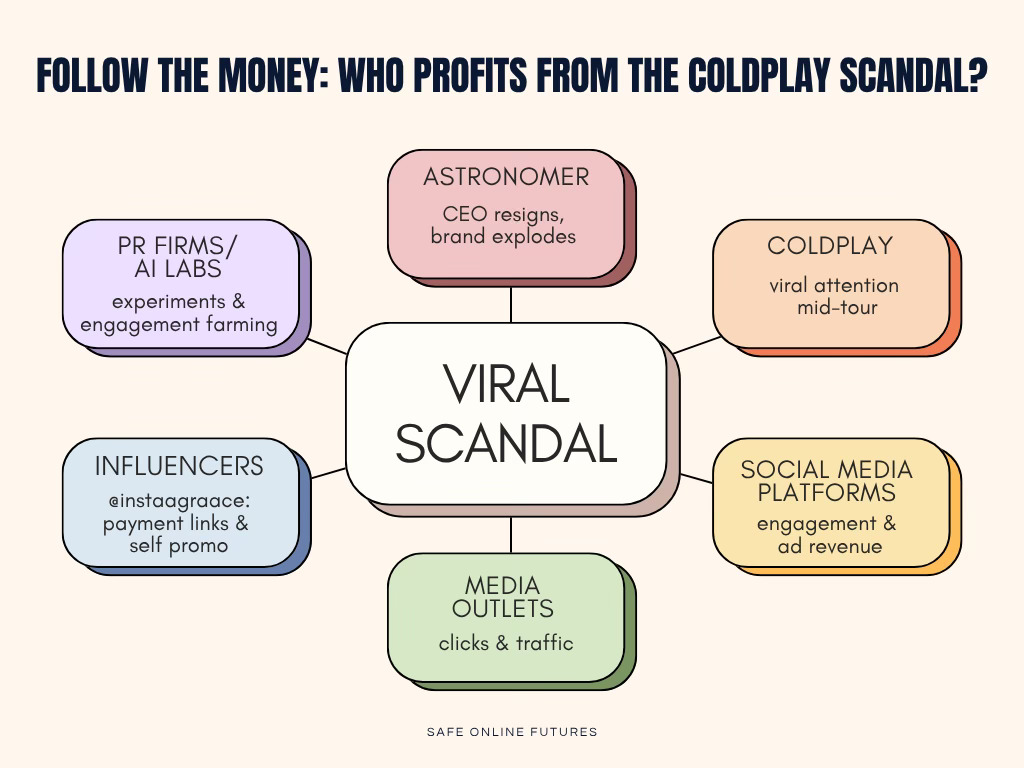
The Tech Company - Astronomer
The New York Times confirmed the identities of Andy Byron and Kristin Cabot through an Astronomer spokesman after the company placed Byron on leave and named Chief Product Officer Peter DeJoy as interim CEO. But here's where things get suspicious.
Astronomer's public statement reads like opportunistic marketing disguised as damage control. The company wrote: "Before this week, we were known as a pioneer in the DataOps space, helping data teams power everything from modern analytics to production AI. While awareness of our company may have changed overnight, our product and our work for our customers have not."
That's not crisis management—that's brand positioning. The company gained global name recognition overnight precisely when AI and data analytics dominate cultural conversations. Can we trust Astronomer to verify the identities of two people when they stand to benefit enormously from this viral moment?
Social Media Platforms
This story was born on algorithm-driven platforms that profit from emotional engagement. TikTok, X, Instagram — they all thrive on content combining celebrity drama, infidelity, and moral outrage. The platforms made money from every view, share, and comment this story generated.
Coldplay and the Chris Martin Brand
The band gained massive media coverage and social media virality while currently on tour — timing that couldn't be better commercially. Martin's confused "What?!" reaction became instant meme material, capturing viral attention from digital natives who might never have engaged with their content otherwise. Even if Martin wasn't complicit, Coldplay benefited enormously from being positioned as an emotionally resonant cultural force.
Traditional Media
Outlets like The New York Times and USA Today amplified the story without questioning its authenticity. They repeated details from social media and company statements without pointing out obvious red flags — like the mismatched eye in Byron's widely circulated photo, a telltale sign of AI generation. The media legitimized the narrative instead of interrogating it.
The Video's Creators
If this was synthetic content, someone orchestrated it. Candidates include PR firms running experiments, engagement-farming content mills, or AI companies testing public credulity. This kind of manufactured controversy can seed distrust in real media or generate financial returns through advertising and engagement.
Engineered for Maximum Viral Impact
The video didn't just go viral; it became a cultural phenomenon. The original clip accumulated over 120 million views after being posted by the TikTok account @instaagraace — an account that raises multiple red flags and may itself be partially or even fully synthetic.
Additional suspicious patterns include AI artifacting in the account's content. One video from May 29, captioned "POV: You're a bartender at the Jersey Shore," shows the creator wearing a textured shirt with blurry artifacting — a common sign of AI rendering struggles with mesh, texture, or tightly gridded fabrics. This suggests the account may be using AI-generated content or could be a synthetic persona (AI-generated fake identity) entirely.
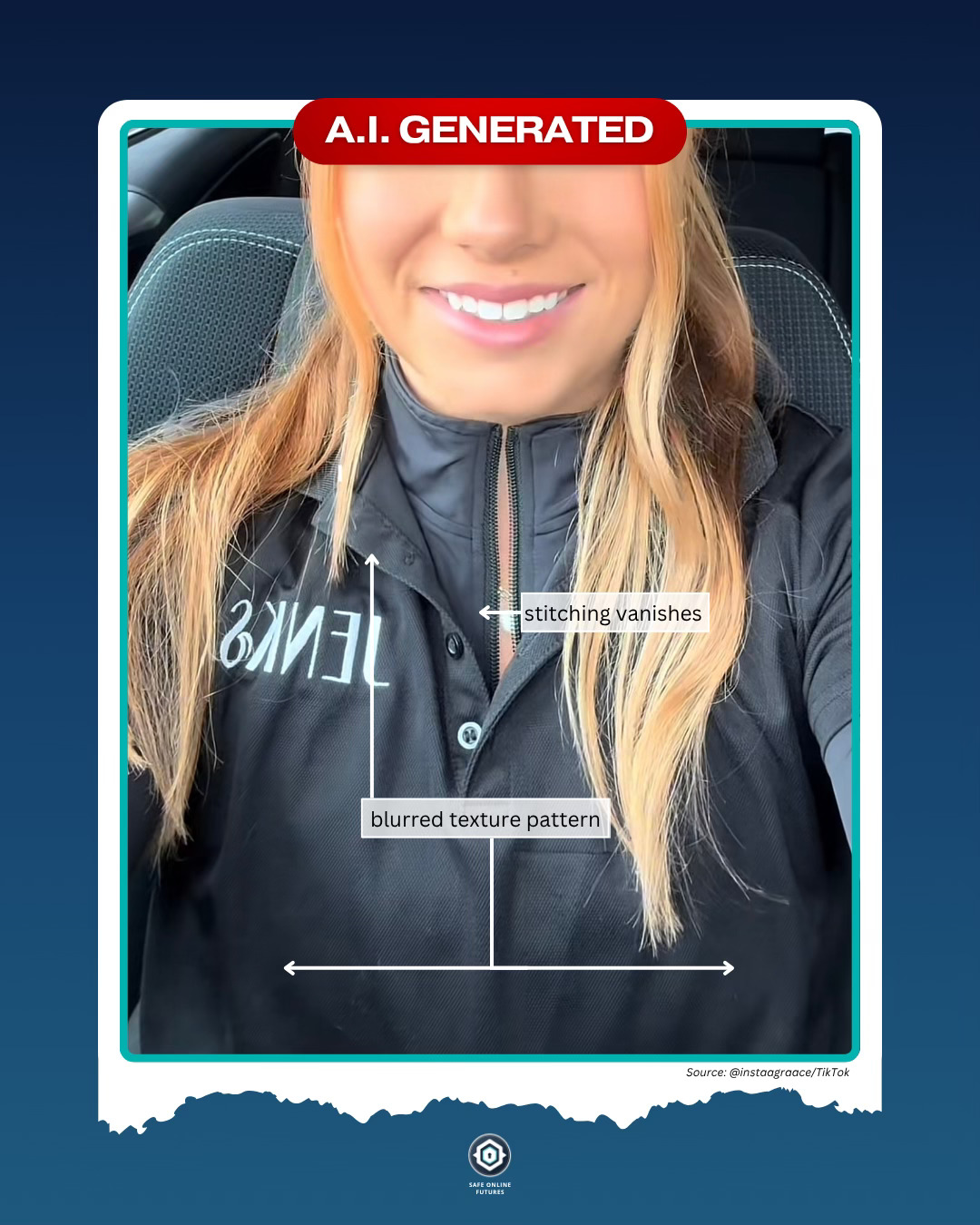
Another post reads "TMZ just called me. Venmo in bio," featuring her claiming she hasn't profited from the viral video while simultaneously including direct payment requests and promoting Coldplay's current tour. If the moment were truly organic, the immediate monetization and promotional content would be oddly opportunistic.
The mainstream press never questioned any of this. NBC News admitted it couldn't confirm the relationship status of the people in the video and "has not heard back from either party," yet treated the narrative as fact.
The Primary Beneficiaries
The winners are clear:
• Platforms that amplified the content and profited from engagement
• Astronomer, whether as victim or orchestrator, gaining global brand recognition
• Coldplay, who gained massive media coverage and social media virality during their active tour
• Media outlets driving clicks with sensational coverage
• Whoever seeded the story, profiting from ad revenue and testing public credulity
This could also serve a darker purpose: eroding public trust in media. If audiences later discover it was fabricated, they become less likely to believe future real footage — a classic disinformation tactic.
Are These Real People Caught in Real Circumstances?
While the individuals may exist, additional suspicious patterns surround their identities and the incident's circumstances:
Andy Byron's photo on Astronomer's website (mirrored in media stories) shows clear AI inconsistencies, notably a mismatched eye — a common generative flaw that current AI models struggle to avoid.
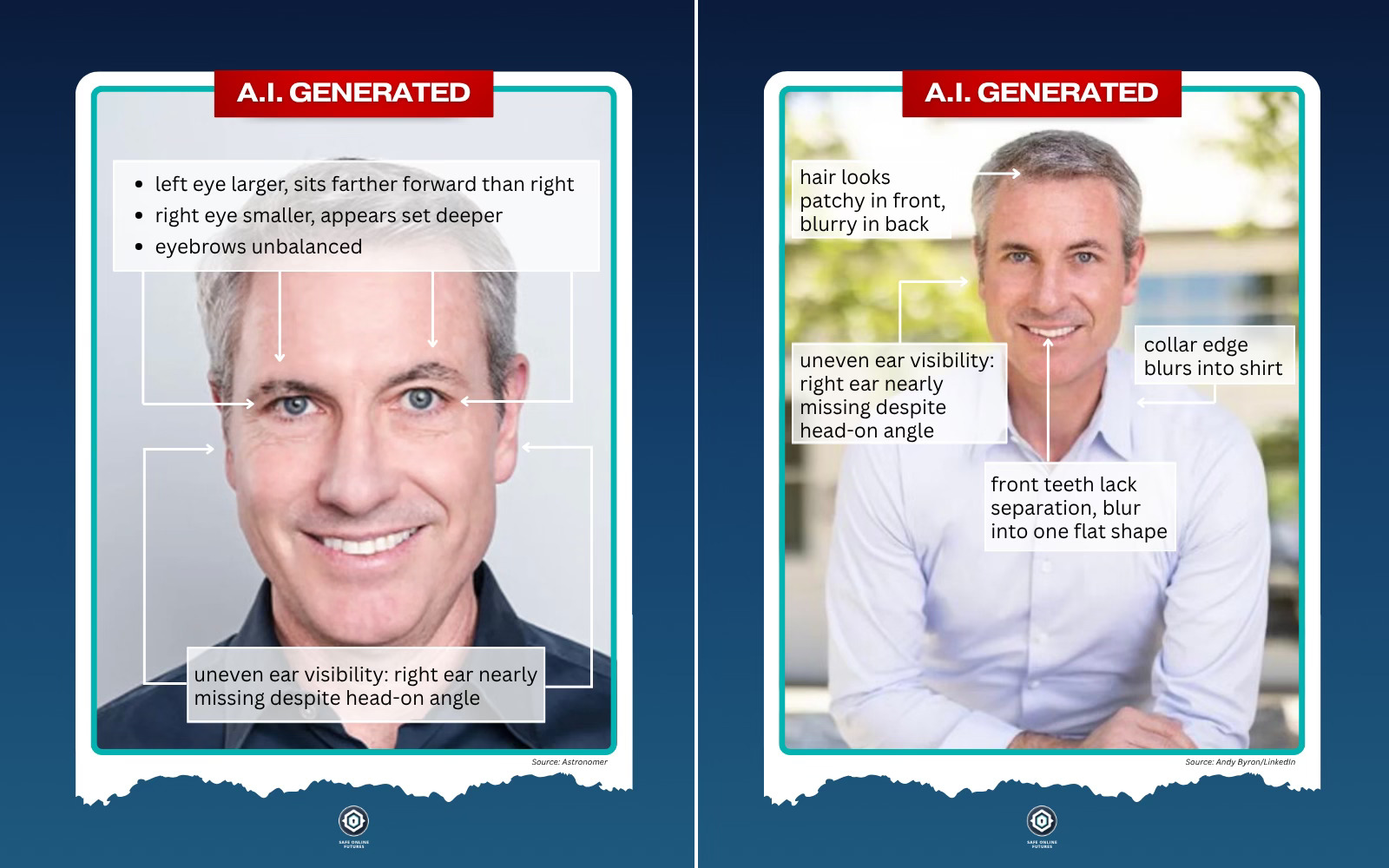
The timing of digital footprint changes raises red flags. Kristin Cabot deleted her LinkedIn profile immediately after the incident, despite having maintained an extensive professional presence that media outlets had documented before the deletion. This convenient erasure of digital evidence following viral exposure suggests either damage control or pre-planned cleanup.
The BBC stated it could not confirm either person's identity — a significant red flag that other major outlets ignored while treating the narrative as verified fact.
The "apology letter" attributed to Byron was confirmed as fake, yet its viral spread created the illusion of accountability and authenticity before anyone had even verified his identity or role at the company.
These coordinated actions — the convenient timing, the strategic deletions, the fake validation materials — suggest orchestrated management of the narrative rather than organic responses to an embarrassing personal moment.
The Bigger Picture
This appears to be a synthetic narrative combining AI-generated or AI-enhanced video content, potentially fabricated personas, a viral moral scandal designed for maximum engagement, strategic resignations to validate the event's authenticity, and platform-boosted amplification that deliberately blurs the line between real and fake.
The real story isn't about a man caught cheating — it's about how easily we can manufacture narratives, amplify them through AI, and reshape collective memory using synthetic inputs. When AI can fabricate a scandal and potentially collapse a CEO's career overnight (regardless of whether that CEO exists), we're witnessing a new form of information warfare.
The evidence strongly suggests this incident was engineered to test our collective gullibility while generating massive profits for multiple parties.
The technical artifacts, the convenient timing, the immediate monetization, and the cascading media amplification all point to orchestrated manipulation rather than organic scandal.
More importantly, this case reveals how synthetic content can be injected into real events to create hybrid narratives that are nearly impossible to fully debunk. When reality and artificial content merge seamlessly, truth becomes whatever generates the most engagement.
Who's really pulling the strings? The answer matters less than recognizing the strings exist at all.
Want to stay ahead of the curve on AI deception and digital manipulation tactics?
Subscribe for weekly insights that help you see through the illusion.