Comey, AI, and the Outrage Machine
How a beach photo turned into a political firestorm — and what it reveals about the weaponization of attention.
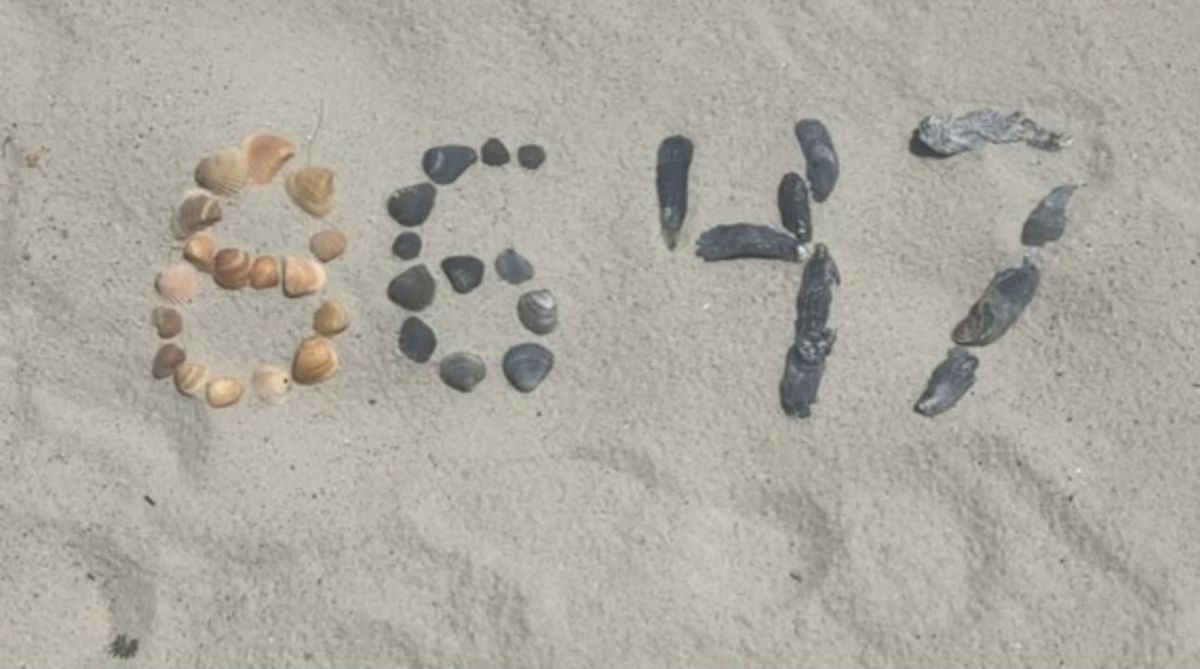
On Thursday, former FBI Director James Comey posted a photo to Instagram that showed seashells arranged on a beach to form the number “8647.” The caption read, “Cool shell formation on my beach walk.”
To the casual viewer, it may have seemed like nothing more than a beach snapshot. But online, it exploded. According to Columbia University professor Jesse Sheidlower, the common modern use of “86” is as a verb, meaning to dismiss, eject, or get rid of. Trump is the 47th president. And just like that, the internet erupted with accusations — including from Donald Trump Jr., who claimed Comey was calling for the assassination of his father.
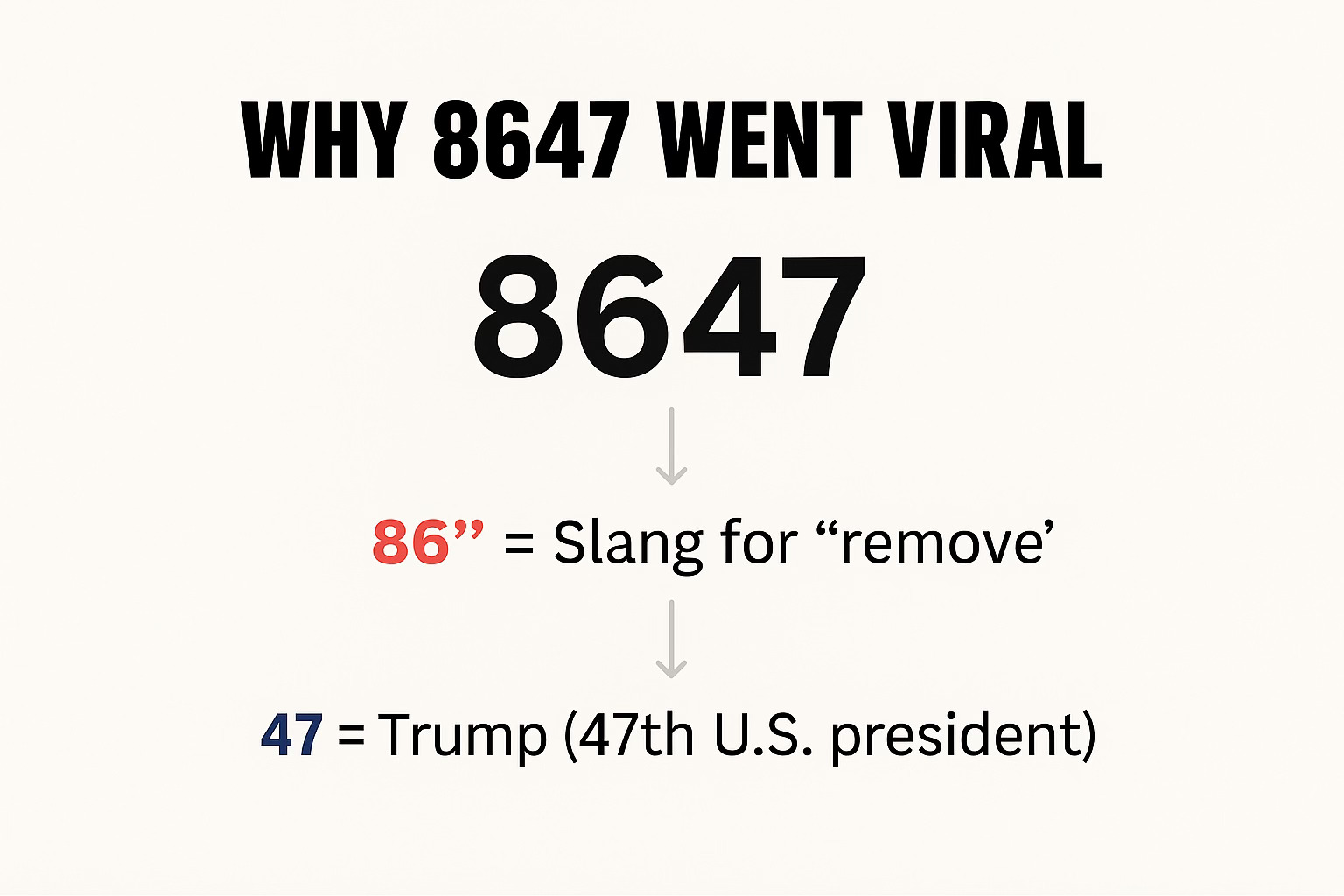
Comey quickly deleted the post, later saying he assumed it was a “political message,” not a violent one. He didn’t arrange the shells himself, he said — he simply found them that way.
But here's the real twist: the photo appears to be AI-generated. And that’s where this story becomes a case study in how artificial intelligence, political symbolism, and the Attention Economy now collide in ways designed to manipulate public perception.
This Is What Narrative Bait Looks Like
Let’s be clear: the "8647" message was crafted to provoke. Whether Comey generated the image himself, or simply posted something that had been circulating, the photo served a specific purpose — to attract attention by stoking ambiguity and outrage.
Here’s why this matters:
1. Controversy Drives Engagement
Platforms like Instagram, X, Facebook, and TikTok reward content that generates strong emotional reactions. Whether users are angry, confused, or defending their tribe, outrage fuels the algorithm.
Researchers at MIT found that false or sensational stories spread six times faster than truthful ones on Twitter/X because they evoke stronger emotional responses.
The Comey post was vague enough to spark speculation, but pointed enough to get people talking — and it worked. Within hours, screenshots and theories were circulating across partisan echo chambers, giving Comey free visibility in a polarized media landscape.
2. Comey Has a Book Coming Out
Timing matters. Comey’s next book, FDR Drive, is set to release on May 20, 2025. It’s a political thriller — and what better way to promote a political thriller than with a real-life political thriller-like moment?
This kind of controversy functions like a PR magnet. Comey didn’t need to directly comment on Trump or AI — he just had to light the fuse and step back.
3. The Photo Shows Signs of AI Manipulation
Several clues in the image suggest it may have been AI-generated: unnatural shell patterns, inconsistent shadows, and an implausibly clean and aligned “8647” formation that doesn't match typical beach erosion or shell behavior.
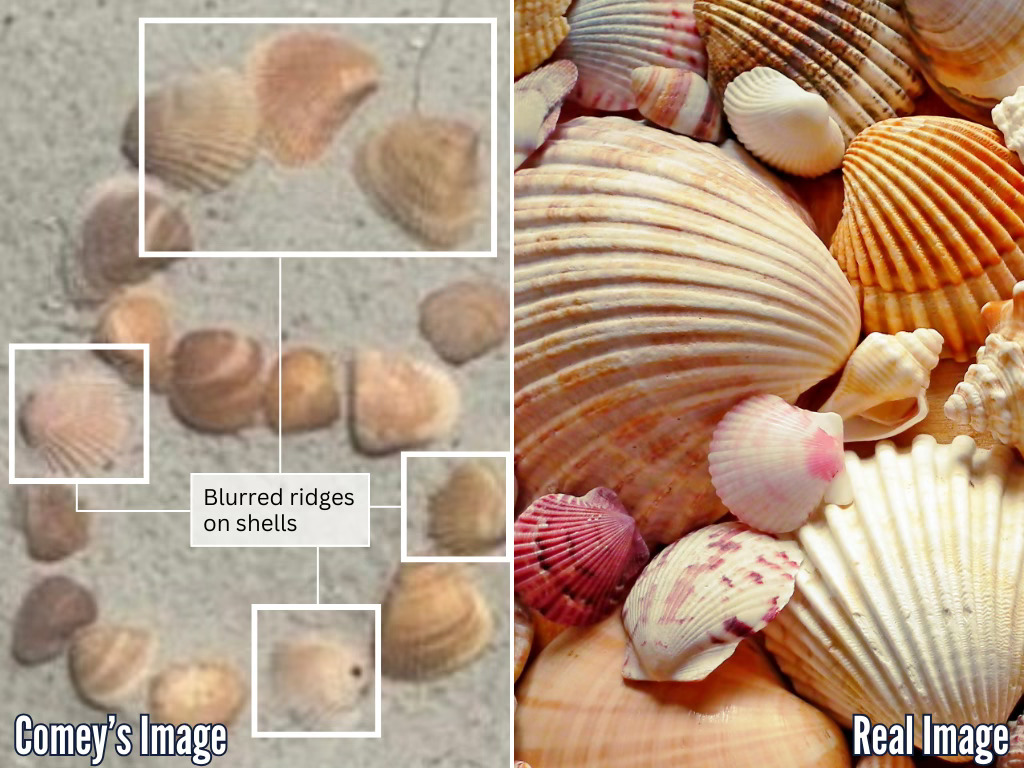
Can you tell the difference? Most people can’t — and that’s the point.
We’ve seen this before: in March 2023, AI-generated images of Trump being arrested by “police” in riot gear went viral — so realistic they fooled thousands. As AI tools become more sophisticated and accessible, it’s increasingly difficult to distinguish between real imagery and synthetic fiction.
Yet most platforms offer little to no disclosure — and no real consequence for posting misleading visuals.
How This Fits Into the Attention Economy
In 1971, psychologist Herbert A. Simon wrote, “A wealth of information creates a poverty of attention.” In today’s media environment, that idea has become the backbone of how platforms operate. What gets rewarded isn’t accuracy — it’s engagement.
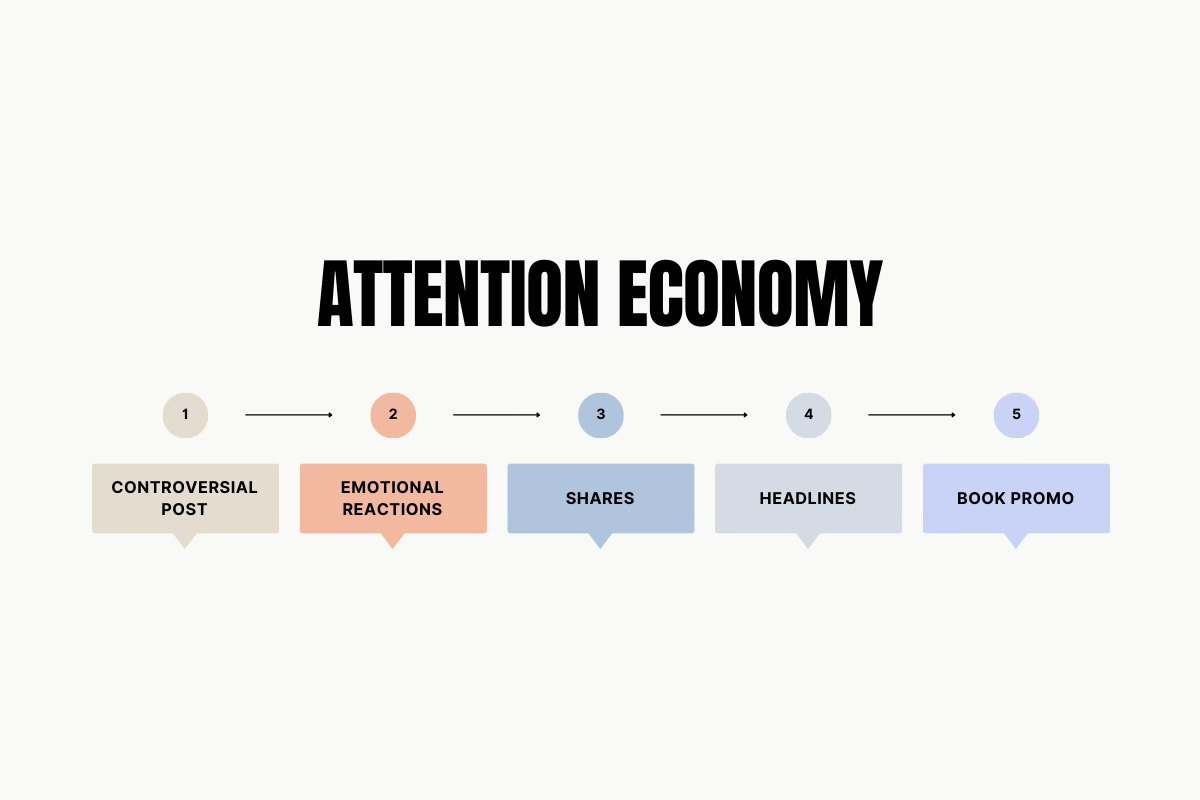
That’s the Attention Economy: a system where attention is currency, and the most provocative content wins.
Comey’s post may not have been an explicit threat or even an intentional political statement. But it was a perfect example of content engineered (or selected) to spark maximum engagement with minimal effort — then disappear, letting the algorithm and media do the rest.
What This Tells Us About AI’s Role in Shaping Perception
AI tools like Midjourney, DALL·E, and Runway are now capable of creating photorealistic images with a simple text prompt. They’re being used not only by artists and hobbyists, but also by political campaigns, disinformation networks, and bad actors — often without transparency.
We are entering a new reality where:
- Visual proof ≠ truth
- AI-generated content can spark real-world outrage
- Politicians can exploit ambiguity to shape public discourse, deny intent, and blame interpretation
Comey’s shell photo was less about policy and more about performance. Whether real or AI-generated, it achieved its purpose: hijack the narrative.
What to Watch For Next
This won’t be the last time a political figure posts something uncanny, provocative, or suspiciously well-timed. Here's what to keep an eye on:
- AI-generated photo ops of public figures (especially during campaign season)
- Media coverage cycles built on ambiguous viral content
- "Deleted" posts that go viral before they disappear — an intentional strategy to spark conversation without accountability
- Cross-platform amplification where screenshots drive narrative even after content is removed
Bottom Line
Comey’s shell photo isn’t just weird or controversial — it’s a template for how AI and the Attention Economy intersect to manipulate public attention. And it’s a warning.
As AI tools become easier to use and harder to detect, we need stronger media literacy, sharper instincts, and a deep understanding of the systems that reward outrage over truth.