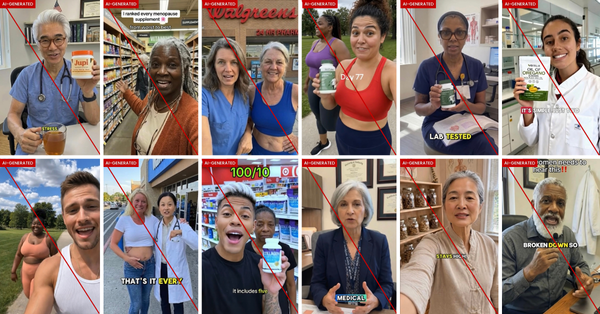
How Algorithms Actually Decide What You See
Part 1: Engagement signals and the ranking system that shapes your reality
Most people assume social media platforms show them content in something close to chronological order, with a few recommended posts sprinkled in. That assumption is wrong. The gap between what people believe and how these systems actually work is one of the most consequential misunderstandings of our time.
Here’s how it actually works.
There Is No Feed. There’s a Score.
Every piece of content on a major platform — every post, video, article, or comment — gets a score. That score determines whether you see it, when you see it, and how prominently it appears. The score isn’t assigned by a human editor. It’s calculated in real time by an algorithm, based on signals about how you and people like you have previously interacted with content.
These signals fall into a few categories:
Engagement signals: Did you like, comment, share, or save this? Did you click through? Did you watch past the first three seconds, or did you scroll past immediately?
Dwell time: How long did you spend looking at a post before moving on? Even if you never interacted with it, the algorithm registered your pause.
Relationship signals: How often do you interact with the person who posted? A close friend you frequently engage with scores higher than a public figure you passively follow.
Content-type preferences: If your history shows you watch videos to completion but rarely read long captions, the algorithm weighs that. Your behavior teaches the system what to serve you.
The platform aggregates all of this into a predicted probability: how likely are you to engage with this specific piece of content right now? The higher the predicted probability, the higher it ranks. Meta has published its own explanation of how this works on Facebook and Instagram, and TikTok has done the same for its recommendation system. The specifics differ by platform. The underlying logic is the same.
Why Emotional Content Outperforms Everything Else
Not all engagement is weighted equally. Platforms have found, through years of behavioral data, that certain content reliably produces more engagement than others. Content that triggers strong emotional responses — outrage, fear, awe, or moral indignation — tends to generate more comments, more shares, and longer dwell times than content that produces neutral or positive feelings.
This is not speculation. A 2021 study published in Science Advances found that moral and emotional language in social media posts significantly increased the spread of that content within political networks. Separately, research published in PNAS found that social media platforms amplify moral outrage because outrage expression is rewarded with engagement, which the algorithm then treats as a signal to distribute that content more widely.
The algorithm doesn’t know or care that outrage is corrosive or that fear is exhausting. It only knows that these emotions produce the signals it has been trained to maximize. The result is an information environment that systematically surfaces emotionally activating content — not because it’s accurate, important, or good for you, but because it performs.
You Are Both the Audience and the Training Data
Every interaction you have with a platform is data. Every post you pause on, every story you skip, every comment you read but don’t respond to is being logged and used to adjust what you see next.
This creates a feedback loop that most people don’t see while they’re inside it. You didn't sit down and tell the platform that you want more content that confirms your existing beliefs, or more content from one specific account, or more content that makes you anxious. But if your engagement history suggests those things hold your attention, the algorithm will serve more of them.
Over time, this shapes not just what you see, but what seems normal, urgent, and like consensus. The Wall Street Journal’s reporting on Facebook’s internal research — drawing on documents provided by whistleblower Frances Haugen — showed that the company’s own researchers had identified this dynamic and raised concerns about it internally. The platform’s response was to largely continue optimizing for engagement regardless.
What This Means in Practice
Understanding engagement-based ranking helps explain phenomena that otherwise seem puzzling:
False claims travel faster than corrections: The false claim is often more emotionally activating, so it scores higher and spreads further before the correction has a chance to circulate.
Feeds feel more extreme over time: Moderate content gets outcompeted by content that produces stronger reactions. The algorithm keeps raising the threshold.
You keep seeing the same voices: The algorithm reinforces relationships you have already signaled interest in, narrowing your information diet over time.
These systems were built this way because they work — for the platforms. They keep people on the app longer. They drive higher ad revenue. They produce the engagement metrics that investors and advertisers care about.
The question isn’t whether the algorithm is doing what it was designed to do. It is. The question is whether what it’s designed to do is compatible with a healthy information environment, and whether we have ever actually consented to that tradeoff.
In Part 2, I’ll look at recommendation engines and rabbit holes: how the system doesn’t just rank what you’ve already been shown, but actively decides what to show you next.
If this helped clarify something you’ve sensed but couldn’t name, share it with someone who needs to understand it. And if you want to keep following, subscribe below.