If You Make It Trend, You Make It True
How Taylor Swift's AI-generated engagement photos reveal the collapse of media gatekeeping
Taylor Swift and Travis Kelce's engagement photos broke the internet on August 26. Within an hour, the Instagram post hit 14 million likes. By day's end, it had shattered every platform record with 29 million interactions.
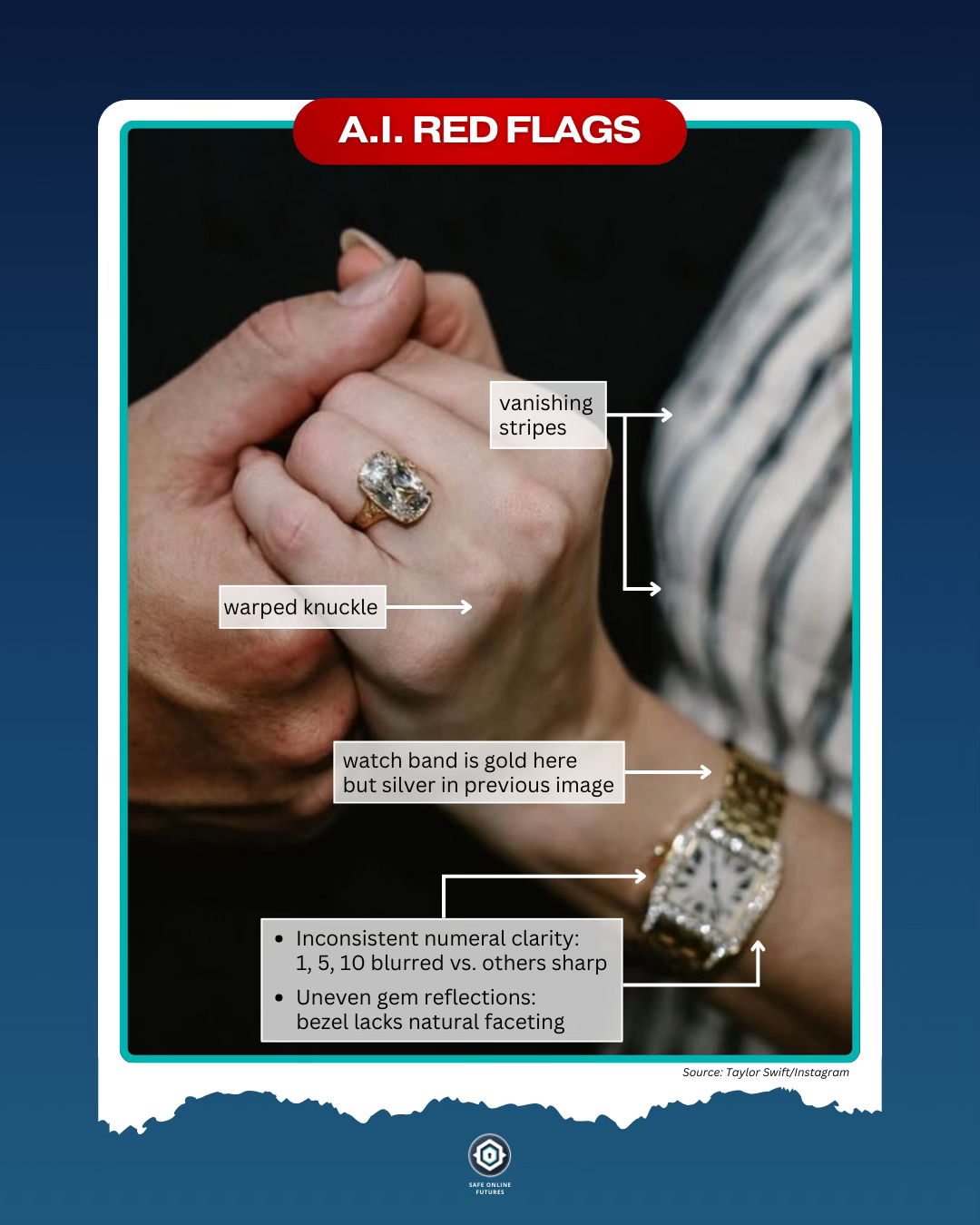
There was just one problem: the photos appear to be riddled with signs of AI generation or major digital manipulation.
Swift’s watch face lost definition, numbers blurring into illegible smears. Her skin appeared impossibly smooth while Kelce’s cable-knit sweater lost all texture. Jewelry frames warped unnaturally. The pop star's watch band even changed color from photo to photo.
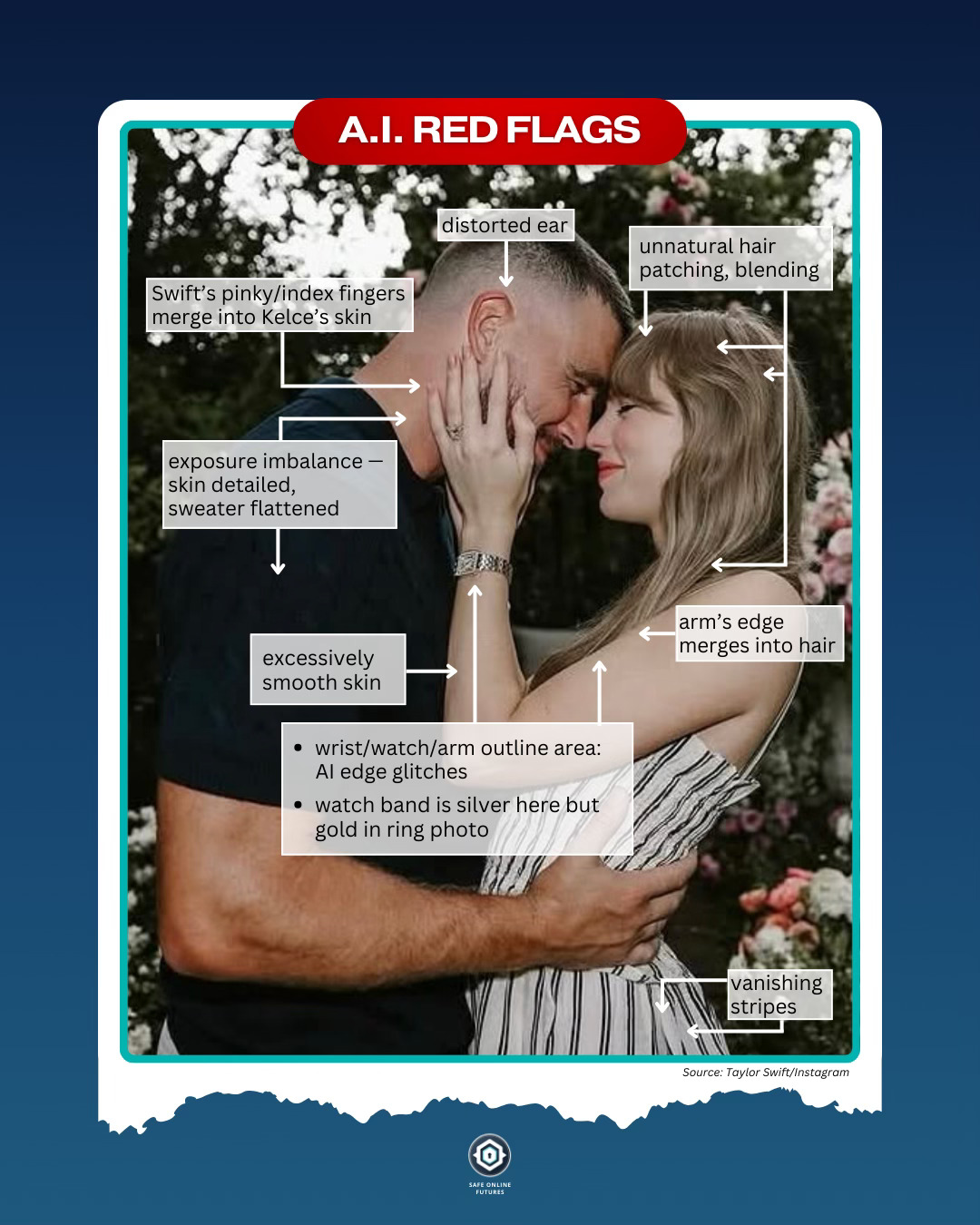
The AI artifacts weren't subtle. They were everywhere. And not a single major news outlet noticed — or cared to look. Because as Renée DiResta writes in Invisible Rulers: "If you make it trend, you make it true."
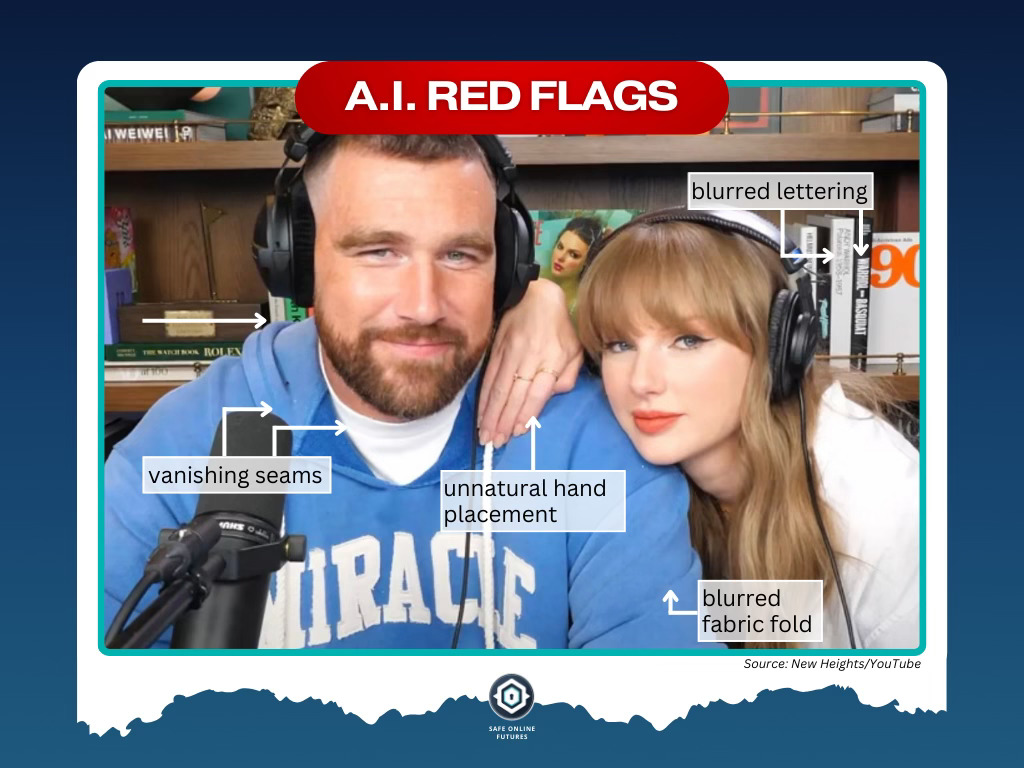
But this wasn't Swift's first AI-assisted viral moment that month. Two weeks earlier, she appeared on Kelce's podcast "New Heights" to announce her new album "The Life of a Showgirl," set for October 3, 2025. The appearance pulled in record-breaking viewership — 1.3 million concurrent viewers, according to Guinness World Records. Screenshots from that podcast also showed telltale signs of AI manipulation. The pattern was becoming clear.
The Attention Economy's New Rules
The Swift-Kelce moments revealed something darker than celebrity fakery. They exposed how our information ecosystem has fundamentally rewired itself around a simple principle: virality trumps truth.
The financial incentives driving this system are staggering. Swift's connection to the NFL has generated over $1 billion in brand value for the league since September 2023, according to Apex Marketing Group. Meanwhile, Swift herself benefits enormously from maintaining viral visibility during her album rollout, and Kelce's profile has exploded far beyond sports through the "Swift effect," amplifying his brand and marketability. With stakes that high for all parties, the pressure to manufacture viral moments — authentic or not — becomes enormous.
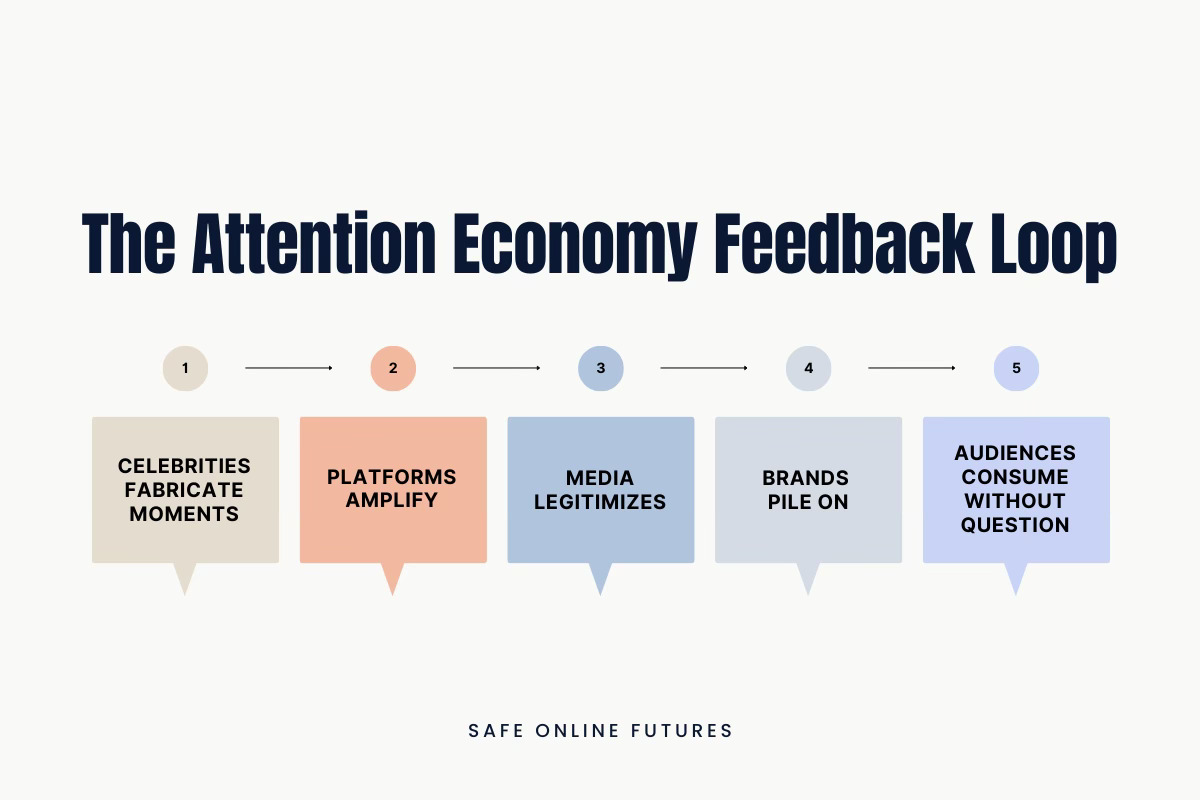
Here's how the machine works:
Celebrities manufacture moments. Real or fake doesn't matter — only scale does.
Platforms amplify without question. Instagram's algorithm doesn't fact-check; it counts engagement and declares victory.
Media legitimizes the spectacle. Scores of outlets breathlessly reported the "record-breaking" post without examining what broke those records.
Brands pile on for profit. Within thirty minutes of the announcement, Sour Patch Kids, Duolingo, and Buffalo Wild Wings had already chimed in. Starbucks, Panera, Southwest Airlines, DoorDash, and Poppi were also among the long list of brands that seized on the moment, riding the wave of manufactured authenticity.
At no point does anyone pause to ask: is this real?
“If you make it trend, you make it true.”
The Gatekeepers Have Left the Building
Twenty years ago, photo editors scrutinized images before they reached front pages. Today, Instagram's algorithm decides what floods our feeds, and newsrooms simply repackage viral content as journalism.
The result? Meta counts the clicks, sets the records, and declares events "historic." For platforms, AI-generated content isn't a problem to solve; it's a profit engine to protect. News outlets amplify these platform-generated metrics as objective fact. The cycle doesn't just distribute information — it creates reality.
But when that reality is built on AI-generated images that wouldn't fool a teenager with Photoshop, we have a problem.
What We're Really Consuming
The Swift-Kelce engagement wasn't an isolated incident — it was the culmination of a pattern. Two AI-assisted viral moments in two weeks, each generating massive engagement and media coverage, each going unquestioned by mainstream outlets.
If major outlets won't question the most scrutinized celebrity photos in the world, what happens to images from war zones? Political campaigns? Natural disasters?
The Swift-Kelce engagement isn't just about two celebrities or even about AI. It's about trust — and how quickly we're losing it.
Every time media outlets treat viral AI slop as news, they train audiences to accept digital fiction as fact. Every uncritical repost of platform metrics as journalism erodes the distinction between authentic reporting and algorithmic amplification.
The danger isn't that Taylor Swift's engagement photos were fake. The danger is that we're normalizing a world where fake is indistinguishable from real — and nobody in power seems to care about the difference.
The Question That Matters
In the attention economy, authenticity has become optional. Virality is the only currency that counts. AI isn't just changing how we create content — it's changing how we define truth itself.
So here's the uncomfortable question the Swift-Kelce moment forces us to confront: In a world where the biggest stories can be built on digital lies, and our most trusted institutions won't tell the difference, what else are we consuming as "fact" that never deserved the label?
The photos may have broken the internet. But they revealed something far more troubling: the internet has already broken us.
This is part of an ongoing series on synthetic celebrity — how AI and algorithmic design are quietly redefining what passes for real. Each week, I break down the mechanics of AI-driven media manipulation: how it works, why it works, and how to spot it before it rewrites what you think you know.