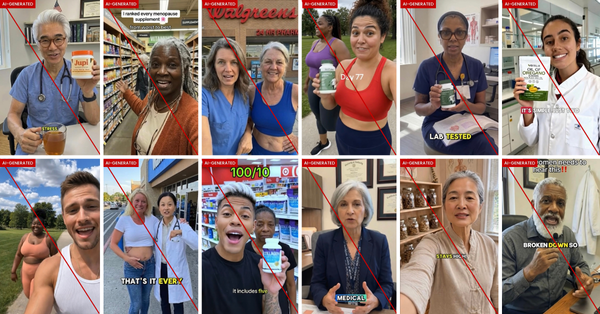
Just Because It's Live Doesn't Mean It's Real
AI Deepfake Influencers Are Livestreaming Now — And They're More Convincing Than You Think
There's a common assumption that if someone appears on a livestream, they must be real. The logic seems sound: they're interacting with viewers, responding to comments, reacting in real time. Surely that requires an actual person behind the camera.
But this assumption is becoming dangerously outdated.
Advances in AI and deepfake technology have made livestreaming one of the easiest formats to fake convincingly. Yet most people still view live video as a kind of digital proof of authenticity, as if it’s a guarantee that what they're seeing is genuine.
Companies are now creating entirely synthetic influencers with realistic faces, detailed backstories, and engaging personalities. These AI-generated personas can livestream around the clock, selling products and building genuine emotional connections with audiences who have no idea they're watching a computer program.
The technology works because it exploits our basic trust in live interaction. When we see someone respond to our comment in real time, our brains interpret this as human connection. That instinct is now being systematically manipulated.
How AI Influencers Actually Work
The process behind these synthetic livestreamers is surprisingly straightforward. According to reporting by MIT Technology Review, AI-generated influencers have already become common on Chinese platforms like Taobao and Douyin.
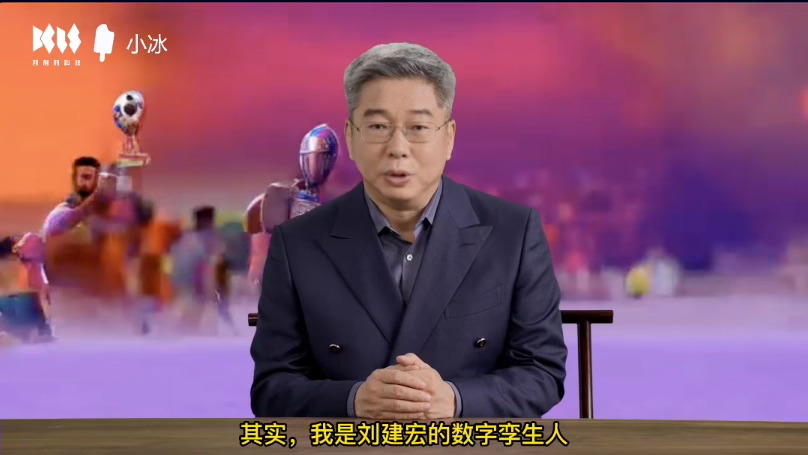
This isn’t theory. Above is a real example of a deepfake influencer livestreaming to sell products on a Chinese platform — completely AI-generated, with no human on camera.
Here's the basic workflow: Companies start with about one minute of video footage from a real person. They feed this into an AI system trained to replicate that person's appearance, voice patterns, and gestures. The result is a digital clone that can talk, move, and interact with viewers in real time.
The setup cost is roughly $1,000 per synthetic influencer. Once created, these AI hosts can run continuously without breaks, mistakes, or salary demands. They can even operate multiple livestreams simultaneously for different brands.
Some of these fake livestreamers generate thousands of dollars per hour. The technology has become sophisticated enough that detection often requires specialized knowledge most viewers don't possess.
Real-Time Doesn't Mean Real Person
The fundamental problem is that we've confused "live" with "human." Something can happen in real time without requiring human involvement.
Modern AI avatars can process viewer comments using natural language models, adjust their presentation style based on audience engagement, and modify their sales approach mid-stream. They can read and respond to live comments, creating the illusion of spontaneous human conversation.
This responsiveness makes the deception particularly effective. When an AI influencer personally addresses a viewer's question or reacts to their donation, it feels like genuine human interaction. The emotional response is real, even if the influencer isn't.
The technology has essentially turned livestreaming into a form of interactive theater, where the performance is optimized for trust and designed for profit and persuasion.
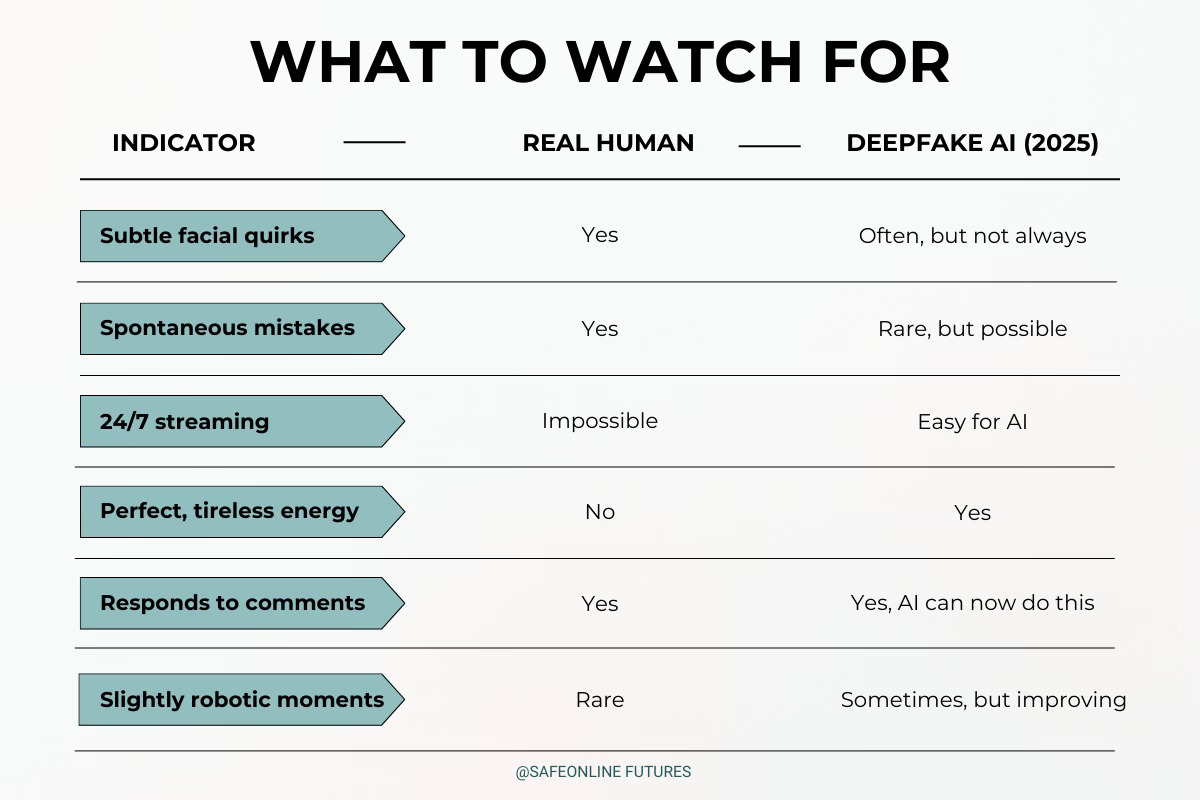
Still not sure how to tell the difference between a real human and an AI deepfake livestreamer? Here’s a quick breakdown of what to watch for in 2025:
Beyond Simple Face-Swapping
Most people think of deepfakes as face-swapping technology — putting one person's face onto another's body in a video. But the current generation of AI influencers represents something more sophisticated.
These synthetic personas are built from the ground up with carefully designed visual identities, emotionally compelling personal stories, and thousands of followers who believe they're real people. The goal isn't just visual realism — it's emotional authenticity.
This shift matters because emotional connections drive purchasing decisions more effectively than visual tricks.
When viewers feel like they know and trust an influencer, they're more likely to buy recommended products or accept promoted ideas.
The Absence of Safeguards
Perhaps most concerning is the complete lack of regulatory oversight.
There are currently no requirements for AI-generated influencers to disclose their synthetic nature. No labels, no watermarks, no warnings to viewers.
This means someone can create a fully artificial persona, build a substantial following, influence purchasing decisions, and shape public opinion while audiences believe they're watching a real person. The major platforms allow this because there's no law preventing it.
Until governments establish clear rules, this regulatory vacuum will continue to enable large-scale deception.
Why This Matters
Livestreaming used to serve as a verification mechanism. If someone could interact with viewers in real time, it suggested they were genuine. This assumption helped people distinguish between authentic content creators and elaborate hoaxes.
That verification system is now broken.
The erosion of livestreaming as a trust signal has broader implications for how we evaluate online content. If we can no longer rely on real-time interaction as proof of human presence, we need new ways to assess authenticity.
The stakes are significant because trust drives the internet economy. It influences what products we buy, what information we believe, and which public figures we support. When that trust can be manufactured artificially, it changes the entire dynamic of online influence.
The Human Cost
The most troubling aspect of synthetic influencers may be their impact on genuine human relationships. When people form emotional connections with AI personas, they're investing real feelings in artificial entities designed to extract value from those emotions.
This represents a new form of manipulation — one that exploits our basic human need for connection and community. The parasocial relationships that develop feel authentic to the viewer, even when the influencer is entirely synthetic.
Looking Forward
The technology behind synthetic livestreaming will continue improving. The economic incentives are too strong, and the technical barriers are falling too quickly for this trend to reverse.
Rather than assuming livestreaming equals authenticity, we need to develop better methods for verifying human presence online. This means both technical solutions for detecting synthetic content and regulatory frameworks that require disclosure of AI-generated personas.
Most importantly, we need public awareness. People should understand that the technology for creating convincing fake livestreamers already exists and is being used commercially.
The era of synthetic livestreaming has begun. Our ability to distinguish between human and artificial content needs to evolve accordingly, before the technology becomes completely indistinguishable from reality.
In the age of AI, going live doesn't prove you're alive — it just means the performance is happening in real time.
Want to stay ahead of the curve on AI deception and digital manipulation tactics?
Subscribe for weekly insights that help you see through the illusion.