Synthetic Tears, Real Consequences
How the White House used AI to reshape reality
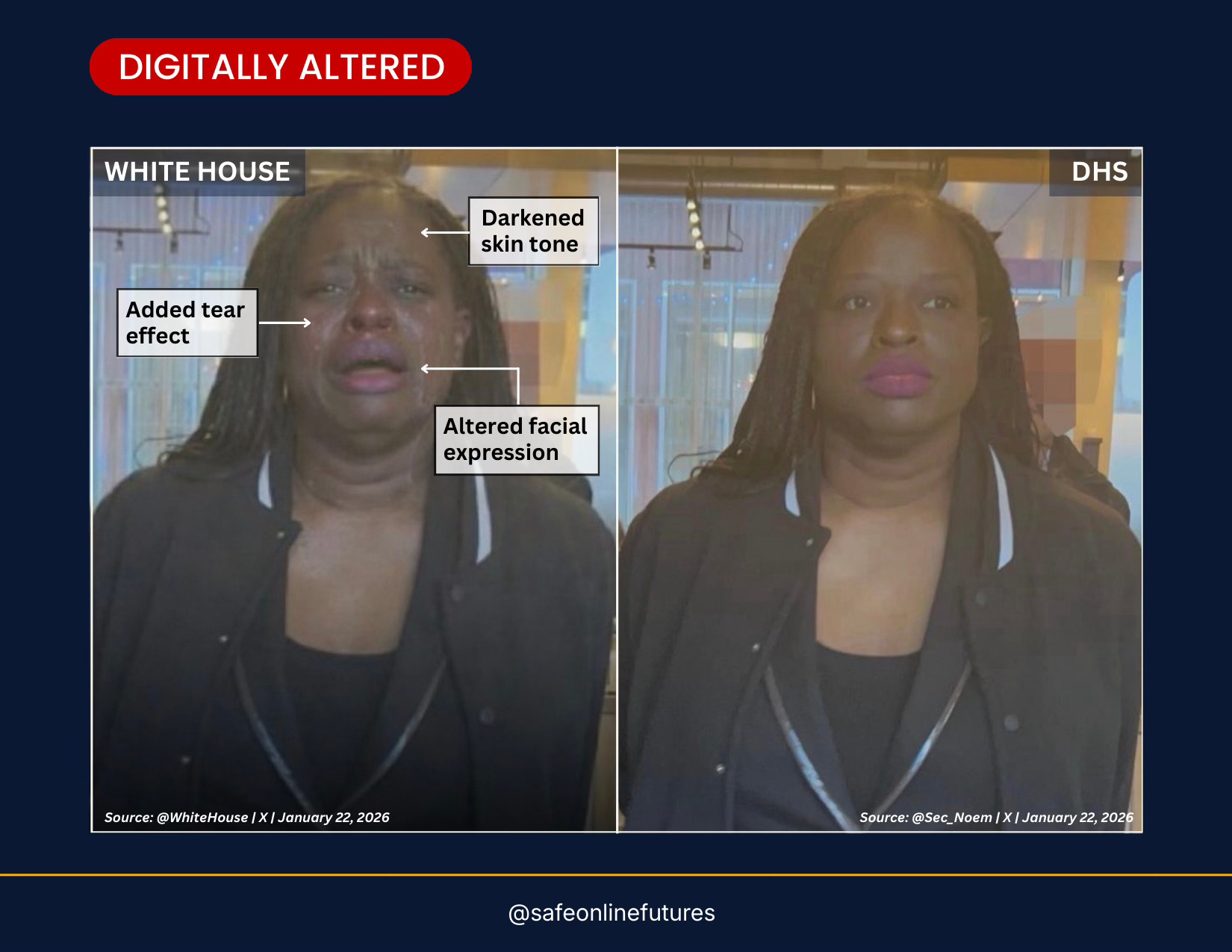
In January 2026, the White House posted an image of Nekima Levy Armstrong to its X (formerly Twitter) account. Armstrong, a civil rights attorney, had been arrested at a protest against Immigration and Customs Enforcement. But a forensic analysis by multiple outlets, including The New York Times and The Guardian, revealed that the White House image had been digitally manipulated. Tears had been added to Armstrong’s face. Her skin tone had been darkened. The original photograph showed her calm and composed; the White House version depicted her as emotionally distressed.
Within an hour of Attorney General Pam Bondi announcing Armstrong’s arrest, images appeared across multiple administration accounts. Homeland Security Secretary Kristi Noem’s post showed Armstrong composed. The White House’s altered version, posted shortly after and reposted by Press Secretary Karoline Leavitt, showed her crying with darkened skin. When questioned, the administration’s deputy communications director offered a chilling defense: “Enforcement of the law will continue. The memes will continue.”
This incident marks a watershed moment in the relationship between state power, artificial intelligence, and truth. The White House didn’t share AI-generated art or satirical imagery. It manipulated a photograph of a real person facing criminal charges in a case being promoted by the Attorney General herself, weaponizing generative technology to reshape public perception of an ongoing legal case.
The Anatomy of Digital Manipulation
The Guardian’s analysis confirmed that the White House image and the original posted by Noem were the same photograph — identical officers, background elements, and positioning — with two critical changes. First, tears were added to Armstrong’s face, transforming her expression from dignified composure to apparent emotional collapse. Second, her skin tone was darkened, a modification that carries profound racialized implications in a criminal justice context.
These weren’t accidental artifacts. They were deliberate editorial choices designed to alter how viewers perceive Armstrong’s character. The thirty-minute gap between Noem's unaltered post and the White House's manipulated version shows these were two different versions of the same photograph, not compression artifacts or lighting variations. The tears suggest weakness, guilt, and regret — emotions that undermine the presumption of innocence. The darkening of her skin activates unconscious racial biases that have historically shaped perceptions of criminality. Together, these manipulations constitute visual rhetoric that speaks beneath the threshold of conscious analysis.
The administration’s defense — framing the manipulation as “meme” culture — represents a strategic rebranding of propaganda. By invoking internet vernacular, the White House lowers accountability standards, positioning doctored images of defendants as lighthearted content rather than ethically fraught perception management. This makes it harder for the public to distinguish official information from performance and truth from fabrication.
The Propaganda Playbook
Armstrong’s altered image reveals three core strategies in the emerging AI propaganda playbook.
First is emotional engineering. Tears are among the most potent visual signifiers in human communication. By imposing tears onto Armstrong’s face, the manipulation transforms a narrative of principled civil disobedience into one of personal breakdown. A calm, composed defendant suggests someone acting on conviction; a crying defendant suggests someone overwhelmed by consequences. In legal contexts where character matters — particularly in a case the Attorney General herself has publicly touted — such visual suggestions can prejudice perception before any testimony is heard.
Second is racialized visual framing. Darkening Armstrong’s skin tone isn’t neutral. Research demonstrates that even subtle manipulations of skin tone in photographs can activate racial biases and influence judgments about guilt and punishment severity. The alteration transforms her physical presentation in ways that carry sociopolitical weight, potentially shifting how audiences — including potential jurors — perceive her.
Third is the normalization of disinformation through the “meme” defense. By reframing propaganda as internet culture, the administration exploits digital communication’s ambiguity. Memes occupy a liminal space — simultaneously serious and ironic, factual and fictional. The full statement from the deputy communications director reveals the rhetorical strategy at work: “YET AGAIN to the people who feel the need to reflexively defend perpetrators of heinous crimes in our country I share with you this message: Enforcement of the law will continue. The memes will continue.” This framing does double work: it dismisses accountability while preemptively delegitimizing critics by positioning anyone questioning the manipulation as “reflexively defending perpetrators of heinous crimes.” It’s a rhetorical move that frames accountability itself as complicity with criminality.
The Algorithmic Advantage
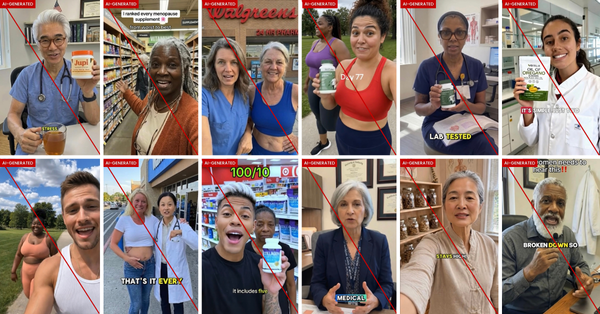
The effectiveness of AI-altered imagery isn’t merely about content. It’s about how that content moves through digital ecosystems optimized for engagement rather than accuracy. Social media platforms reward posts that generate strong emotional responses. AI-generated and AI-altered visuals are engineered to trigger exactly these reactions, making them algorithmically advantageous.
The Armstrong image exemplifies this dynamic. It’s visually striking, emotionally provocative, and politically charged — qualities that allow it to bypass traditional gatekeepers like fact-checking. By the time corrections are published, the image has already circulated widely across the White House account’s 3.5 million followers and been amplified by cabinet officials. Research shows that corrections rarely achieve the same reach as initial misinformation, and many people don’t update their beliefs after exposure to debunking.
This dynamic is amplified when state actors adopt influencer tactics. The White House functions as an influencer with extraordinary reach and institutional authority, deploying rapid content drops and narrative momentum without mediated vetting. The administration’s broader pattern of AI imagery — at least 14 posts from the White House account since the start of Trump’s second term — demonstrates a systematic embrace of influencer playbooks: high-volume content production, persona cultivation, and engagement maximization.
Generative AI tools make it inexpensive and fast to produce visually compelling imagery at scale, creating asymmetry between fabrication and verification. Truth-seeking is slow; lie-spreading is instant. In attention economies where visibility determines influence, these structural advantages make AI propaganda formidable.
The Normalization of Synthetic Reality
Perhaps the most concerning aspect isn’t the manipulation itself but what it signals about normalizing synthetic content in official discourse. When a presidential administration repeatedly deploys AI-generated and AI-altered imagery, it shifts public expectations about legitimate government messaging. Each instance makes the next less shocking, more routine.
This normalization accelerates erosion of epistemic trust. Photographs historically carried evidentiary weight — they were documentary records tethered to reality. When democratic governments systematically alter images and defend the practice as “memes,” the category of trustworthy visual evidence shrinks dramatically.
The problem isn’t merely that individual images might be fake. It’s that audiences increasingly cannot distinguish real from fabricated without forensic tools most people don’t possess. Images are no longer self-authenticating. Every photograph becomes suspect, creating what might be called a post-truth infrastructure — not the absence of truth, but a media ecosystem where truth becomes just another narrative competing alongside fabrications.
When governments themselves contribute to this ecosystem by producing and disseminating synthetic content, they undermine democratic deliberation. Citizens cannot make informed decisions about policy or accountability if they cannot reliably determine what actually happened.
The Stakes of Synthetic Governance
The altered image of Nekima Levy Armstrong is not isolated. It’s a template, a proof of concept. AI imagery has become central to the administration’s messaging strategy, and what began as experiments with AI-generated art has evolved into systematic manipulation of photographs depicting real events and real people facing real legal consequences.
This evolution demands a shift in how we understand media literacy and institutional accountability. The challenge is no longer simply identifying misinformation from fringe actors. It’s recognizing that legitimate institutions, including cabinet secretaries and White House officials, now have the capacity and apparent willingness to weaponize generative tools to manufacture preferred realities. Teaching audiences to “spot fake news” is insufficient when the news itself comes from official channels equipped with AI image generators.
The Armstrong case illuminates the stakes. A civil rights attorney, arrested in a case promoted by the Attorney General, was made to cry on command through digital editing. Her skin was darkened. Her dignity was weaponized to serve a political narrative. The manipulation occurred while she faced criminal charges, when public perception could influence legal outcomes. It was coordinated across multiple cabinet-level officials and amplified to millions. And when confronted, the government responded not with correction or accountability, but with defiance: “The memes will continue.”
This is the face of AI-powered propaganda in democratic societies. It doesn’t announce itself as authoritarian control. It presents itself as internet culture, as engagement, as the inevitable evolution of political communication. But beneath the veneer of viral content lies a fundamental question about power: Whoever controls the tools of image-making controls the tools of narrative-making. And when governments photoshop reality and call it humor, we’ve entered an era where power doesn’t just spin truth, it manufactures it wholesale, one synthetic tear at a time.
For clear, evidence-based analysis of how AI and media are reshaping politics and reality, subscribe here.