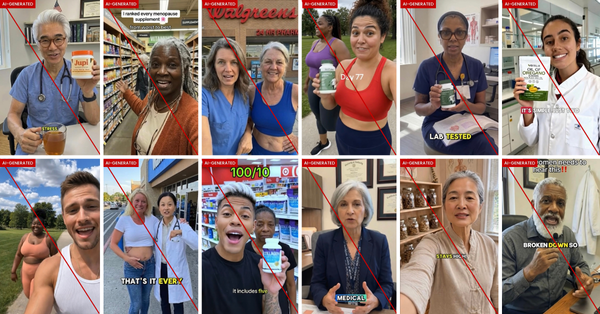
The AI Wedding No One’s Talking About
What Jeff Bezos’ wedding photos reveal about synthetic narratives, media complicity, and billionaire-controlled reality
At first glance, Jeff Bezos and Lauren Sánchez’s wedding looked like a billionaire fairytale. Luxe setting. Custom Dolce & Gabbana. Perfectly staged photos distributed across Vogue, Instagram, and entertainment sites. The kind of coverage we’ve come to expect from celebrity–media symbiosis.
But something’s off.
Actually, multiple things are off. And once you start noticing the visual inconsistencies, it becomes impossible to unsee. This isn’t just about vanity. It’s about how synthetic content, legacy media, and AI investment are merging to quietly reshape what we’re told is “real.”
The Photos Don’t Match
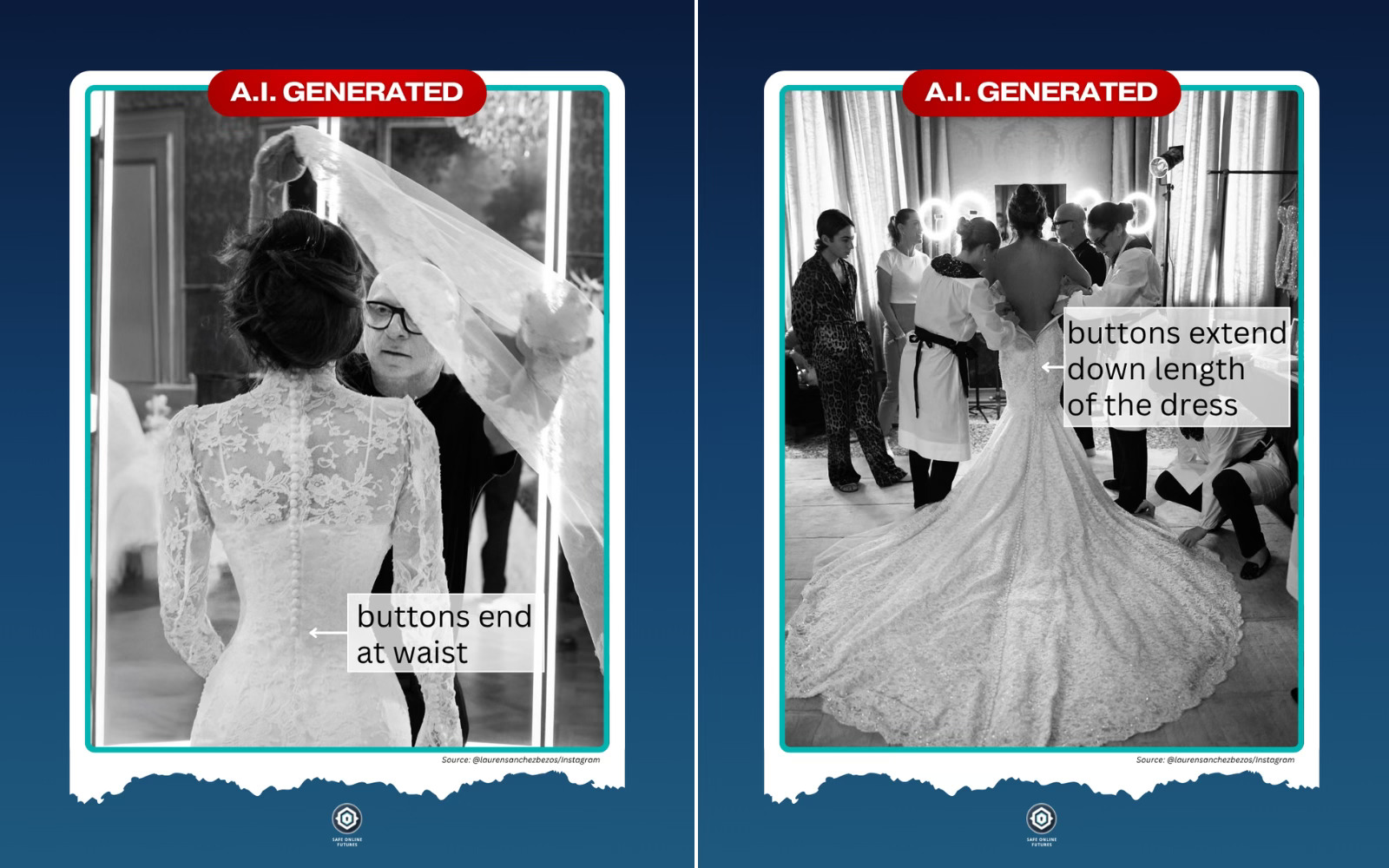
Let’s start with the dress. In one photo, the button detailing on Sánchez’s gown stops at her waist. In another — captured from a similar angle — the buttons extend all the way down the train. That’s not a minor alteration or a trick of the light. It’s two conflicting versions of the same moment.
And it doesn’t stop there. One image shows her in a high-neck lace gown with long sleeves. Another shows what looks like a completely different strapless, backless design. These discrepancies aren’t about fashion. They’re about fabrication.
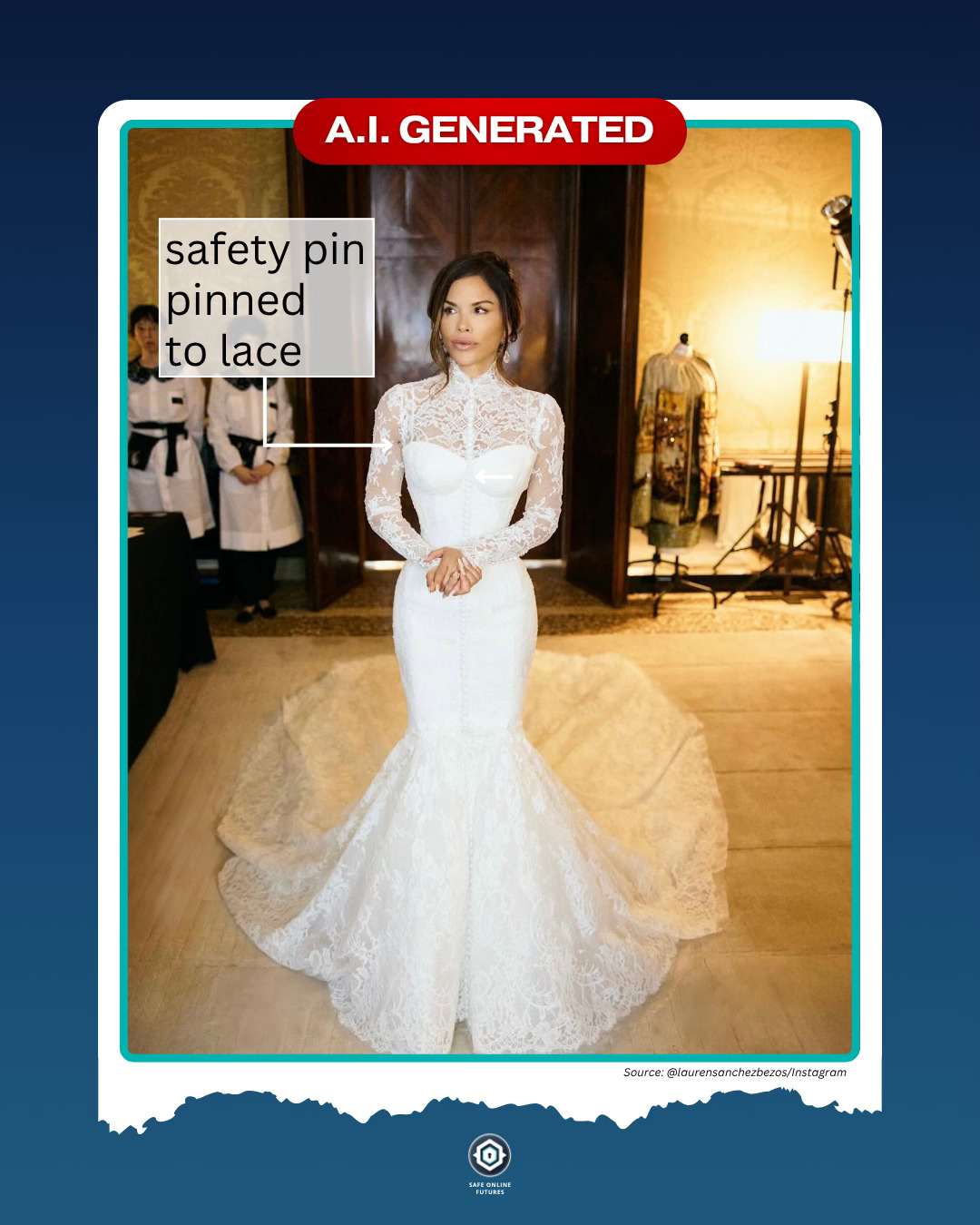
Then there’s the safety pin. Yes, a visible safety pin, punched right through the lace of Sánchez’s gown near her armpit. No designer would approve this. No stylist would allow it. And certainly no bride wearing a couture Dolce & Gabbana dress would walk down the aisle with metal hardware distorting hand-sewn lace. It’s absurd. Unless, of course, the image wasn’t documenting reality — it was generating it.
Vogue Posted the Glitches
Here’s where it gets more concerning.
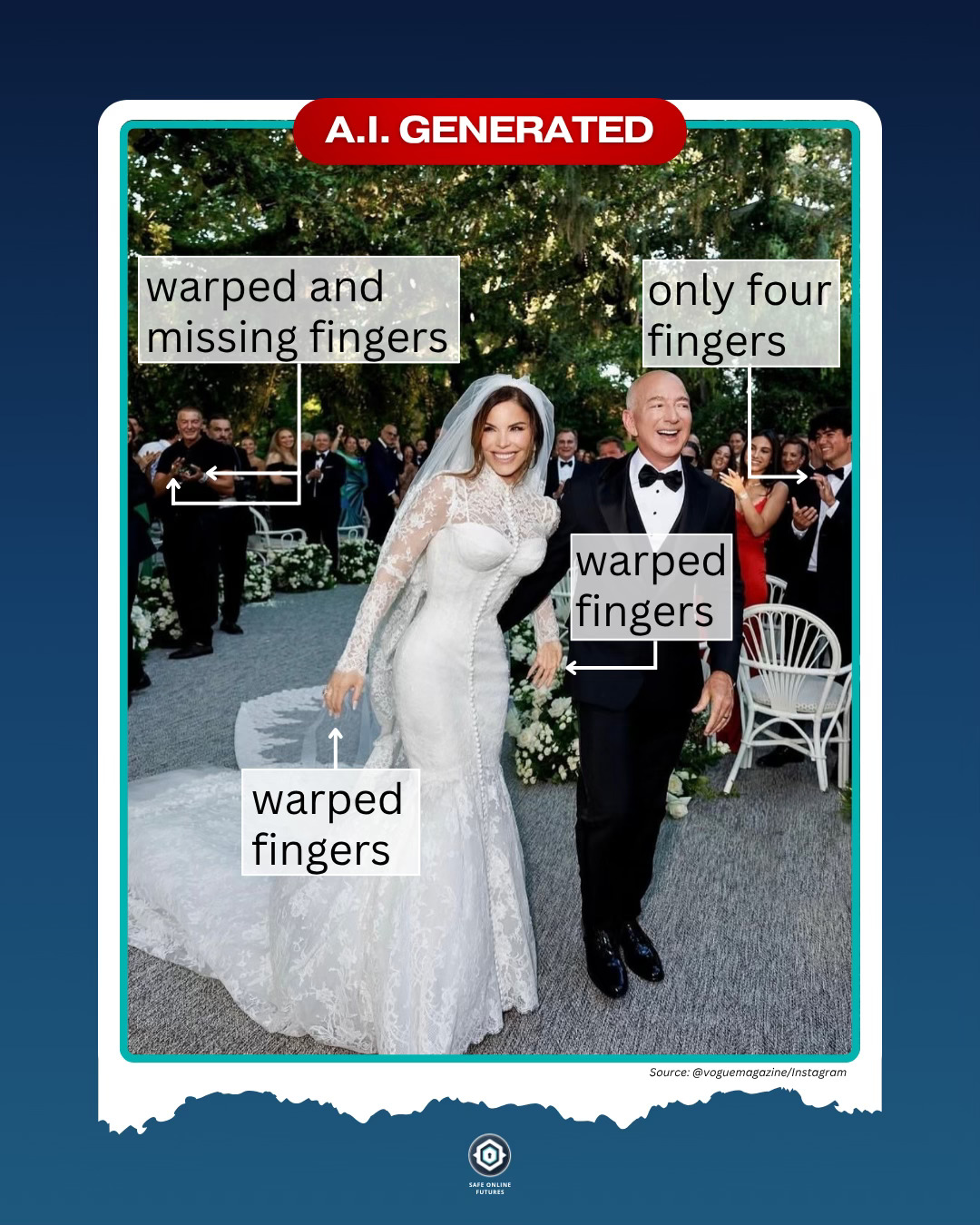
These images weren’t leaked or sourced from fringe accounts. At least two were posted by Vogue’s official Instagram account. One features the newlyweds surrounded by guests, except some of those guests have distorted fingers, warped hands, and missing knuckles, classic signs of AI generation.
Another Vogue-published image, a solo portrait of Sánchez, shows significant AI telltales: blurred, textureless lace in areas where detail should be crisp. The skin, too, appears unnaturally smoothed — almost plastic. It’s the kind of over-correction we’ve seen in AI tools trying to approximate glamour. But instead of questioning it, Vogue published it. Uncritically. As if it were just another wedding shot.
Bezos Isn’t Just the Groom — He’s a Stakeholder
This is where narrative control comes in.
Bezos isn’t some passive figure being packaged by PR agents. He’s one of the most powerful players in AI development and deployment. Through Amazon and AWS, he profits directly from the very systems capable of generating images like these.
And yet, those same AI tools are now being used — quietly, aesthetically — to engineer the image of his own personal life.
Think about that: the billionaire shaping your digital infrastructure is also reshaping the images of himself you’re supposed to trust. That’s not coincidence. That’s strategy.
This wedding wasn’t just a personal milestone. It was a soft launch for synthetic intimacy — a lifestyle branding moment, rendered and reinforced by AI and distributed through trusted media channels.
Meanwhile, the technology powering this illusion remains completely unregulated. And if Trump’s “One Big Beautiful Bill” passes the Senate this week, it would prevent any new AI regulation for the next decade — effectively giving billionaires and corporations free rein to shape synthetic narratives without oversight.
Update (July 1, 2025):
After this essay was published, Senators voted overwhelmingly to strip the provision in Trump’s “One Big Beautiful Bill” that would effectively block states from passing and enforcing laws on AI for the next decade. Read more via The Hill.
Why It Matters
This isn’t just about a wedding dress or a Vogue post. It’s about a larger shift in how public narratives are being manufactured. When billionaires use AI to generate flawless (or nearly flawless) versions of themselves, and legacy media amplifies those images without question, we lose something critical: the ability to distinguish curated illusion from lived reality.
And as these tools become more seamless, that confusion becomes the point.
This isn’t deepfake panic. It’s something quieter, subtler, and potentially more dangerous. Because it’s not about one outrageous fake. It’s about flooding the feed with almost-real content: synthetic images that feel authentic, intimate, aspirational — until no one bothers to question the seams. That’s narrative control. And we just watched it happen at a wedding.
But it doesn’t stop at appearances.
If billionaires are already using AI to curate how they present themselves — and they also control the platforms that shape what we see — how long before they start using our own data to shape what we believe?
This isn’t just about editing wedding photos. It’s about who gets to script reality, and who’s quietly training us to accept it.
Want to see the signs of AI for yourself? View the full photo breakdown on Instagram / Facebook / TikTok / LinkedIn.
Each week I deconstruct how narratives are manufactured — and who profits. Follow for forensic breakdowns of how AI, power, and media are reshaping what we believe to be real.