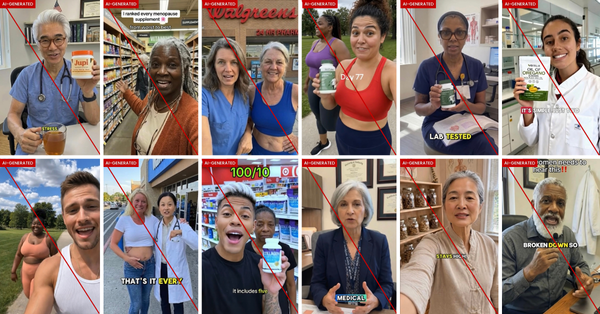
The Anatomy of a Modern Hoax
How AI manipulation and social algorithms manufactured a presidential death conspiracy
This summer, a few photos of Donald Trump's hand sparked something far more dangerous than typical political gossip. What began as images showing apparent bruising and a lack of public appearances for several days, snowballed into a viral conspiracy theory claiming the former president was dead. The #TrumpIsDead hashtag dominated social media for several days, racking up millions of views and hundreds of thousands of likes.
This wasn't just another internet rumor. It was a masterclass in how modern misinformation spreads — a perfect storm of AI manipulation, algorithmic amplification, and our own psychological biases creating a self-reinforcing cycle.
The Seven-Step Recipe for Manufacturing Truth
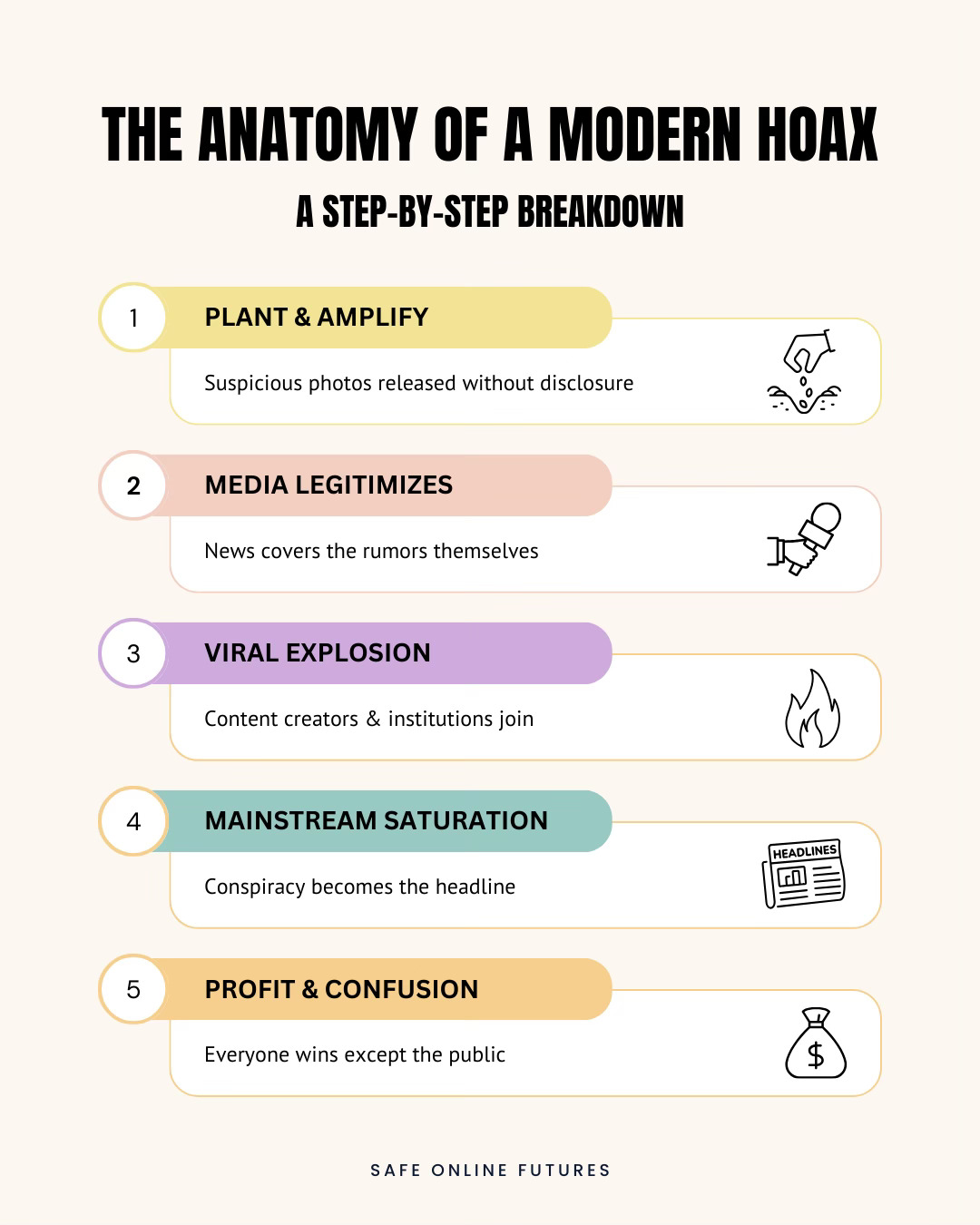
Step 1: Plant the Seed
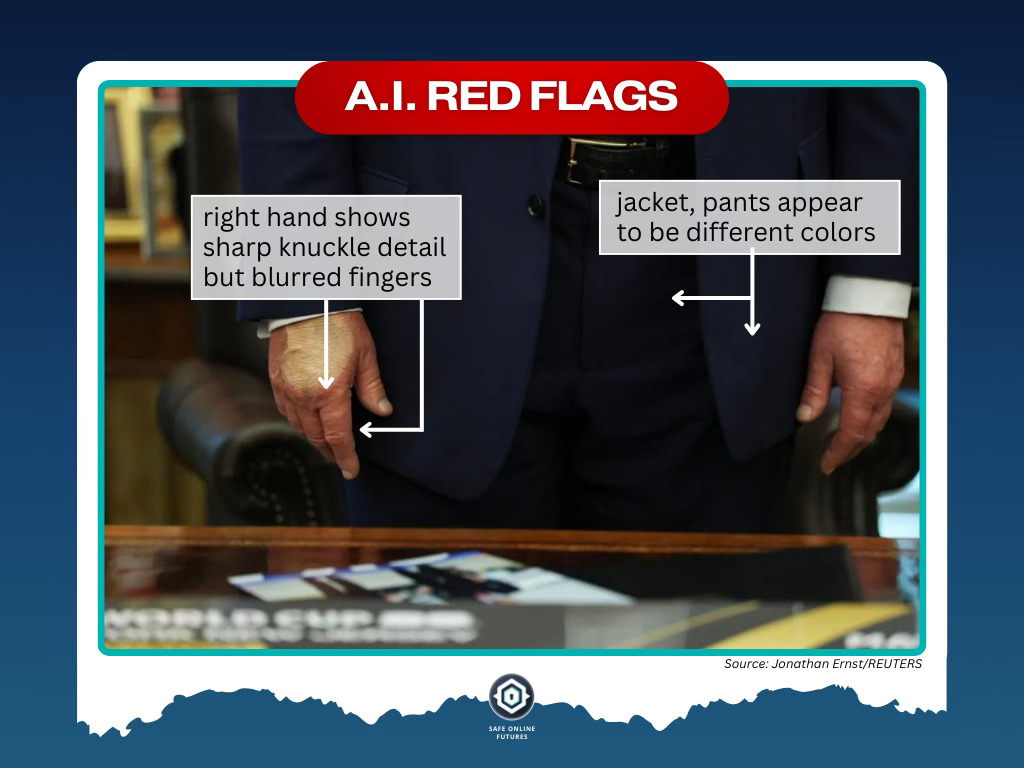
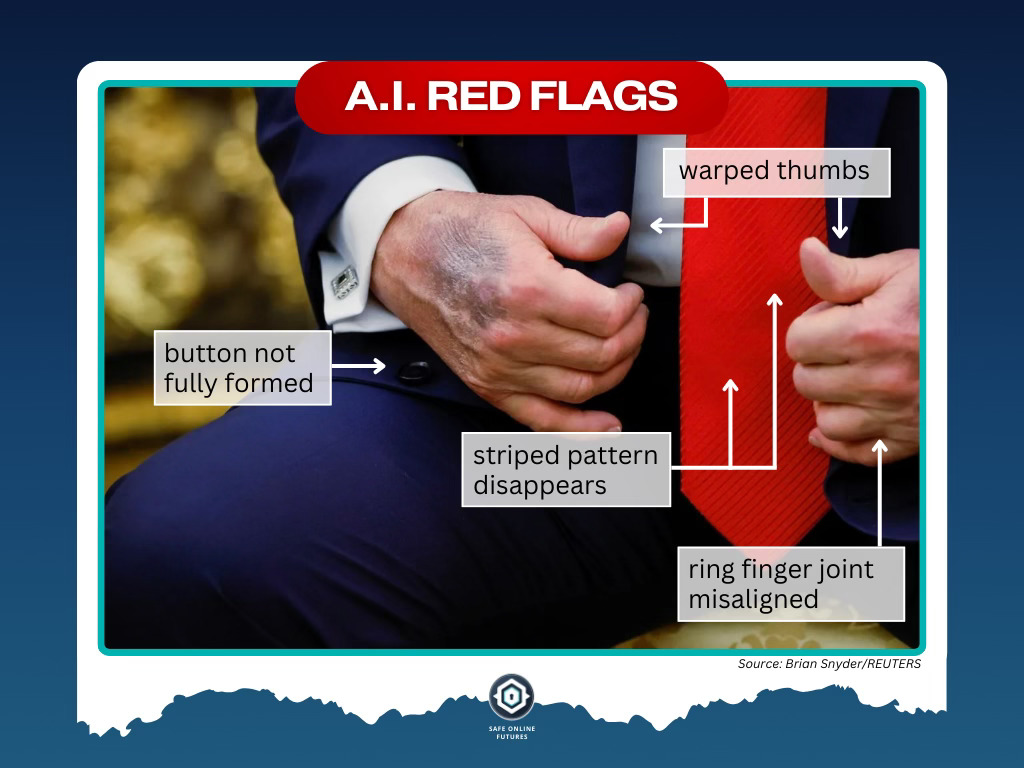
In late August, Reuters published photos of Trump's hand that immediately felt off. The photos showed bruising and heavy concealer but also contained telltale AI artifacts—disappearing tie patterns, oddly inconsistent suit colors.
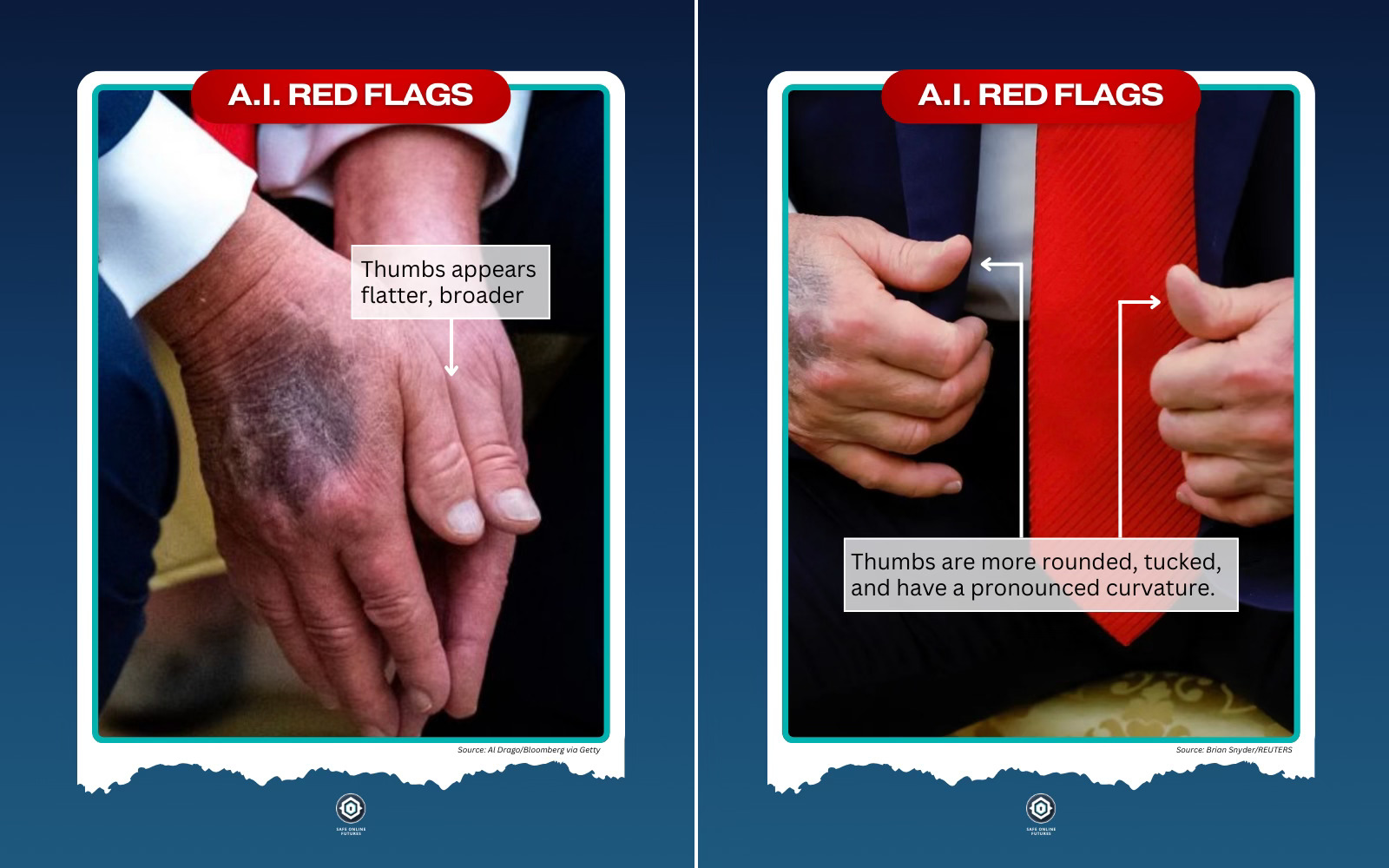
Even more revealing was comparing images from different wire services on the same day. Despite both purporting to show Trump's hands, the thumb anatomy appears completely different — different shape, different curvature.
Two major wire services, same subject, same day, yet inconsistent physical features that raise serious questions about authenticity.
These images were distributed without any disclosure of digital alteration and picked up by major outlets as standard news photography. Why?
Whether this was editorial oversight or a calculated decision in the attention economy is unclear — but what's certain is that suspicious-looking images entered the media ecosystem without transparency about their authenticity.
Step 2: Let Algorithms Do Their Work
Social media platforms are designed to amplify content that generates engagement, and nothing drives engagement like mystery and controversy. The suspicious-looking photos created instant buzz as users speculated about Trump's health: Was it skin cancer? IV therapy? A reaction to his recently disclosed chronic venous insufficiency?
The platforms' recommendation algorithms, detecting high engagement, began pushing the content to wider audiences.
Step 3: Media Takes the Bait
Rather than investigating the authenticity of the images, news outlets leaned into the speculation itself. "What people are saying" became the story, with headlines focusing on social media rumors rather than verified facts.
This gave the conspiracy its first taste of mainstream legitimacy.
Step 4: Viral Explosion
Content creators transformed speculation into full-blown conspiracy theory. The scale was staggering: over 158,000 X (formerly Twitter) posts declared "TRUMP IS DEAD" while another 42,000 stated "TRUMP DIED." At one point, the hashtag #whereistrump became the sixth most popular trending topic in the United States. Individual posts reached massive audiences — one TikTok garnering 1.7 million views and 210,000 likes, while another hit 3.5 million views with over 600,000 likes.
According to Grok, X's AI-powered chatbot, posts speculating about Trump's death accumulated over 1.3 million user engagements in a single day. Each viral post fed the algorithm, creating an exponential spread pattern that traditional fact-checking couldn't match.
Step 5: Mainstream Amplification
Now the conspiracy itself became headline news. Critics seized on Vice President Vance's seemingly innocuous comment as evidence of a cover-up:
"I feel very confident the president of the United States is in good shape, is gonna serve out the remainder of his term, and do great things for the American people. If, God forbid, there's a terrible tragedy, I can't think of better on-the-job training than what I've gotten over the last 200 days."
What Vance intended as routine reassurance was twisted into ominous foreshadowing.
Step 6: Institutional Credibility
Even established media organizations joined the fray. MeidasTouch, a liberal-leaning outlet with 8 million followers that brands itself as "pro-democracy journalism," actively fueled the speculation. Co-founder Ben Meiselas posted: "Where did Trump go?! Where is he? What is happening? He has not made a public appearance in two days."
This continued even after Trump appeared publicly — spotted with his granddaughter en route to his golf club in Virginia. Instead of acknowledging the obvious evidence that Trump was alive and active, outlets like MeidasTouch doubled down on health speculation, lending institutional weight to baseless rumors.
Step 7: The Payoff
Attention equals revenue in the digital economy. Platforms, media networks, and content creators all profited from the engagement surge through increased ad revenue, subscriber growth, and follower counts.
Meanwhile, the truth became a casualty, leaving the public more confused and divided than before.
This complex sequence might seem overwhelming, but the pattern is remarkably consistent. Here's how these incidents typically unfold:
Why This Blueprint Is So Dangerous
This incident reveals the troubling efficiency of modern misinformation. The Trump death hoax succeeded because it exploited several psychological and technological vulnerabilities simultaneously:
Confirmation Bias at Scale: The conspiracy thrived because it told people what they wanted to hear. Trump's critics were primed to believe something was seriously wrong, while his supporters were ready to see media manipulation.
AI as the Perfect Accomplice: Unlike crude Photoshop jobs, AI-generated alterations occupy a dangerous middle ground. They can slip through editorial processes — whether due to oversight or willful blindness in the attention economy — while still appearing suspicious enough to fuel public speculation. The technology has evolved to exploit the gap between what editors catch and what audiences question.
Platform Incentives: Social media algorithms don't distinguish between true and false engagement. They simply amplify whatever generates the most interaction, creating a feedback loop that rewards sensationalism over accuracy.
Institutional Failure: When respected media outlets chase clicks instead of facts, they accidentally, or perhaps intentionally, legitimize the very conspiracies they should be debunking.
Recognizing the Pattern
The next time you encounter a viral story that seems too convenient or dramatic, ask yourself:
- Does the source material look authentic, or are there visual inconsistencies?
- Who benefits from this story spreading?
- Are media outlets reporting facts or just reporting that people are talking?
- Does the story confirm what you already believed a little too perfectly?
The Trump hand photos won't be the last time we see this playbook in action. As AI technology improves and platform incentives remain unchanged, we can expect more sophisticated attempts to manufacture truth from digital fiction. The patterns are already emerging, and they're only getting harder to detect.
Learning to spot these techniques now — before they become completely seamless — may be our best defense against a future where distinguishing truth from fabrication becomes nearly impossible.
Exposing how media manipulation, AI, algorithms, and the attention economy are rewriting reality. Subscribe for free to receive insights into the forces reshaping truth in the digital age.