The Deepfake Influencer in Your Feed
Part 2 - When Institutions Start Printing Deepfakes
Editor's Note: This essay does not accuse The New York Times of knowingly promoting a synthetic persona. Rather, it highlights the troubling implications of a scenario in which deepfake influencers go unchallenged by trusted media institutions — whether through oversight or systemic failure. The purpose is not to allege intent, but to examine the consequences of institutional trust being weaponized in the age of AI.
The story of Tiffany Cianci isn't just about one potentially synthetic persona. It's about something far more dangerous: how our most trusted institutions can transform digital ghosts into documented reality — whether by accident or design.
In January 2023, The New York Times published a sympathetic profile of someone they identified as Tiffany Cianci — a small-business owner locked in battle with a private equity firm. The article included direct quotes and professional portraits credited to a Times photographer.
What it didn't include was any mention of Cianci's extensive social media presence — the very platform where most people first encountered this persona.
And that omission reveals a troubling gap in how legacy media handles the digital age.
When Journalism Becomes Authentication
If you haven't read Part 1 of this series, I recommend starting there. I've documented clear visual evidence that Cianci's videos show signs of AI generation: warped facial geometry, artificially smoothed textures, unstable symmetry, and lighting inconsistencies that don't occur in authentic footage.
I can't say with absolute certainty that the persona is entirely AI-generated. But the visual evidence strongly suggests synthetic construction or heavy digital manipulation.
Which makes The New York Times article so concerning.
The paper ran a high-profile story — complete with sympathetic framing and professionally produced photography — without acknowledging, referencing, or apparently verifying the online identity at the center of their narrative.
This means one of two things happened: either the Times failed to review the persona's social media channels, which show obvious signs of AI generation, or they did review them and chose not to mention what they found.
The Authentication Problem
When America's most trusted newspaper publishes a profile of someone, they're not just reporting a story. They're validating that person's existence.
The Times article portrays Cianci as a determined franchisee caught in a legal and emotional battle with Unleashed Brands. They quote her extensively and publish multiple polished portraits that, like her TikTok videos, raise serious technical questions.
Her videos show overly smoothed skin and unnatural cleavage lines, inconsistent iris detail, and facial symmetry that shifts unnaturally between frames. The photos published by the Times display phantom artifacts, vanishing clothing seams, and distorted digits that fails under forensic analysis.
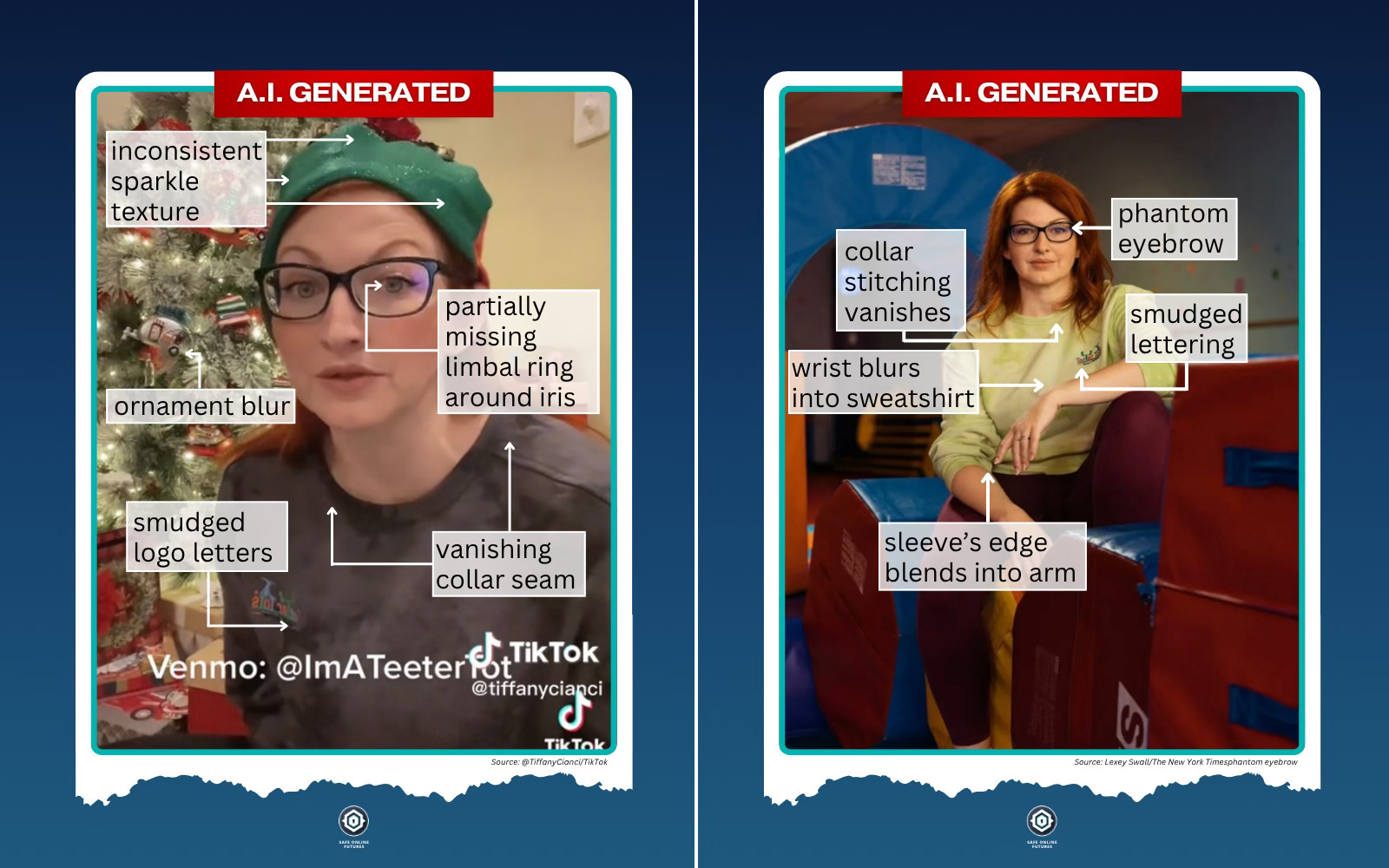
Below is a closer look at three of the photos published by The New York Times, annotated to show visible signs of AI generation or heavy digital manipulation:
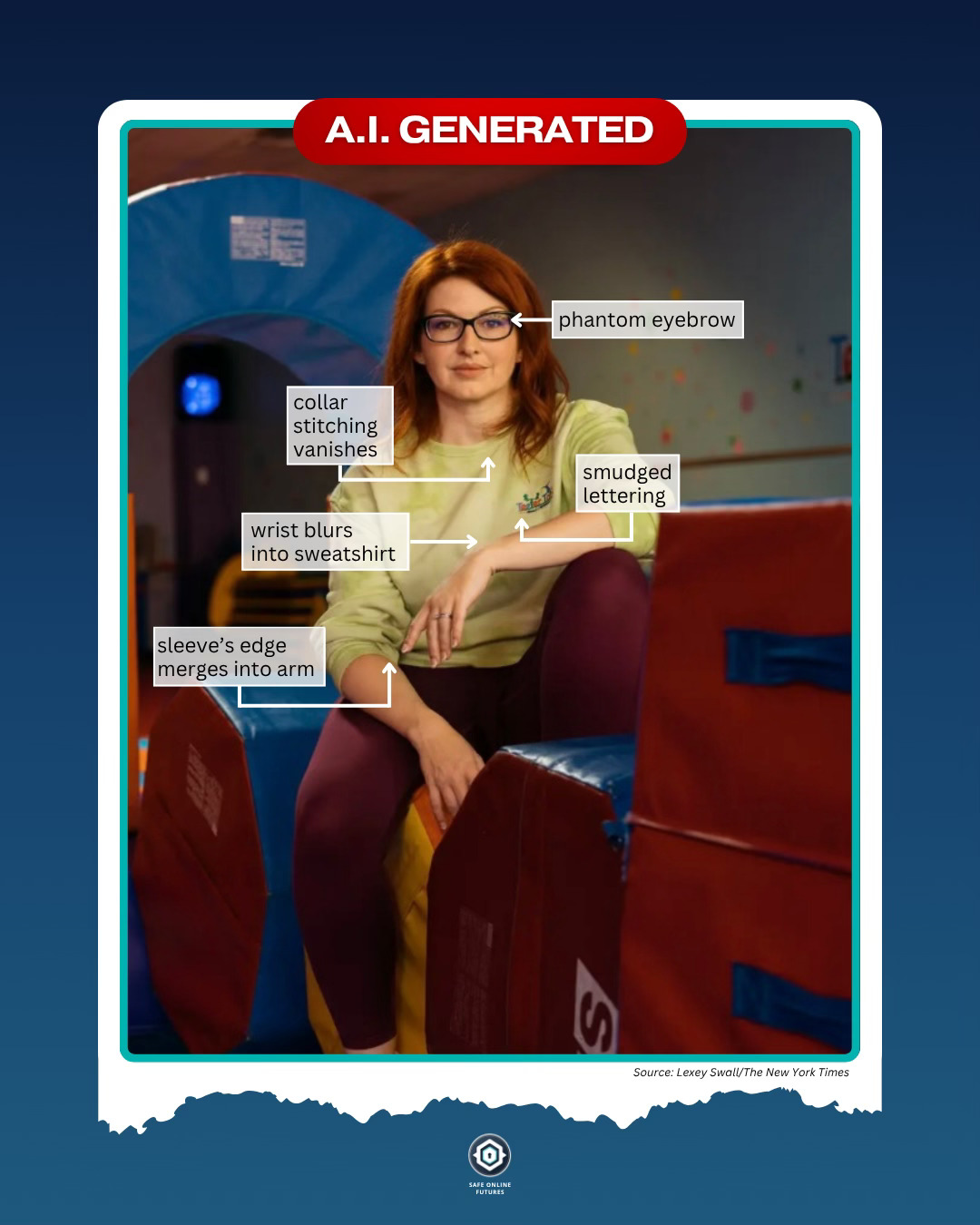
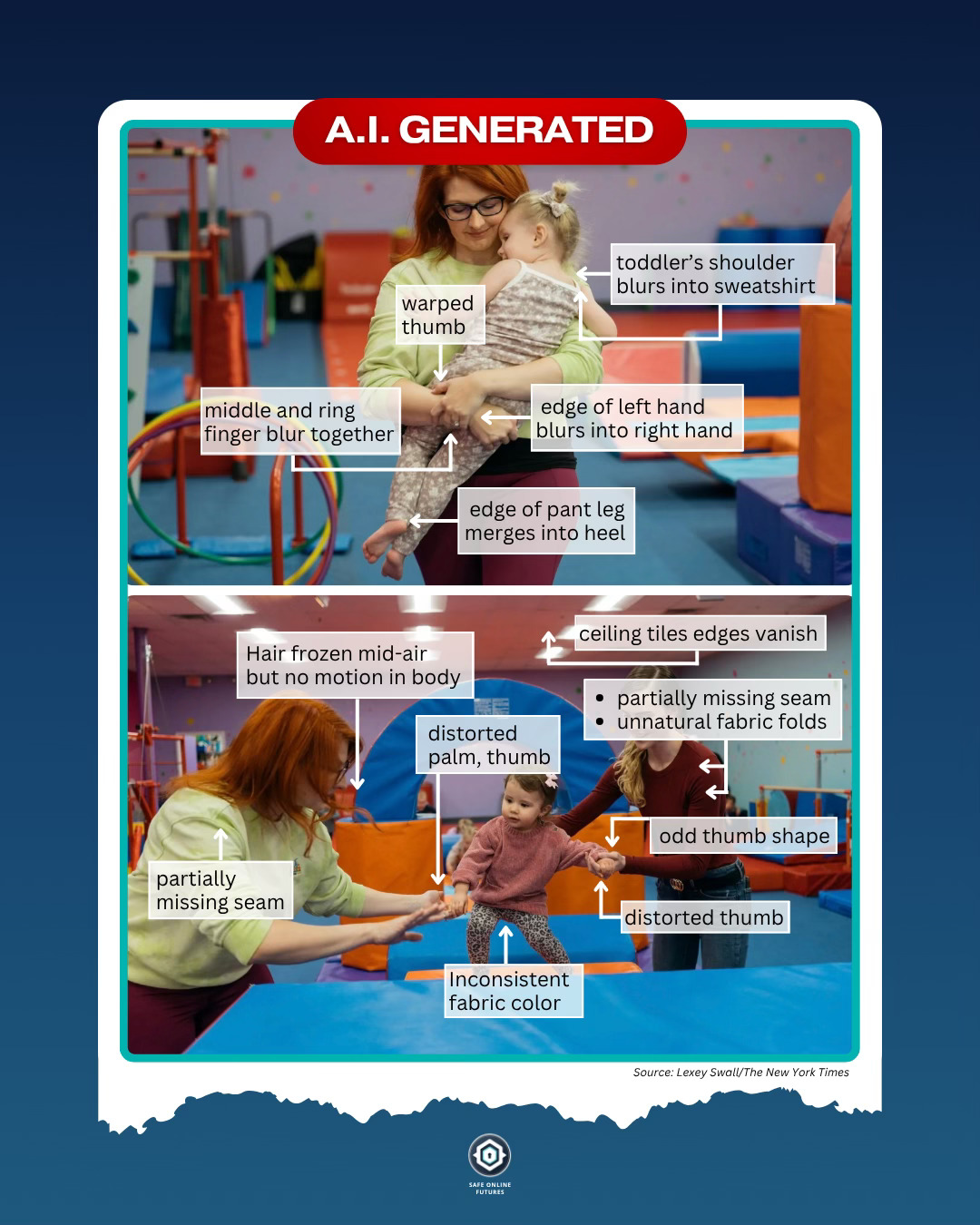
If those photos were taken by a real photographer and later altered using AI tools, then the Times unknowingly published synthetic visuals in a journalistic context —without any disclosure to readers.
If they were fully AI-generated with no real subject present, then the Times functioned as an institutional amplifier for what amounts to a fictional character.
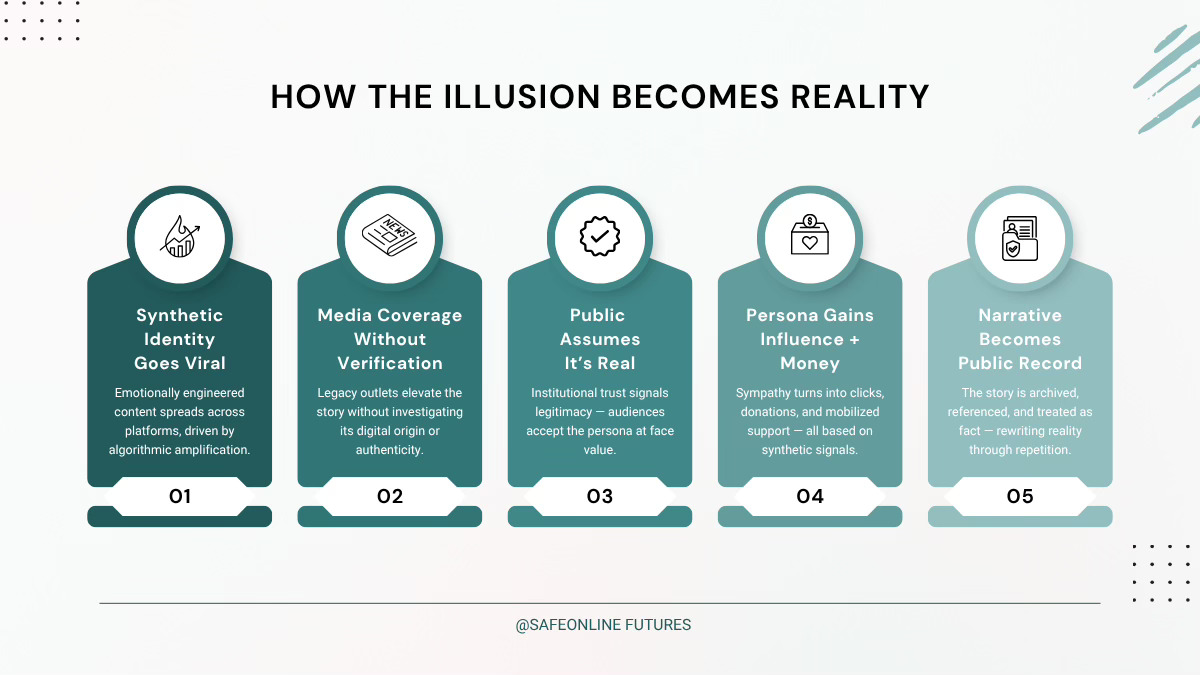
Either scenario leads to the same dangerous outcome: the illusion becomes history, the deepfake becomes the official record, and trust becomes optional.
The Verification Failure
The Times made no attempt to reconcile their real-world reporting with the synthetic signals present in Cianci's digital footprint. They didn't mention her online presence, didn't question the photographic evidence, and didn't apply the kind of skepticism that journalism demands.
That's not just an oversight — it's a fundamental failure of verification in an age when such failures can have serious consequences.
Because in 2025, the public doesn't just consume social media content in isolation. They consume narratives filtered through institutional trust. When the Times treats someone as real, readers assume they've done their homework. The paper's credibility becomes a stamp of authenticity.
The Times didn't have to explicitly say "she's real." They just had to treat her like she was real and let readers fill in the rest.
A deepfake doesn’t need to fool everyone.
It just needs one trusted institution to treat it as real — and the illusion becomes the record.
The Institutional Crisis
For decades, journalism served as a gatekeeper — vetting sources, scrutinizing evidence, applying healthy skepticism to claims and claimants. But as synthetic media becomes more sophisticated and AI-generated personas gain traction across every platform, those traditional safeguards are breaking down.
The press now faces a question it's never had to answer: Can you maintain credibility if you fail to verify the basic existence of the people you're quoting?
In this case, the answer appears to be no.
When a persona built on AI artifacts and emotional manipulation gets framed as "just a mom fighting back," it's not just a narrative problem. It's a crisis of institutional legitimacy that undermines the very foundation of informed public discourse.
The Broader Implications
This isn't really about The New York Times or even about Tiffany Cianci specifically. It's about a systemic vulnerability in how we process and validate information in the digital age.
When trusted institutions fail to account for synthetic media, they become unwitting accomplices in its spread. Their credibility becomes a weapon that can be turned against the very audiences they serve.
The technology for creating convincing deepfakes is advancing faster than our ability to detect them. But more importantly, it's advancing faster than our institutions' ability to adapt their verification processes.
The Stakes Keep Rising
The persona known as Tiffany Cianci might be synthetic. Her story might be constructed. But the emotional impact on her audience is very real — and so is the influence being wielded through her platform.
This isn't just about one potentially fake influencer or one institutional blind spot. It's about a fundamental shift in how power operates in the information age.
Coming Next: Following the Money and Influence
In Part 3, we'll dig deeper into the network surrounding this persona. We'll examine the links, petitions, and fundraisers that Cianci promotes. We'll look at the overlap between this account and other creator networks.
And we'll ask the question that legacy media still seems reluctant to tackle:
Who builds synthetic personas like this, and what are they really trying to achieve?
The answer might surprise you — and it definitely should concern you.
This is Part 2 of an ongoing investigation into AI-generated influence operations. Read Part 1 for the technical analysis of synthetic media indicators, and stay tuned for Part 3's deep dive into the networks and motivations behind digital manipulation.