The Deepfake Influencer in Your Feed
Part 1 of a Special Investigation — How AI personas like Tiffany Cianci are being used to manipulate public trust, emotion, and consensus at scale
We've all heard the warnings about deepfakes. Politicians' faces swapped onto other bodies. Celebrities saying things they never said. The technology sounds futuristic, almost science fiction.
But here's what most people don't realize:
Deepfakes aren't just about swapping faces anymore. They’re being used to create entire personas from scratch — complete with backstories, emotional appeals, and thousands of followers who believe every word.
In my previous post, I explored how social media creates the illusion that "everyone agrees" on controversial topics, even when that consensus is manufactured. Today, I want to show you something more disturbing: what happens when the influencer pushing that consensus might not exist at all.
Meet Tiffany Cianci. Or rather, meet what I believe is one of the most sophisticated AI-generated personas I've encountered on social media.
The Case of Tiffany Cianci: Synthetic Persona or Real Person?
The TikTok account @TiffanyCianci has built a following of nearly 300,000 users. It also maintains a companion Instagram account (@thevinomom) with another 30,000 followers. Together, these accounts form a compelling digital persona — one that hits all the right emotional notes: relatable struggles, social justice causes, and the kind of vulnerable authenticity that makes people want to support her.
The pinned video from June 28, 2023, tells a heart-wrenching story. Through tears, the persona claims a private equity firm forced her into an abortion after she challenged their treatment of franchisees. The persona is positioned as a whistleblower — the underdog who stood up to corporate power and paid the ultimate price.
The story is compelling. The emotion feels genuine. But the visuals tell a different story entirely.
What AI Can't Hide: The Technical Tells
After analyzing her content, I've identified several visual anomalies that are consistent with AI-generated video:
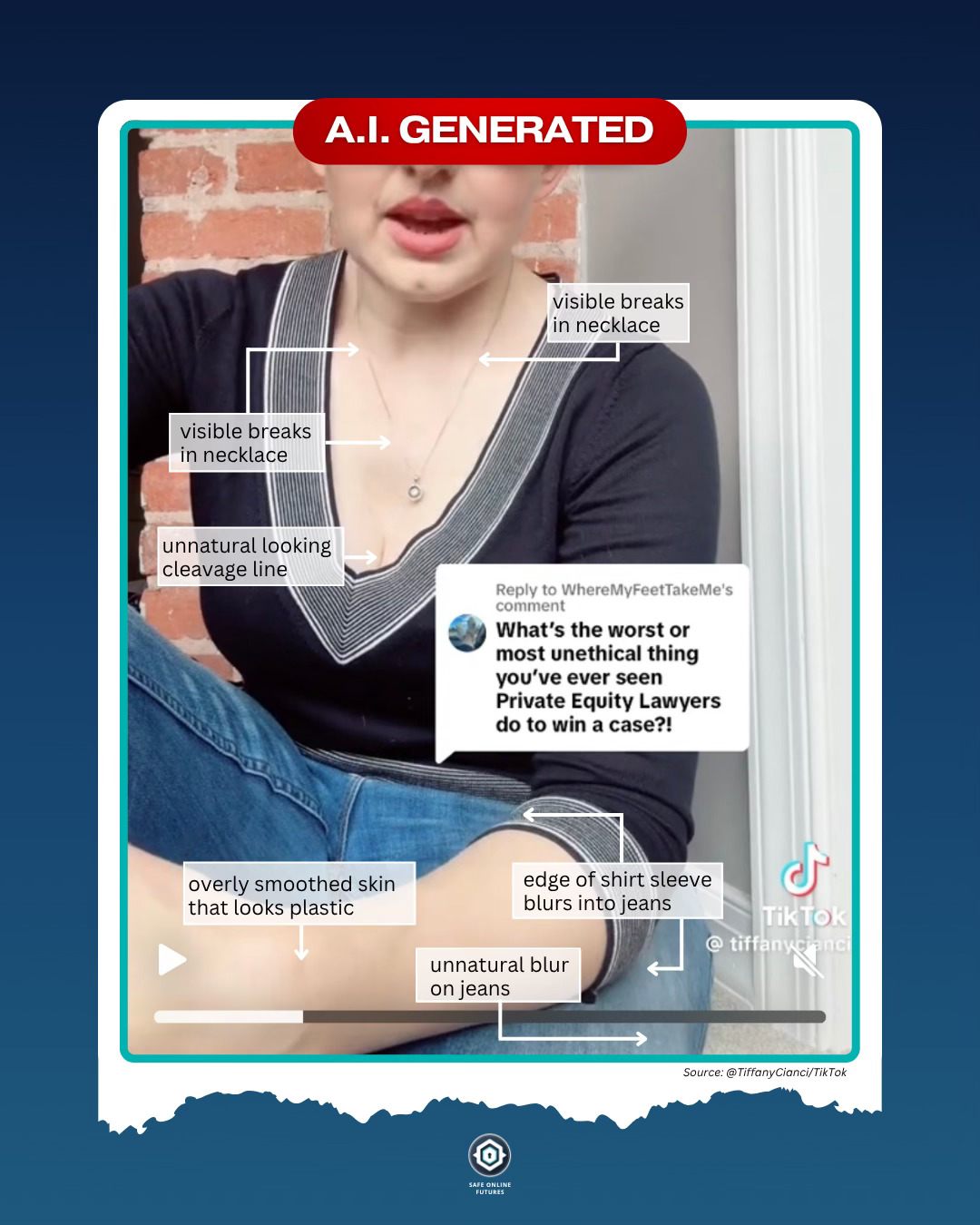
In her pinned video:
- The edges of her sleeves bleed into her jeans, both showing signs of unnatural blurring
- The cleavage line looks artificial and unnatural
- There are visible breaks in her necklace
- The skin is overly smoothed
- There's an uncanny visual consistency that suggests synthetic generation
In her response to my analysis: When I commented about AI indicators in her content, the Cianci account posted a defensive video. This follow-up contained even more obvious signs of synthetic content:
Hair that looks straw-like and renders inconsistently
Eyes that appear too sharp or cartoonish
Misshapen irises and blurred lower eyelids
Eyeglass frames that partially disappear
A reflection that should be sharp but appears blurred and out of focus
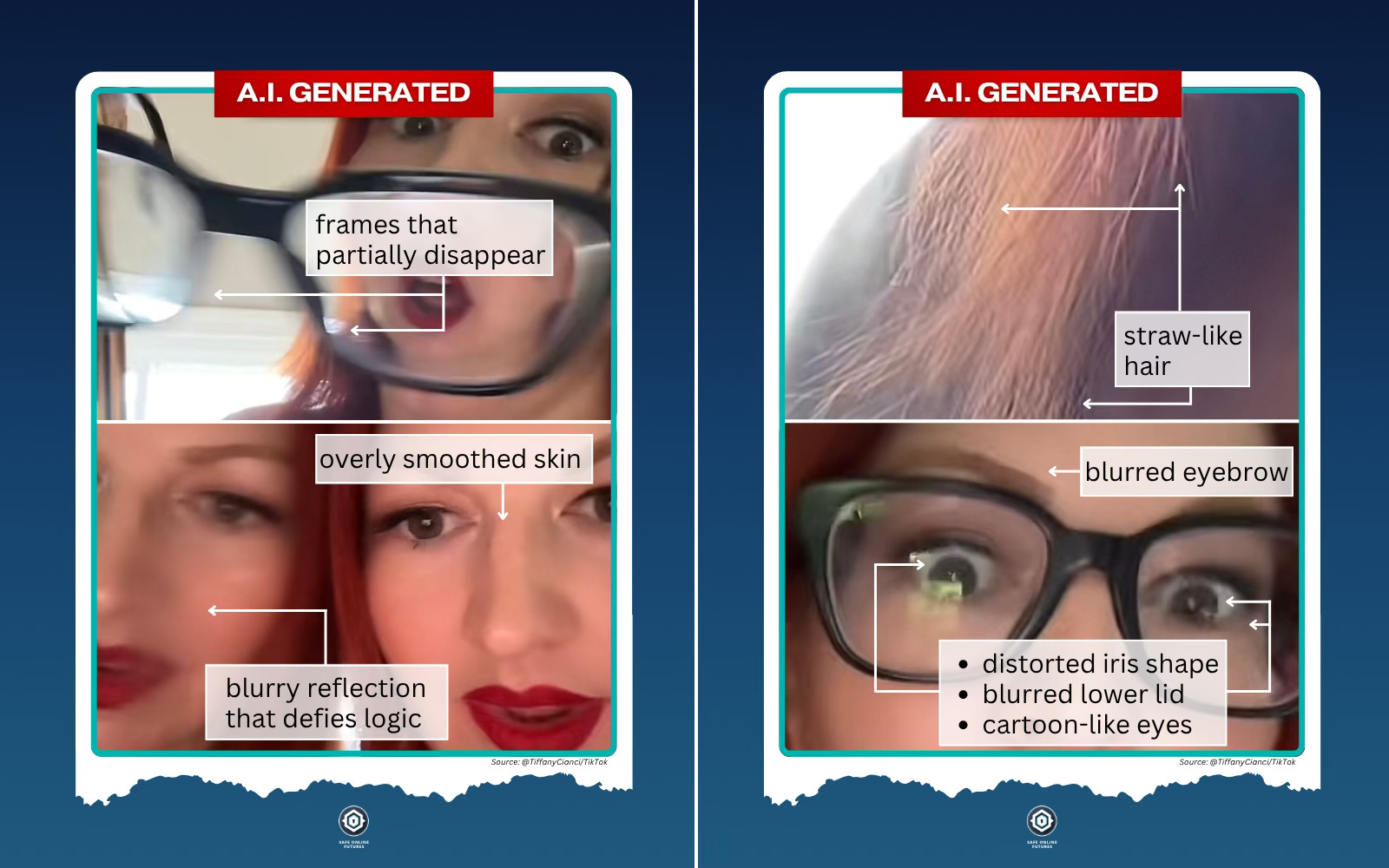
Screenshots from Cianci’s response video show further AI anomalies: glitching eyeglasses, distorted eye shapes, and synthetic hair textures.
These aren't subtle glitches or compression artifacts. These are the kinds of errors that occur when AI tries to generate complex visual elements but fails to maintain logical consistency.
The Defense Network: When Bots Protect Bots
Here's where things get really interesting. After I raised questions about Cianci's authenticity, the backlash was swift and coordinated.
Cianci herself, along with dozens of commenters, flooded my posts with defensive responses. Some claimed they'd met her in person. Others said they’ve seen her on livestreams. Many resorted to personal attacks, accusing me of harassment or spreading conspiracy theories.
But when I examined these defending accounts, I found something troubling: many showed clear signs of being AI-generated themselves.
These accounts typically featured:
- Profile pictures that appeared synthetic or recycled
- Photos and videos that showed common markers of AI
- Defensive language patterns that seemed scripted
- Little to no original content
This is how modern digital manipulation works. It's not just one fake account. It’s an entire ecosystem of synthetic personas designed to create the illusion of authenticity and consensus.
The Money Trail: Emotional Manipulation as Business Model
From the TikTok profile, the Cianci account links to a GoFundMe campaign that has raised over $16,000. The fundraising page echoes her video narrative: she's a small business owner targeted by a private equity firm after organizing franchisee resistance.
The campaign frames the persona as David fighting Goliath, struggling to protect her students and business. It claims she's already spent $300,000 in legal fees, with $40,000 more needed. The page also references her appearance on the front page of the Sunday edition of the New York Times in January 2023.
But here's the critical question: if the videos are synthetic, and if the New York Times images also show signs of AI generation, then who's actually behind this account? And why would someone go to such lengths to build sympathy, solicit donations, and insert themselves into national news?
The GoFundMe may just be the surface layer — an emotional hook. But what if the real goal isn't money… it's influence?
What This Means for All of Us
The Tiffany Cianci case isn't just about one potentially fake influencer. It's a window into how sophisticated digital manipulation has become — and how unprepared we are to deal with it.
When synthetic personas can build massive followings, generate emotional responses, and raise thousands of dollars, we're not just dealing with a technology problem. We're dealing with a trust crisis that strikes at the heart of how we consume information and make decisions.
The defenders will say she's real. The media has treated her as real. But the evidence suggests otherwise — and that should concern all of us.
Coming Next: When Institutions Amplify the Fake
Cianci's story doesn't end with TikTok and GoFundMe. Major news outlets have covered her story, lending institutional credibility to what may be a completely synthetic persona.
In Part 2, I'll examine how traditional media outlets can become amplifiers for AI-generated content — and what that means for the future of journalism and public discourse.