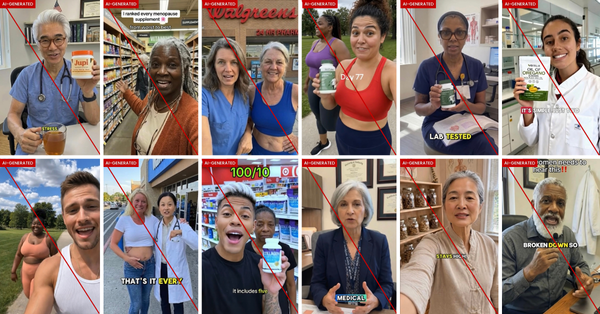
The Fake Face at Coachella
AI influencers are now a fixture of every major cultural moment. Disclosure is not required.
Earlier this month, a photo circulated on Instagram showing a woman in a “Future Mrs. Bieber” crop top being carried by pop star Justin Bieber at Coachella. His wife, Hailey, was laughing beside them. The caption read: “Hailey, honey, the shirt wasn’t for you.” It racked up nearly a million likes as of April 24, 2026. The account has 2 million followers. The woman doesn’t exist.
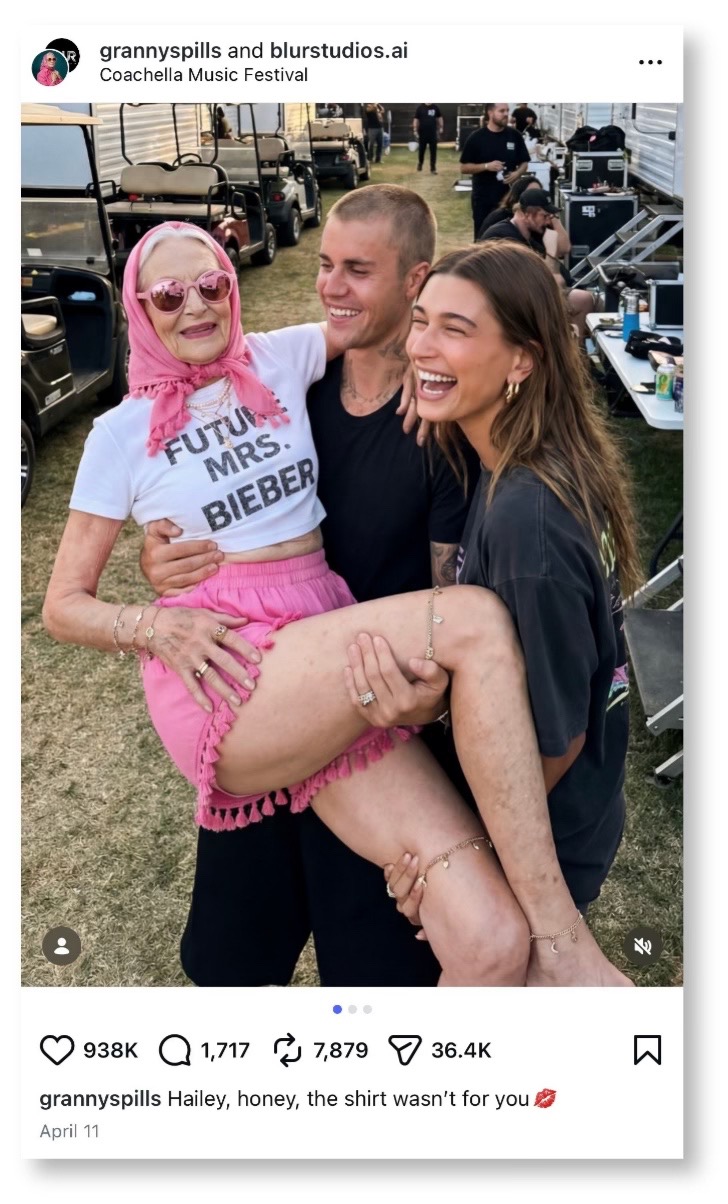
Her name is Granny Spills, and she is one of a growing number of AI-generated influencer accounts that have made themselves a fixture of moments like this one. Coachella has always been as much performance as event, a place built around being seen, where influencers have been manufacturing their presence, real and fabricated, for years. AI-generated accounts are simply the next iteration of that, and they have figured out exactly how the game is played.
The strategy is straightforward. Coachella is one of the most searched and followed cultural moments of the year. For an AI-generated account, attaching itself to that moment and placing a synthetic face alongside real celebrities in recognizable festival settings is a low-cost, high-return play. Include Justin and Hailey Bieber, or any recognizable celebrity face in your posts, and you are borrowing the attention of every fan who searches for them. The AI account gets followers, engagement, and in many cases, real revenue through brand deals or subscription platforms. There’s no way to know if celebrities whose likenesses are used consented to any of it. But in the attention economy, there is an argument that they benefit too. Every fabricated photo keeps their names circulating, feeds the algorithm, and extends their reach. Virality, manufactured or not, has value.
Among Granny Spills’ Coachella posts featuring real celebrities, only one carried any form of disclosure. The Future Mrs. Bieber photo was cross-tagged to Blur Studios, the AI company that created her. Their bio describes them as "birthing the world's most influential AI personalities." That tag was the disclosure. But every other post tells a different story. Posts featuring the Kardashian-Jenners, Billie Eilish and SZA, Sabrina Carpenter, and additional appearances with the Biebers carry no label, no tag, no disclosure of any kind.
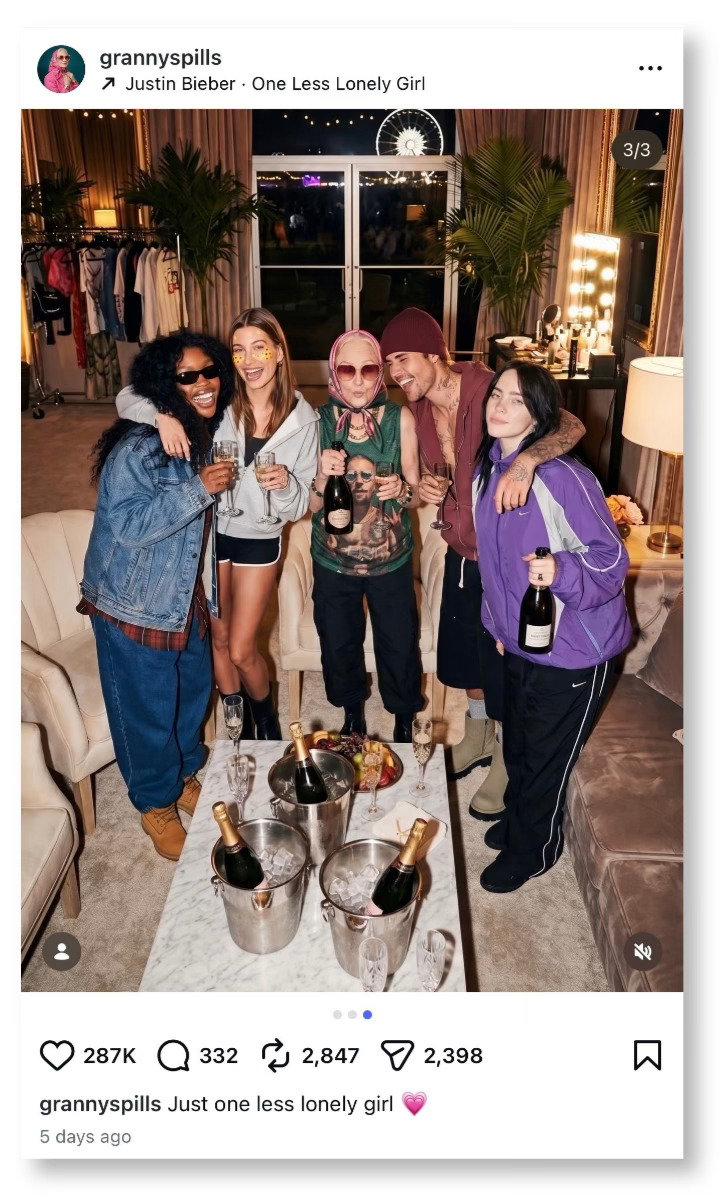
That pattern is telling. The only post that carried any form of transparency was a collaboration that benefited the studio behind her. The rest served no one's commercial interest in being transparent, so they weren't. This is what it looks like when disclosure is a marketing decision rather than an obligation. The audience's right to know is not part of the calculation. You get told what's real when someone has something to gain from telling you. If one of her photos lands in your feed, there is nothing to guarantee what you're looking at is real. You would have to click through to the account, read the bio, and know what you were looking for.
Most people don’t do that. Most people scroll.
She is not alone. Thousands of AI-generated influencer accounts are now active on Instagram and TikTok, producing content that is increasingly difficult to distinguish from the real thing. This is not a fringe phenomenon. It is an industry, and it is growing rapidly. The barrier to entry is low, the financial incentives are real, and the platforms have shown little urgency to intervene.
None of it is required to be labeled. There are no laws governing disclosure of AI-generated social media content. No federal standard. No platform-wide rules with any consistent enforcement. What appears in your feed is not required to be real, and no one is obligated to tell you so.
What to look for: Phrases like "digital creator" or "digital storyteller" in an account bio can be a soft signal — not proof, but worth a second look. Check whether individual posts carry any AI label, not just the account bio. Look for visual tells: movement that seems slightly off in videos, faces that are a little too smooth, backgrounds that don’t quite add up. And if a smaller account seems to have suspiciously high engagement or implausible celebrity access, that’s worth a second look.
As AI-generated content becomes cheaper to produce and harder to detect, these accounts will only multiply. The real question isn’t whether they’re everywhere. They already are. It’s whether people will notice as this becomes the new normal. And if they do, whether they’ll even care.
AI-generated content is everywhere and it's not required to be labeled. Stay informed.