The Outrage Machine — Manufacturing Rage: The Social Media Playbook
Part 2 — How Fake Fury Goes Viral
Social media algorithms don't just show us content — they reshape how we see the world, often in ways that benefit platforms more than people. This series breaks down exactly how that manipulation works and what we can do to fight back.
Picture this: A 15-second video clip goes viral. Within hours, it's everywhere — your timeline, your group chats, the evening news. People are furious. Demands for action spread like wildfire. But here's what you didn't see: the machinery that turned that single spark into a raging inferno.
The Five-Step Manipulation
Step 1: Plant the seed
Someone drops a piece of content designed to hurt. A clip stripped of context. A photo with a loaded caption. A claim that hits you right in the gut. Outrage travels faster than truth — and they know it.
Step 2: Trick the algorithm
Social media platforms are slot machines programmed to chase engagement. When that inflammatory post gets early reactions — likes, shares, angry comments — the algorithm reads it as "interesting content." So it pushes the post to more people who are likely to react the same way. Research proves it: anger and tribal hostility get more visibility than anything else.
Step 3: Amplify the signal
Now the bots and coordinated networks kick in. Fake accounts share identical talking points. Paid influencers echo the message to their followers. What looks like organic grassroots outrage is actually manufactured volume, designed to make you think everyone's talking about this.
Step 4: Strip the nuance
The message mutates as it spreads. Context disappears. Conspiracy theories get layered on. The angriest, most extreme takes rise to the top because they get the most engagement. People who see these variations over and over start to believe them. Skepticism becomes certainty. Questions become calls for action.
Step 5: Jump offline
Online rage becomes offline harm. Harassment campaigns. Institutional pressure. Protests that turn violent. Lives destroyed. The digital manipulation machine produces real-world consequences.
Why Every Click Feeds the Beast
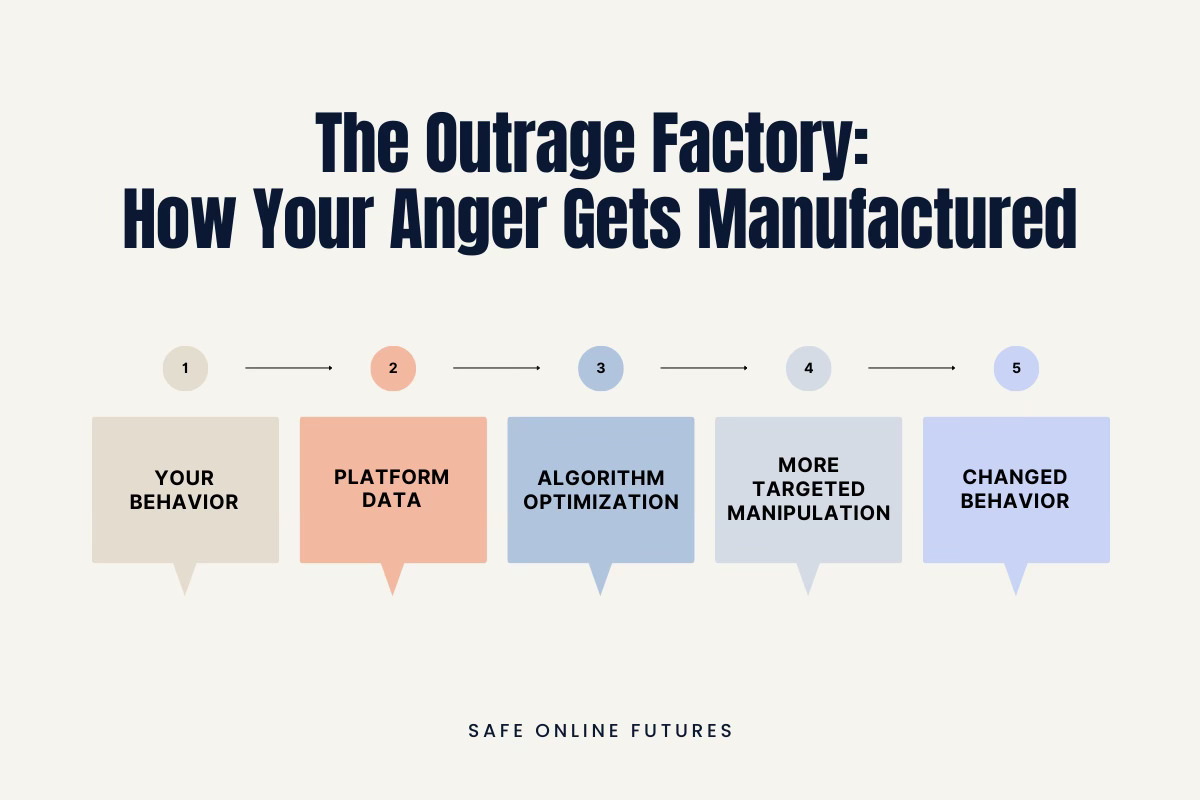
This isn't guesswork — it's data science. Every second you spend watching, every angry reaction, every share gets measured and fed into the machine. The algorithm learns which words, images, and tones provoke the strongest response from you specifically.
Then it optimizes. The next piece of content is slightly more targeted, slightly more inflammatory, slightly more personal. Over time, the system learns exactly which buttons to push to send you over the edge.
Your behavior → Platform data → Algorithm optimization → More targeted manipulation → Changed behavior
That's why one outrage post never stays alone. It becomes training data for the next attack.
The Illusion Everyone's Talking About It
You scroll through social media and see the same talking points everywhere. The same hashtag trending. The same outrage from account after account. It feels like the entire world is unified in anger.
That's manufactured consensus, created by:
- Bot networks pushing identical messages from thousands of fake accounts
- Coordinated posting that makes the same language appear across your feeds
- Paid amplification disguised as organic posts
- Algorithms that reward repetition, making repeated lies look like truth
When it seems like everyone agrees, most people stop questioning. Manufactured unanimity silences doubt and gives movements momentum they never earned.
The Real Stakes
This isn't just about annoying social media drama. Manufactured outrage:
- Destroys reputations overnight
- Drives harassment, doxxing, and death threats
- Forces institutions into panicked decisions
- Radicalizes people into real-world violence
The misinformation campaigns leading up to January 6th show us exactly where this leads when left unchecked.
Fight Back (And It's Easier Than You Think)
Pause before sharing. Give yourself one minute. If content is engineered to make you furious, it wants you to spread it.
Demand verification. One viral clip isn't consensus. Check multiple reputable sources and look for primary documentation.
Starve the bots. Every like, comment, and share teaches the algorithm what to push next. Don't be the training data.
Call out the mechanics. Point out suspicious patterns — identical language, coordinated timing, fake account networks — without getting into ideological debates.
Support real journalism. Subscribe to outlets that verify claims, provide context, and slow down the outrage cycle.
This Is Our Choice
The outrage machine works because we fuel it. Not because we're stupid, but because it's designed to hijack normal human reactions. The same networks that help us organize and connect get weaponized against us.
But here's the thing: we can break it.
If enough of us refuse to feed the machine — if we stop sharing in anger, stop reacting on impulse, stop amplifying obvious manipulation — it loses its power.
The public conversation belongs to us. It's time we took it back.
This is Part 2 of our series on social media manipulation. (Read Part 1 here) Next up: how recommendation algorithms target the vulnerable.