The Outrage Machine — The Algorithm’s Trap
Part 3 — One Click Can Spiral Into Extremism
Social media algorithms don't just show us content — they reshape how we see the world, often in ways that benefit platforms more than people. This series breaks down exactly how that manipulation works and what we can do to fight back.
Open TikTok. Scroll Instagram. Click one YouTube video. Within seconds, you've been catalogued — every pause tracked, every replay noted, every moment of hesitation recorded.
This data isn't collected to serve you better. It's ammunition. Algorithms use these behavioral fingerprints to map your psychological landscape, searching for cracks in your armor. They're not trying to understand you — they're hunting for ways to hook you.
And once they find your weak spots, they know exactly how to twist the knife.
When Personalization Becomes Predation
The system doesn't coddle vulnerable users with gentle suggestions or balanced perspectives. It accelerates their descent.
Watch this pattern unfold: A teenager clicks one innocent workout video. Suddenly her feed floods with extreme dieting tips, then content promoting anorexia, then full eating disorder communities. A lonely young man stumbles across one men's rights video and gets systematically funneled toward incel forums, misogynist podcasts, and influencers peddling rage. A conservative curious about current events finds himself immersed in QAnon conspiracies and violent fantasies.
This isn't personalization — it's predation at scale. The algorithm serves you the most extreme version of whatever might capture your attention, regardless of the psychological wreckage left behind.
The Addiction Engine
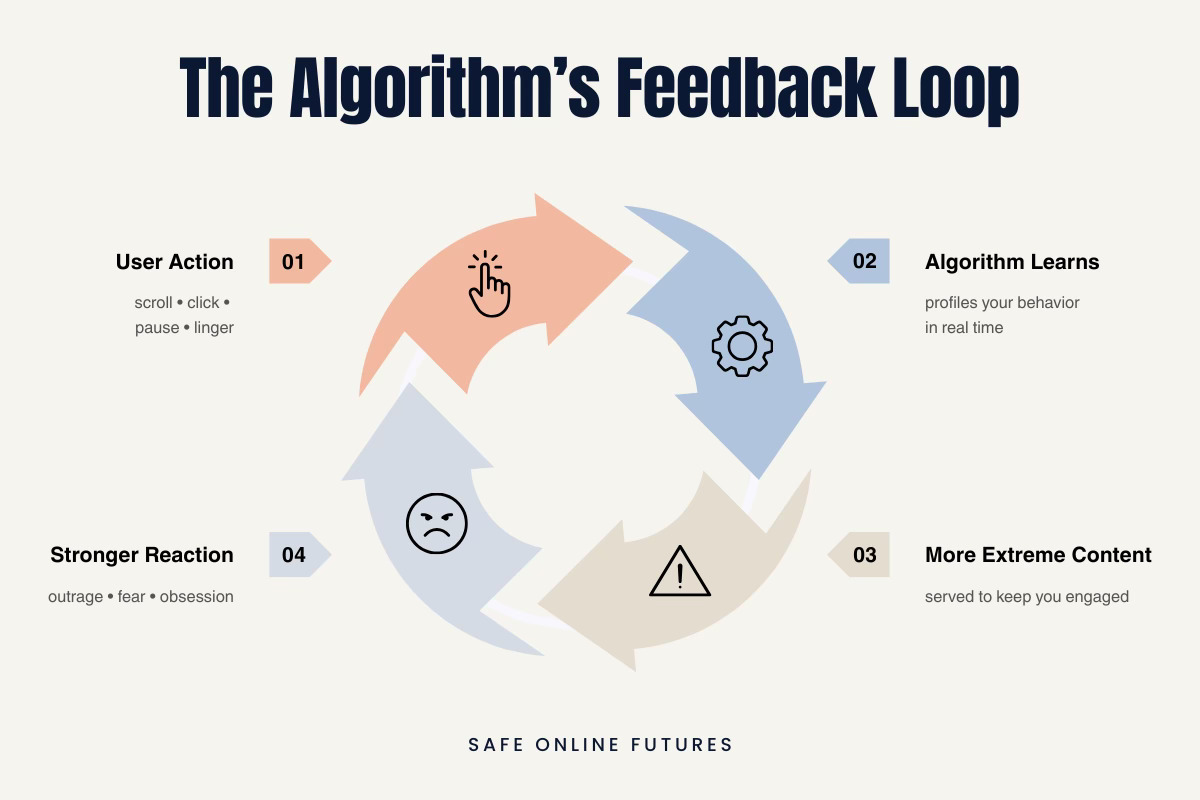
These systems work like digital slot machines, learning from every interaction. Each scroll, click, and pause teaches the algorithm what keeps you pulling the lever. But the platform doesn't just suggest content passively — it adapts in real time, doubling down on whatever triggers the strongest response.
Calm, thoughtful content rarely wins this game. The machine bets on outrage, obsession, and fear because these emotions generate the most engagement. The house always wins when human psychology is the game.
The Radicalization Pipeline
This isn't an accident — it's the business model. Algorithms are engineered to maximize engagement, and extremism is engagement gold. The progression follows a predictable script:
Curiosity leads to that first click. The click generates algorithmic suggestions. Suggestions introduce you to communities. Communities reshape your identity.
What starts as casual interest becomes core belief. The person who clicked one conspiracy video six months ago now sees the world through that lens entirely.
The Evidence Is Damning
Internal Facebook research revealed Instagram worsened body image issues for one in three teenage girls. Wall Street Journal investigators found TikTok could pipeline new users into eating disorder content within minutes of account creation. Mozilla researchers documented how YouTube's autoplay feature recommended extremist content to users who never searched for it.
Whistleblowers and independent researchers have repeatedly exposed the same truth: these harms aren't bugs in the system — they're features.
No One Is Safe
Vulnerability doesn't discriminate by age or demographic. A grieving parent seeking comfort gets nudged toward conspiracy communities that promise simple answers to complex tragedies. An isolated older adult looking for connection gets targeted by scammers who've perfected emotional manipulation. A college student struggling with depression gets served content that romanticizes self-harm.
The algorithm doesn't care about your wellbeing. It only cares about your data and your attention.
Same Blueprint, Different Masks
The tactics remain consistent across platforms:
- TikTok's For You Page creates addictive content loops
- YouTube's autoplay drags users down rabbit holes
- Instagram's suggested reels manufacture endless scrolling
- Facebook's group recommendations build echo chambers
Different interfaces, identical psychology. The goal is always the same: pull you deeper, faster.
When Digital Poison Becomes Real Violence
These algorithmic manipulations don't stay contained online. When vulnerable people get systematically radicalized, they're more likely to adopt extremist worldviews—and sometimes act on violent impulses. We've witnessed this pipeline produce mass shooters, conspiracy theorists who storm government buildings, and movements built on manufactured outrage.
The algorithm doesn't just reflect your interests. It engineers your identity over time.
The Stakes Couldn't Be Higher
This is why the Outrage Machine represents such a profound threat. It doesn't just curate what you see — it shapes who you become.
Nobody voted for children to develop eating disorders through algorithmic manipulation. Nobody chose for lonely people to be transformed into extremists through targeted content. But this is the world we've accepted by treating these platforms as neutral spaces rather than the behavioral modification systems they actually are.
Change is possible, but it requires recognizing the problem's true scope. Whistleblowers continue exposing internal research. Lawmakers are proposing transparency requirements and user protections. Parents and educators can demand digital literacy education. The harm is engineered — but so can be the solutions, if we have the will to implement them.
We cannot afford to treat this as someone else's problem. Algorithms are weapons of mass manipulation, and they're being deployed against the most vulnerable members of our society for profit. If we want a healthier digital future, we need to fight back against systems designed to exploit human psychology at scale.
This is Part 3 of our series on social media manipulation. (Read Part 1 and Part 2) Next up: · Behavioral Metrics as Ammunition: How You Become the Lab Rat