The Outrage Was the Strategy
How AI turned Sydney Sweeney’s ad into a profit machine for everyone but the audience.
The Sydney Sweeney controversy wasn't a PR crisis. It was a PR masterpiece. What looked like an accidental culture war skirmish was actually a carefully orchestrated demonstration of how AI, algorithmic amplification, and manufactured personas now work together to extract profit from our attention. In 2025, brands don't wait for outrage to find them — they create artificial people to generate it.
The Setup Was Too Perfect
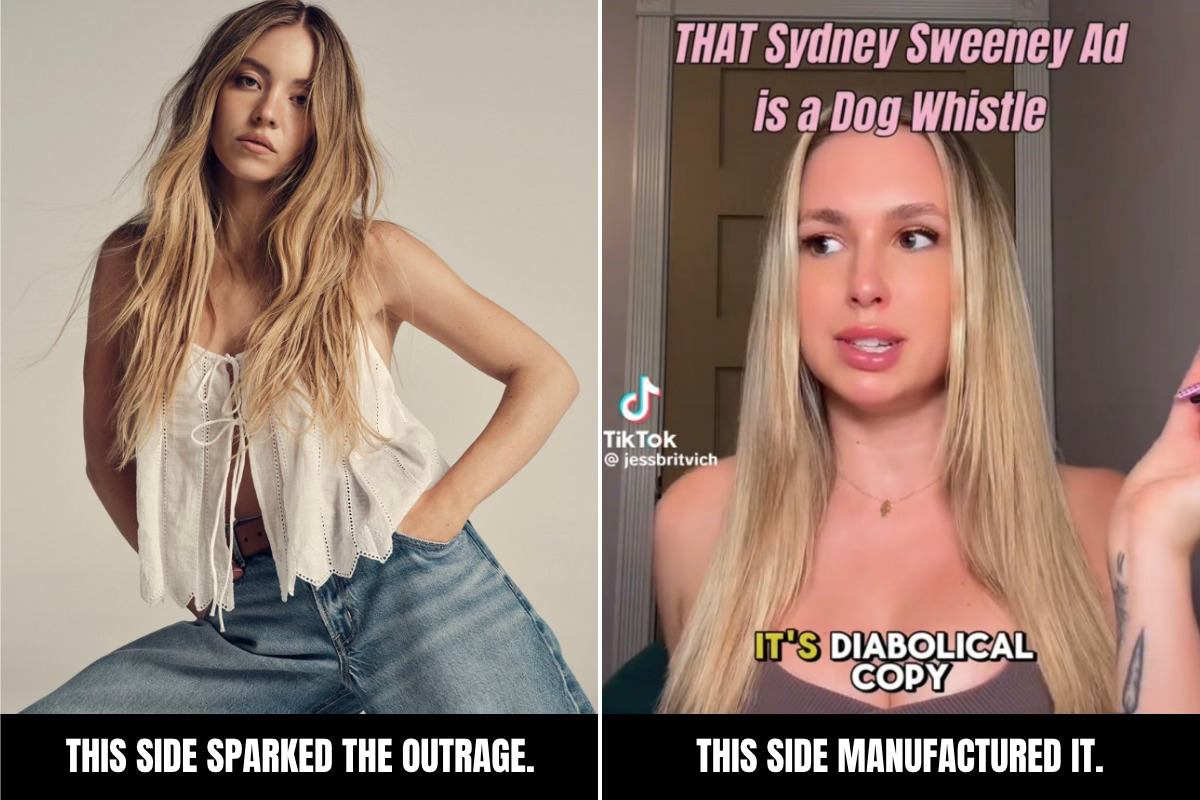
American Eagle's campaign featuring Sydney Sweeney and the "great genes/jeans" tagline appeared designed to walk the razor's edge of controversy. The imagery showed Sweeney in tight denim, striking poses that were provocative enough to trigger interpretation but vague enough to maintain plausible deniability. The tagline itself was a linguistic trap — innocent on its face, loaded with potential meaning for anyone looking to find it. The phrasing was bait — calculated to trigger accusations of eugenics, white supremacy, and coded messaging. Even the campaign images themselves showed subtle AI artifacts, suggesting the entire ecosystem—from official marketing to organic criticism — was artificially constructed.
This wasn't sloppy messaging. This was controversy as product design.
Savvy marketing and PR executives now leverage AI to manufacture controversy with surgical precision. They knew this eugenics accusation would bait contrarians on the opposite end to blame it all on "wokeism" and anti-beauty sentiment. This dual-sided outrage wasn't an accident or miscalculation — it was the entire strategy. AI systems can map cultural fault lines, predict exactly which messaging will generate maximum engagement from opposing demographics, and orchestrate controversy that feeds both sides of any cultural divide. This is the Attention Economy in its purest form: manufactured conflict designed to harvest emotion and monetize outrage from every possible angle.
The Outrage Economy Has Gone Industrial
What followed the campaign launch was a textbook case of manufactured controversy amplification. The "backlash" materialized with suspicious speed and coordination. Sock puppet accounts and contrarian influencers seeded outrage across platforms. Algorithms, trained to surface emotionally charged content, did the rest — feeding the controversy to real users who engaged authentically with artificially constructed rage.
The genius was in the asymmetry. According to detailed reporting by Politifact, most of the criticism came not from progressive voices but from conservative figures like Vice President JD Vance, White House Communications Director Steven Cheung, and TV personality Megyn Kelly, who publicly attacked critics for being "anti-beauty" and "anti-American." Vance's comment on the Ruthless podcast was particularly revealing: "My political advice to Democrats is: continue to tell everybody who thinks Sydney Sweeney is attractive that they're a Nazi."
But here's the key: No major Democratic officials had actually condemned the ad. None. CNN White House producer Alejandra Jaramillo confirmed that "no prominent Democratic party leaders or officials have commented on the ad." The entire narrative was largely a right-wing media construct, with Fox News devoting over 85 minutes to coverage—far more than any other outlet, according to Media Matters.
What appeared to be bipartisan cultural warfare was actually partisan theater, performed for commercial gain.
When the Critics Aren't Real
But the sophistication of this manufactured controversy goes even deeper. Among the voices that helped seed outrage was Jess Britvich, a TikTok influencer whose bio describes her as covering "Internet Culture and Politics." Her video criticizing the Sydney Sweeney ad went viral, garnering 3.2 million views and nearly 500,000 likes. In it, she called the campaign a "dog whistle," arguing that the ad had less to do with denim and more to do with "genes, lineage, and reproductive value."
The problem? Britvich's viral video shows clear signs of AI generation: anatomical irregularities, missing ribbed texture on her clothing, hair patching and blending inconsistencies. If the video was AI-generated, the question becomes unavoidable: is Jess Britvich even a real person?
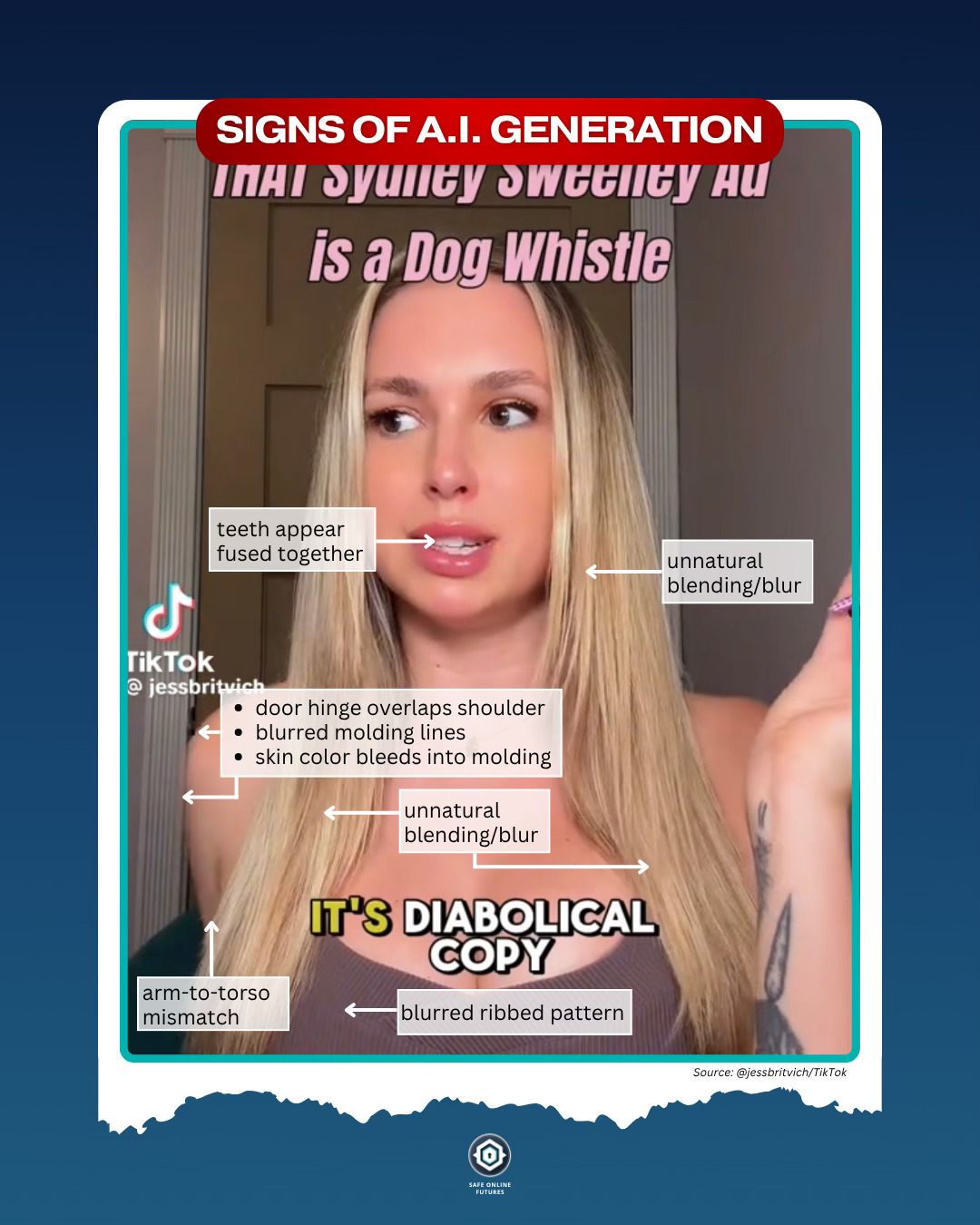
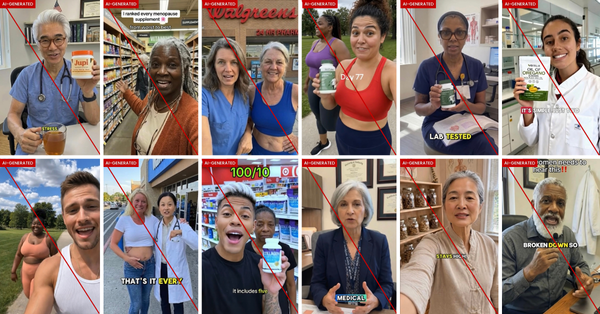
This represents a new frontier in manufactured controversy: AI-generated influencers masquerading as authentic human voices. These artificial personas can be deployed instantly to seed outrage, scaled infinitely across platforms, and optimized continuously for maximum engagement — all while appearing to be genuine cultural critics with real followers and authentic opinions.
The implications are staggering.
Millions of real people engaged emotionally with criticism that may have come from a completely fabricated persona. They shared, commented, and argued based on the manufactured opinions of someone who might not exist. And, because the technology is not required to be labeled, they had no way of knowing they were being manipulated by an artificial intelligence designed to harvest their attention and emotion.
Everyone Wins Except the Audience
The profit structure reveals the true sophistication of modern controversy manufacturing:
Sydney Sweeney achieved cultural saturation without risking her brand. The controversy kept her name trending while the backlash focused on the campaign, not her personally.
American Eagle received millions in free earned media and saw its stock rise 10%. The campaign generated more attention than any traditional advertising buy could have purchased.
Right-wing media got fresh outrage content that drove engagement, ratings, and political influence. The controversy provided weeks of programming material.
Social platforms benefited from increased time-on-site as users engaged with emotionally charged content. Controversy drives the algorithmic engagement that translates directly to advertising revenue.
Mainstream media found easy content that guaranteed clicks and shares. The story wrote itself and fed the perpetual hunger for trending topics.
The only group that didn't profit was the audience — the people whose genuine emotions were harvested and monetized through engineered controversy.
When Reality Becomes Performance
This represents a fundamental shift in how controversy operates in the attention economy. Traditional PR crises were usually accidental — brands scrambling to contain genuine backlash from unforced errors. What we're seeing now is controversy as intentional product, carefully calibrated to generate engagement without crossing lines that would cause actual brand damage.
The sophistication extends beyond individual campaigns. AI systems now help identify the precise cultural pressure points most likely to generate viral controversy. They can model how different demographics will respond to specific messaging, predict which platforms will amplify which narratives, and optimize controversy for maximum engagement with minimal real-world consequences.
We're entering an era where distinguishing between authentic cultural discourse and manufactured controversy becomes nearly impossible. When outrage becomes a commodity, when emotion becomes raw material for algorithmic processing, when even the users expressing righteous anger might be artificial, what happens to genuine cultural conversation?
The Question That Matters
The Sydney Sweeney controversy forces us to confront an uncomfortable reality: if our emotional responses are being systematically harvested through engineered controversies seeded by artificial personas, what exactly are we fighting over?
When the outrage is fake, when the backlash is manufactured, when the critics might not even be real, and when even the cultural battle lines are drawn by marketing algorithms, are we engaging in meaningful discourse or just feeding systems designed to monetize our passion?
The answer matters because controversy-as-product represents more than clever marketing. It's the industrialization of cultural manipulation, the transformation of our most genuine responses into raw material for profit extraction. And until we recognize the difference between authentic outrage and manufactured emotion — and between real people and artificial personas — we'll keep getting played by systems that profit from our anger.
The real scandal isn’t the ad. It’s that we’re living in a world where even our rage is synthetic — and the voices stoking it might not exist at all.
This is part of an ongoing series on synthetic celebrity — how AI and algorithmic design are quietly redefining what passes for real. Each week, I break down the mechanics of AI-driven media manipulation: how it works, why it works, and how to spot it before it rewrites what you think you know.