The Protest Photo That Fooled the News
A single AI-altered image ran in The Atlantic, NPR, The Guardian, and USA Today — with no disclosure.
Last week, mainstream outlets — including The Atlantic, NPR, The Guardian, and USA Today — ran what appeared to be photos of anti-Trump protests. One image in particular, showing a demonstrator dressed as the Statue of Liberty, circulated widely across platforms.
It looked like classic photojournalism: handheld framing, natural light, and candid emotion. But look closer.
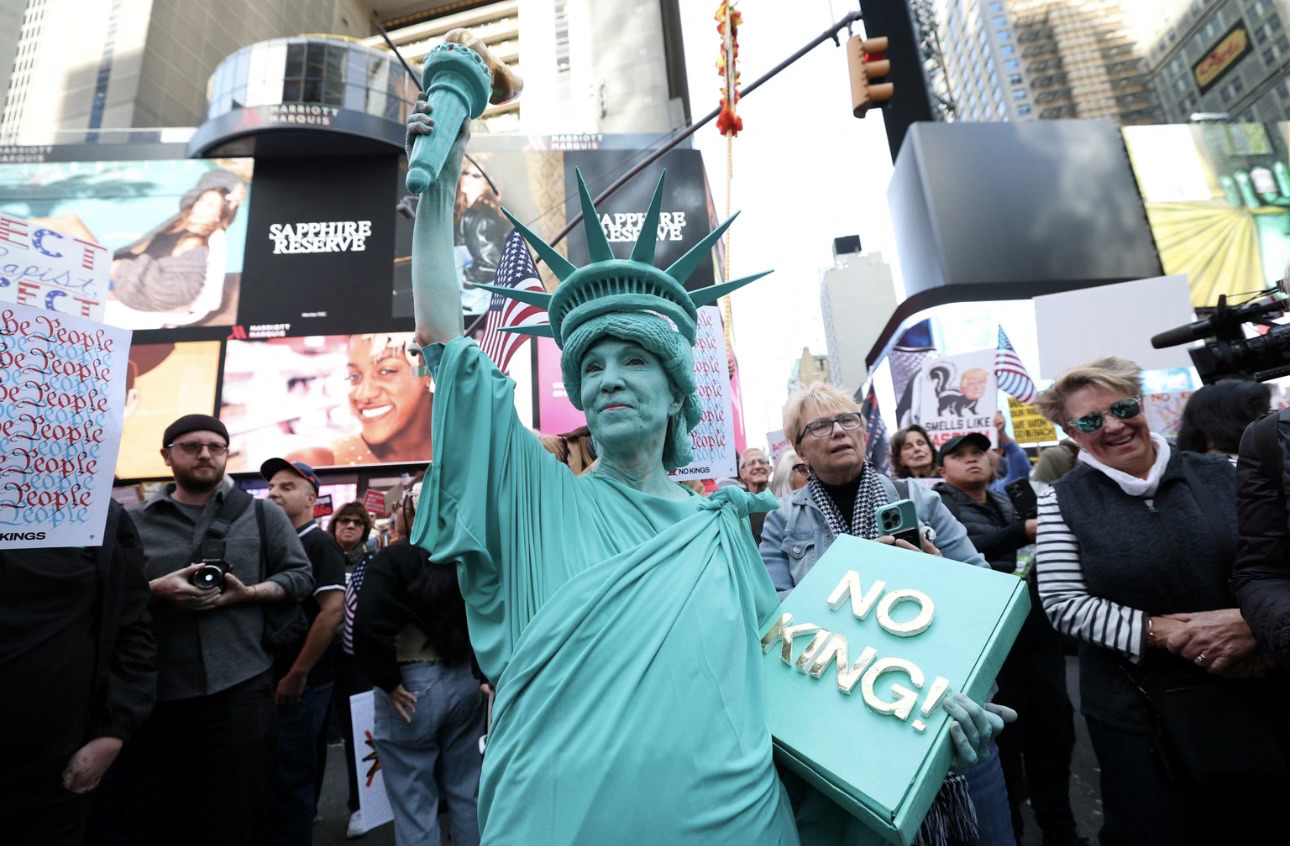
The details tell another story.
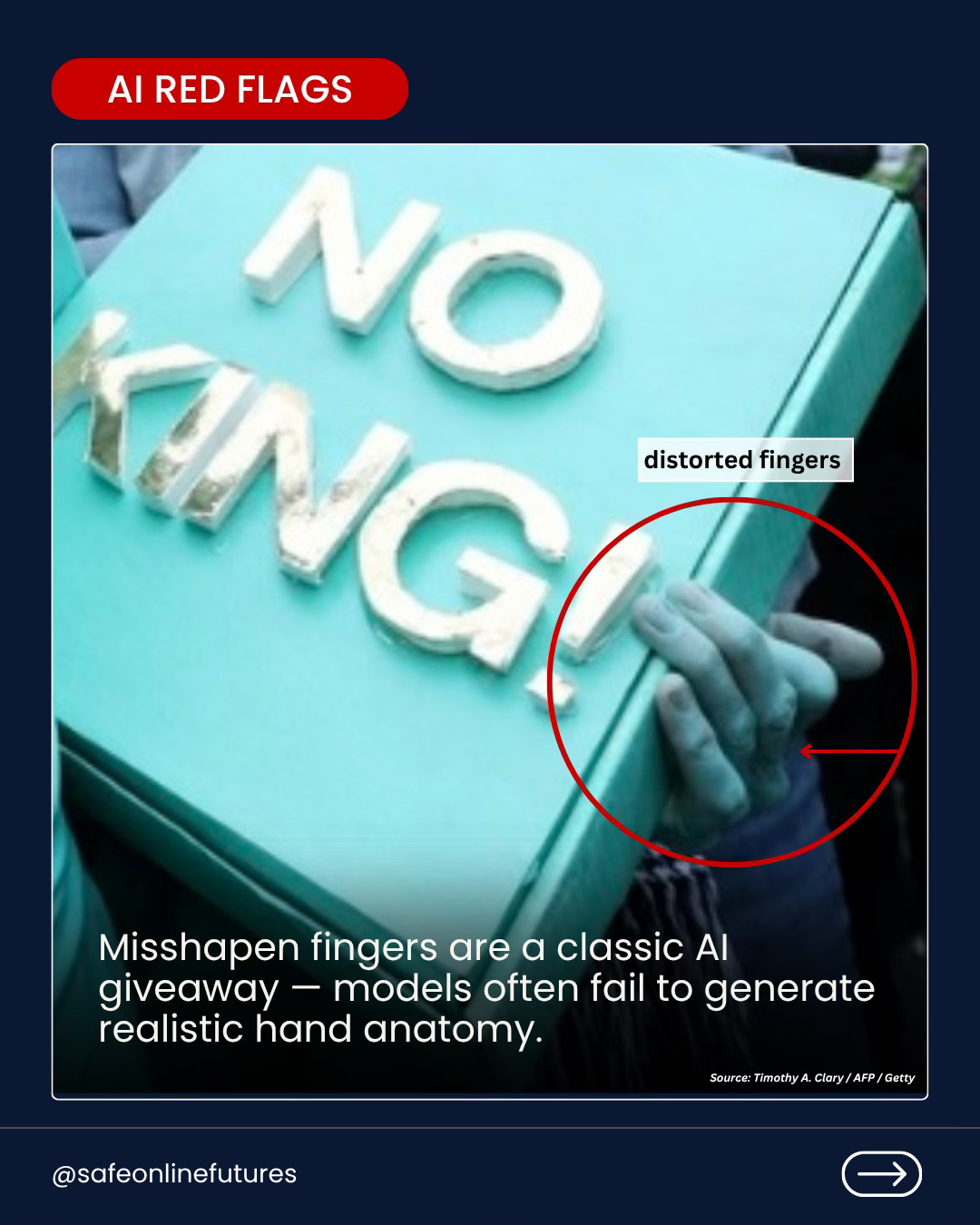
Look first at the figure’s hand. The fingers distort and curve in unnatural ways — a classic AI rendering failure.
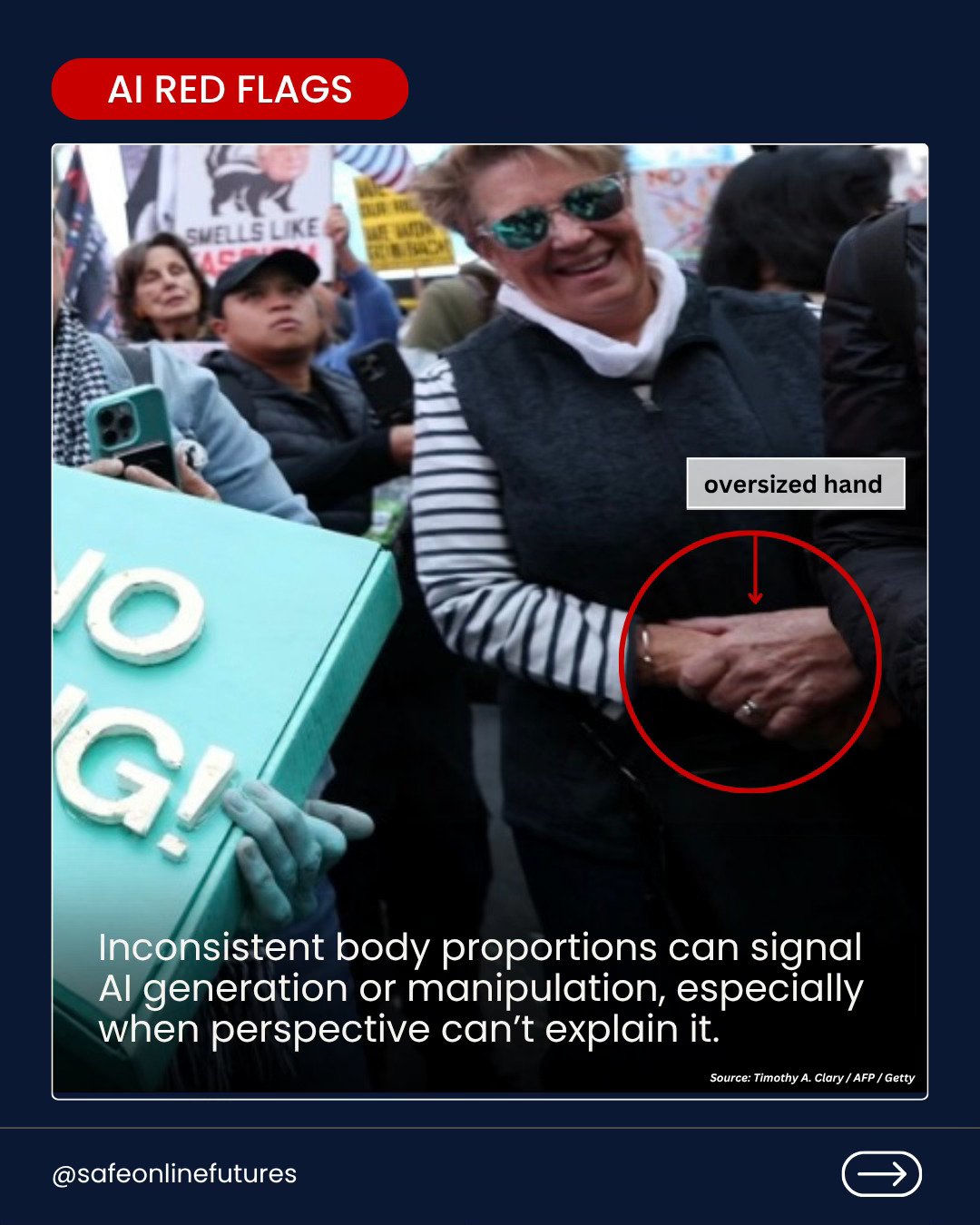
To the right of the frame, another anomaly appears: a woman’s hand that’s proportionally too large for her body. The shape and lighting don’t match the surrounding scene.
Finally, look at the signs in the background. They look like words — but they aren’t. The letters smear and blur into each other, forming shapes that mimic text but don’t spell anything at all.
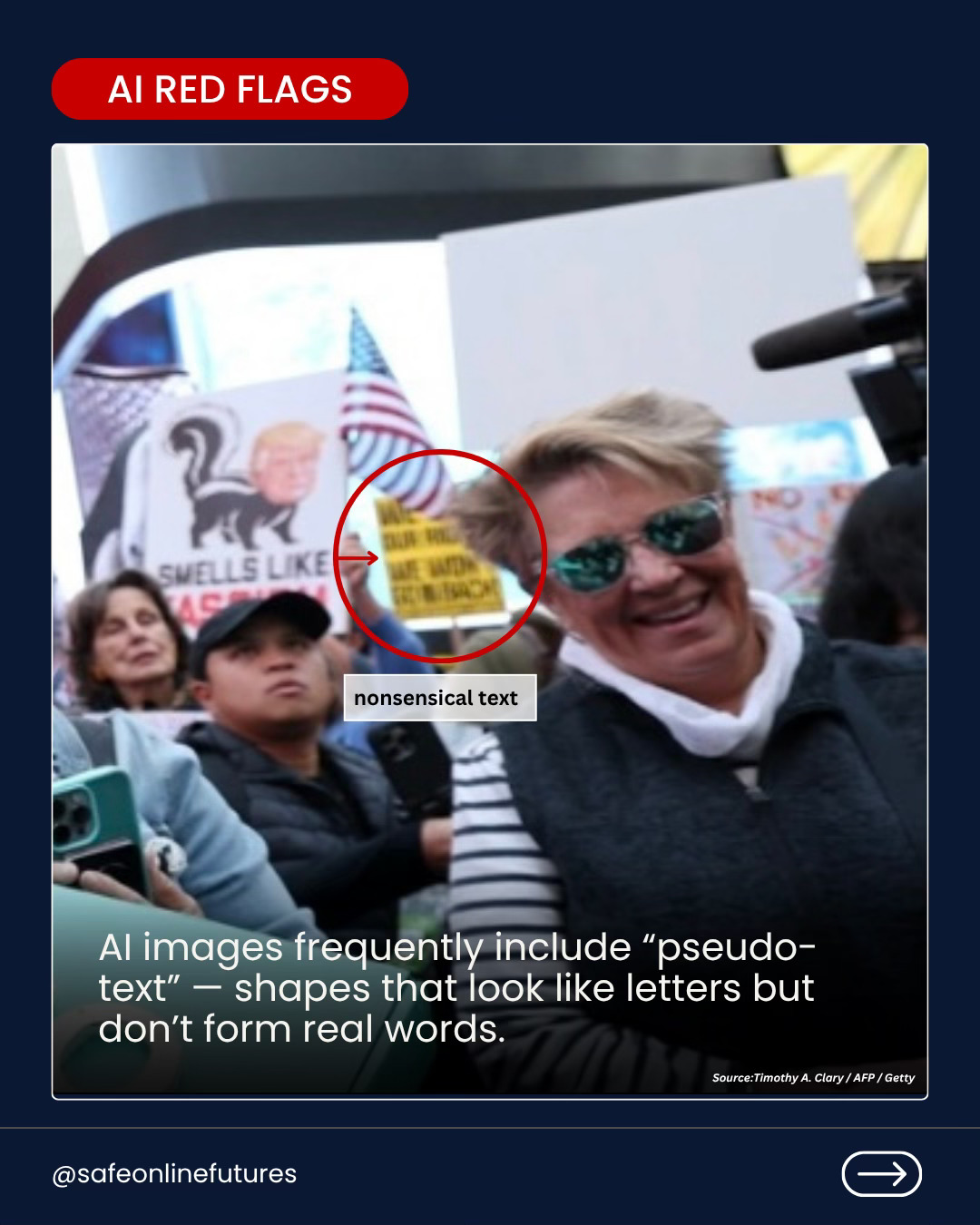
Each of these flaws points to the same conclusion: this image was likely generated or heavily manipulated with AI tools. Yet not a single outlet disclosed that possibility.
This isn’t about one picture. It’s about what happens when the speed of news outruns the duty to verify. When synthetic imagery is treated as documentary evidence, it doesn’t just mislead — it retrains the public eye to accept illusion as truth.
Every fake photo trains you to stop questioning what’s real.
Exposing how media manipulation, AI, algorithms, and the attention economy are rewriting reality. Subscribe for free to receive insights into the forces reshaping truth in the digital age.