The White House Released AI-Generated War Photos
And the media ran with them — without asking a single question.
We’re told there was a major U.S. airstrike in Iran. We’re told top officials gathered in the Situation Room to manage the fallout. We’re shown the photos to prove it. But what happens when the photos don’t look real?
The White House released a series of images meant to convey leadership under pressure — a president surrounded by top military and intelligence officials, eyes locked on screens, the room dimly lit. These weren’t leaked photos. They were distributed intentionally, across official channels, to shape the narrative. And they show unmistakable signs of AI generation.
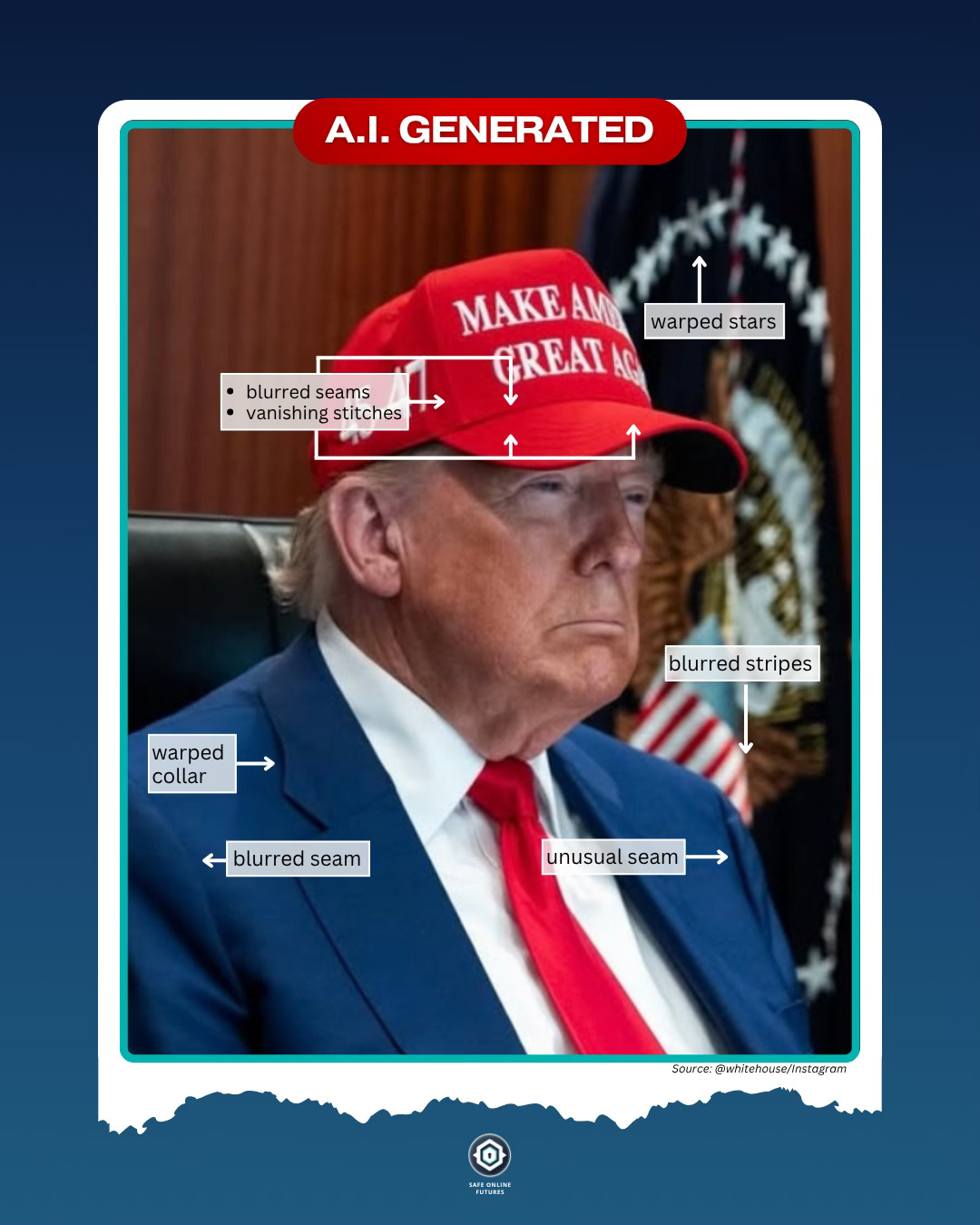
The image anomalies are obvious to anyone who knows what to look for: warped fingers, distorted text, inaccurate flags, strange lighting artifacts, and distorted typography. These aren’t compression glitches. They’re symptoms of generative fill and synthetic construction.
This isn’t just about digital cleanup. It’s about propaganda.
The Situation Room image wasn’t a behind-the-scenes glimpse. It was an AI-crafted visual asset, engineered to send a message: We’re in control. The president is leading. America is striking back.
And it didn’t stop there.
Trump’s televised address to the nation showed facial artifacts and frame glitches — hallmarks of synthetic rendering. The Pentagon briefing featuring Defense Secretary Pete Hegseth and Chairman of the Joint Chiefs of Staff Dan Caine wasn’t immune either. Suit details lacked uniformity. Movements were, at times, glitchy. Eye movements lacked human irregularity. These visuals didn’t just look off. They looked built.
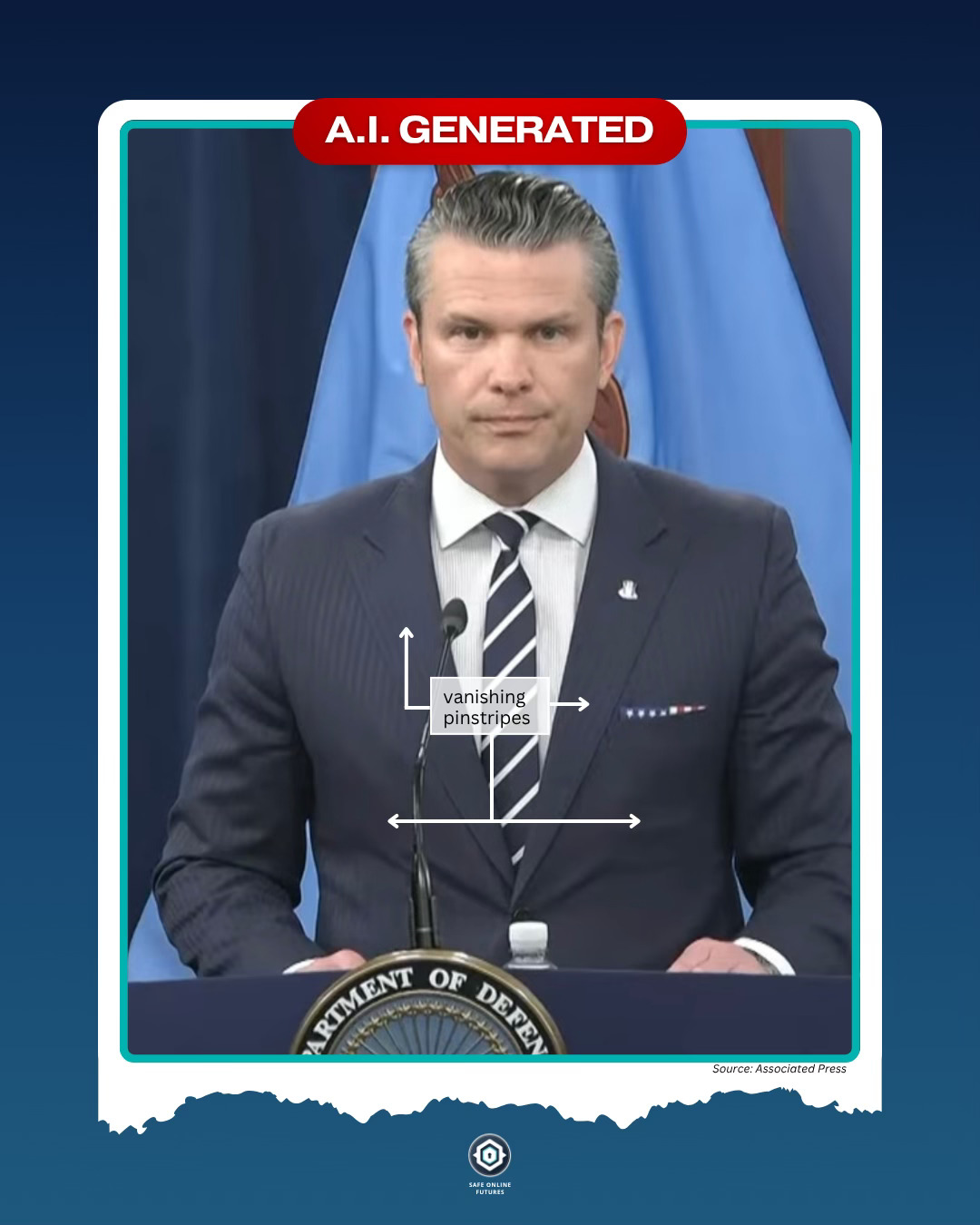
This was a coordinated rollout of synthetic media — three major visuals deployed to craft the illusion of competence, power, and victory. It was AI propaganda, pushed from the highest levels of government.
And the press didn’t just accept it. They amplified it.
The Washington Post, AP News, and Fox News all published the Situation Room images with headlines that emphasized access: “White House photos show rare look inside the Situation Room as Trump authorizes strikes in Iran” or “White House releases Situation Room photos from when U.S. struck Iran sites.” Not one raised questions about the anomalies in the photo. Not one held the government accountable for pushing out synthetic content during a moment of international crisis.
In a rush to reinforce the message of control and credibility, the media helped sell a fabrication.
Let’s be clear: this isn’t about denying that events occurred. It’s about refusing to accept fabricated imagery as acceptable evidence for those events. When generative AI is used to construct official wartime visuals — and the press packages them as truth — we’re not being informed. We’re being manipulated.
This is modern propaganda. It’s clean, fast, and frictionless.
No battlefield footage needed — just a fake hat seam, a synthetic tie, and an audience that won’t look twice.
If the Situation Room, Trump’s address to the nation, and the Department of Defense press briefing are all synthetic, what else is? How many of the visuals that shape our understanding of geopolitics are simulations dressed as facts?
We’re in a moment where the institutions we’re told to trust are using AI to fabricate the appearance of leadership. And the media, instead of investigating that fakery, is distributing it at scale.
The government faked it. The media published it. And the public believed it.
Want to see the signs for yourself? View the full photo breakdown on Instagram / Facebook / TikTok / LinkedIn.
This newsletter exists to expose how AI is being used to manipulate public perception. If that matters to you, consider subscribing and sharing this with someone who still trusts what they see.