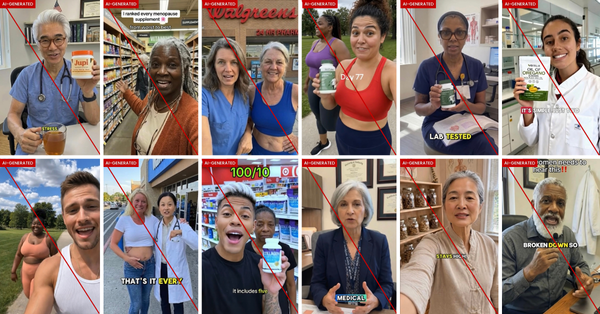
This Photo Cost You $220 Million. Look Closer.
A government-produced image, a compromised contract, and some things that don't quite add up.
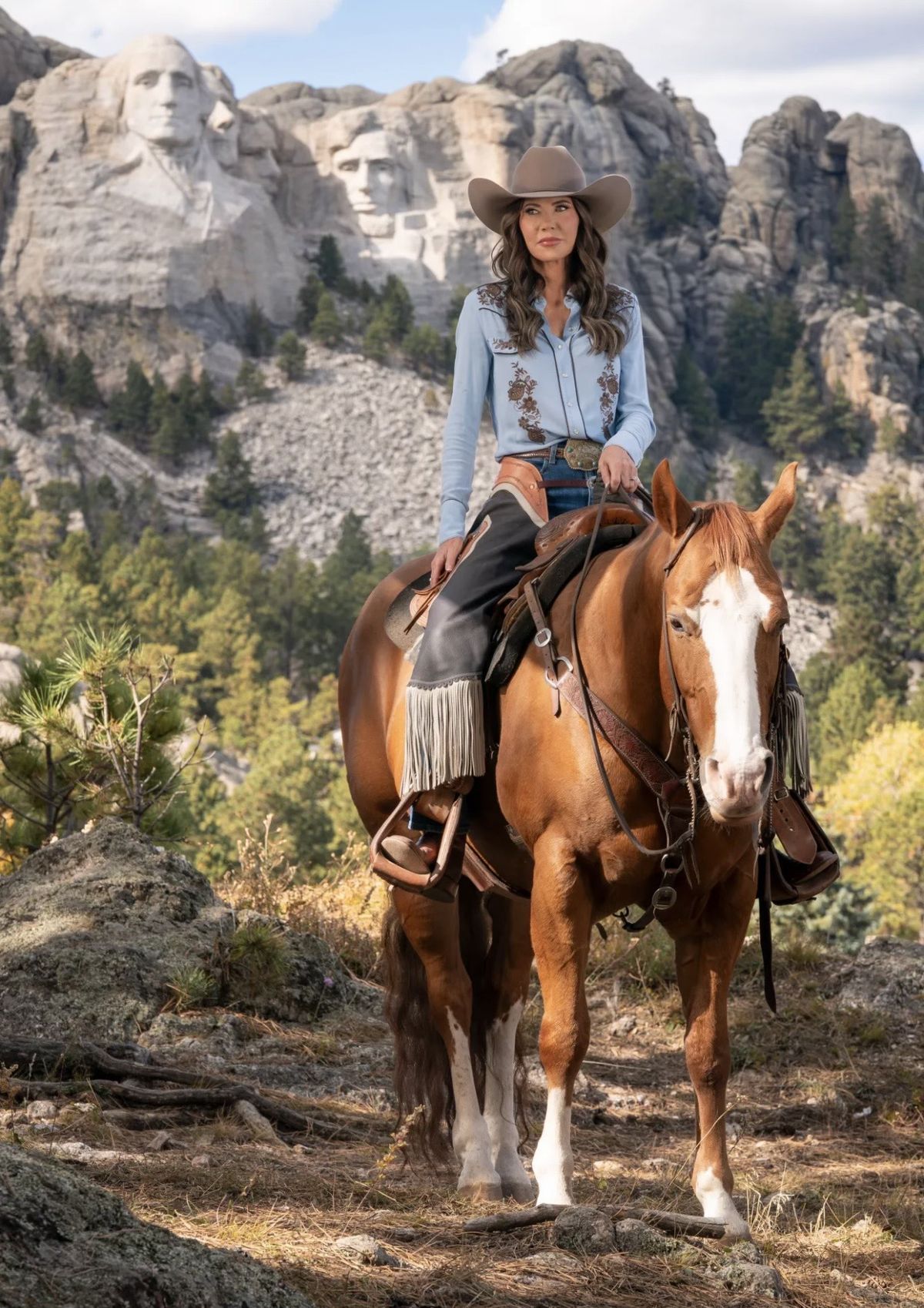
On October 2nd, while the federal government was shut down, then-Secretary of Homeland Security Kristi Noem rode a horse in front of Mount Rushmore for a taxpayer-funded ad campaign. The photo above is from that shoot. It deserves more scrutiny than it’s gotten.
The Story
ProPublica recently reported that the DHS ad campaign this photo comes from has cost American taxpayers $220 million. Noem described the campaign as a crucial tool to stem illegal immigration. The contracts were awarded without competitive bidding, with DHS citing a border “emergency” to bypass the normal process. One of the primary beneficiaries? A political consulting firm called the Strategy Group — run by the husband of Noem’s own DHS chief spokesperson. The conflicts of interest are significant enough that federal contracting experts quoted in the ProPublica piece used the word “corrupt.” That’s the context for this photo. Now look at it again.
Look Closer
Two things in this image are worth examining carefully.
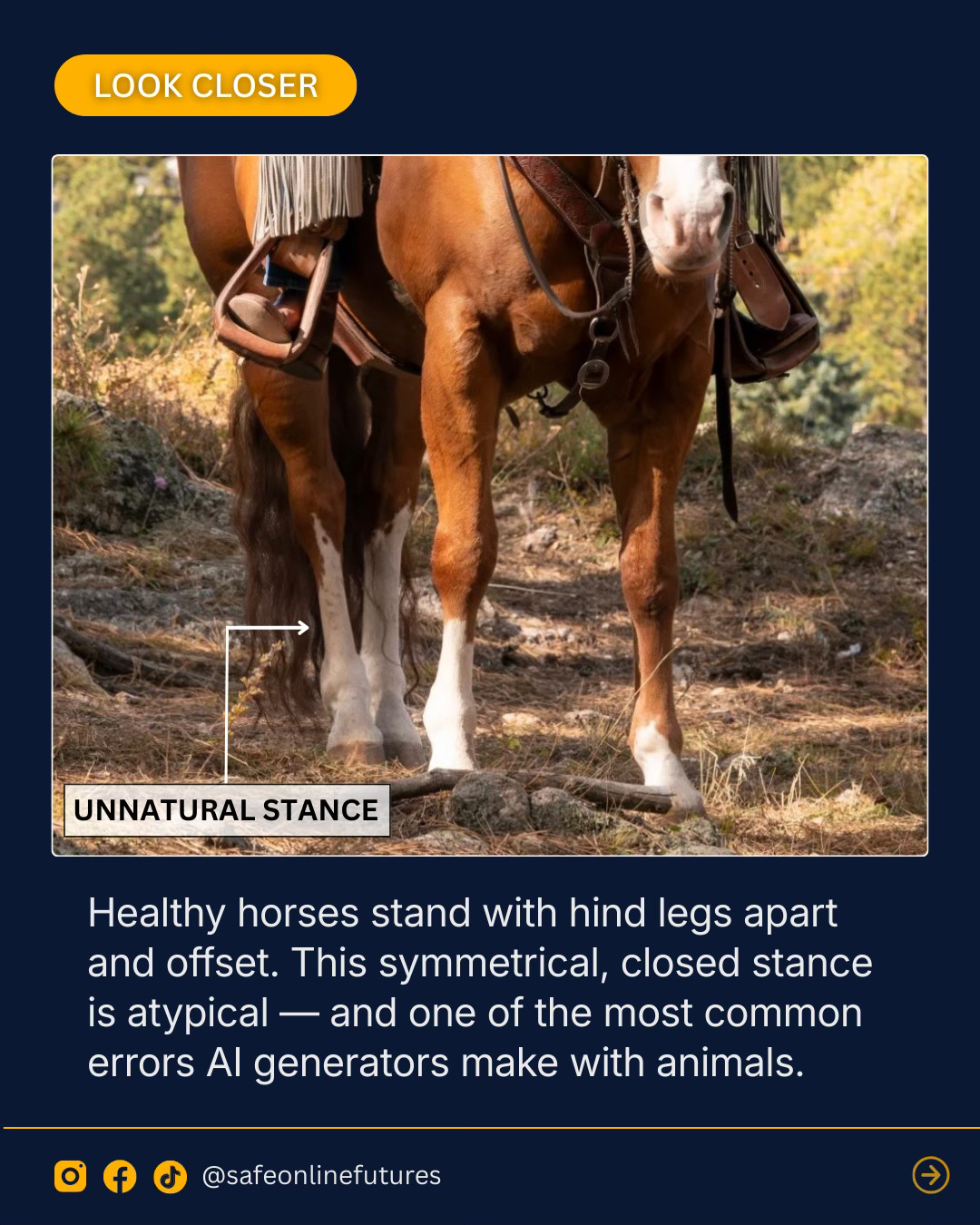
The first is the horse’s hind leg stance. Healthy horses at rest typically stand with their hind legs slightly apart and offset. In this image, the hind legs appear unusually close together and symmetrically placed — a posture that, in a real horse, can indicate discomfort or a health condition. It also happens to be exactly the kind of anatomical error that AI image generators routinely produce, because they don’t truly understand how four-legged animals distribute weight and stand naturally.
The second observation is more technically specific, and it’s the stronger one. Look closely at the upper inner edge of the horse’s left hind leg. The tail hair appears to contour and outline the edge of that leg almost perfectly, and there’s a visible color differential between what appears to be tail hair and the horse’s natural coat. Organic hair doesn’t behave this way. Real tail hair falls according to gravity. It doesn’t trace the outline of a leg beneath it. What you’re looking at is consistent with a masking artifact, the kind produced when an AI model or image editor composites elements together and the layers don’t blend correctly at their edges.
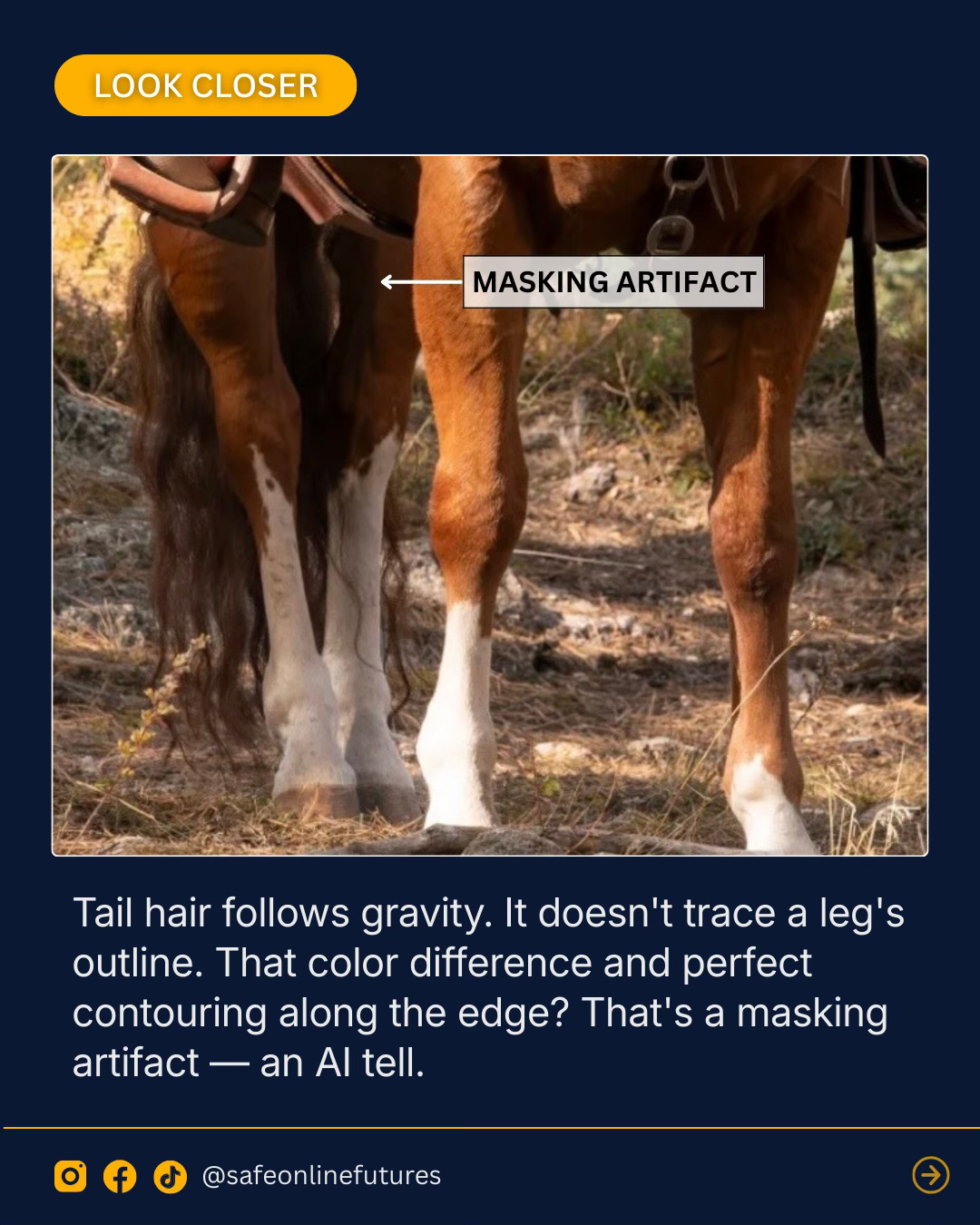
I’m not claiming this photo is definitively AI-generated or manipulated. What I am saying is that these are legitimate anomalies, and in the context of a $220 million government ad campaign with documented conflicts of interest, they are worth asking about.
Why This Matters
This photo wasn’t produced by a privately-funded campaign. It was produced by your government, with your money. And it exists within a well-documented pattern. According to a PolitiFact analysis, President Donald Trump’s Truth Social account has used AI in dozens of posts since his inauguration — imagery that has depicted opponents as criminals, mocked Democratic leaders with racial stereotypes, and presented the president in increasingly grandiose terms. The White House’s own accounts have joined in. DHS itself has posted AI-generated content. Most notoriously, the White House shared an altered image of an ICE protest arrest that was later found to have been manipulated. This is not a fringe behavior. It is a communication strategy.
The manipulation technique potentially on display in this photo — compositing elements together in ways that leave tell-tale artifacts at their edges — is one of the most common and least discussed forms of AI image manipulation. It doesn’t always look like a six-fingered hand or a melting background. Sometimes it looks like tail hair that falls just a little too perfectly along a leg’s edge.
This is what media literacy looks like in practice: not dismissing images outright, and not accepting them uncritically either. It means slowing down, knowing what to look for, and asking who produced this, why, and with whose money.
The next time you see a polished image from a government agency, a political campaign, or a brand — ask the same questions. What looks slightly off? Who paid for this? And what are they trying to make you feel?
Learning to look closer is a skill. Subscribe to keep building it.