Media AI Watch
A wire photo of King Charles and Queen Camilla shows signatures consistent with AI. Two editorial policies say it shouldn't.
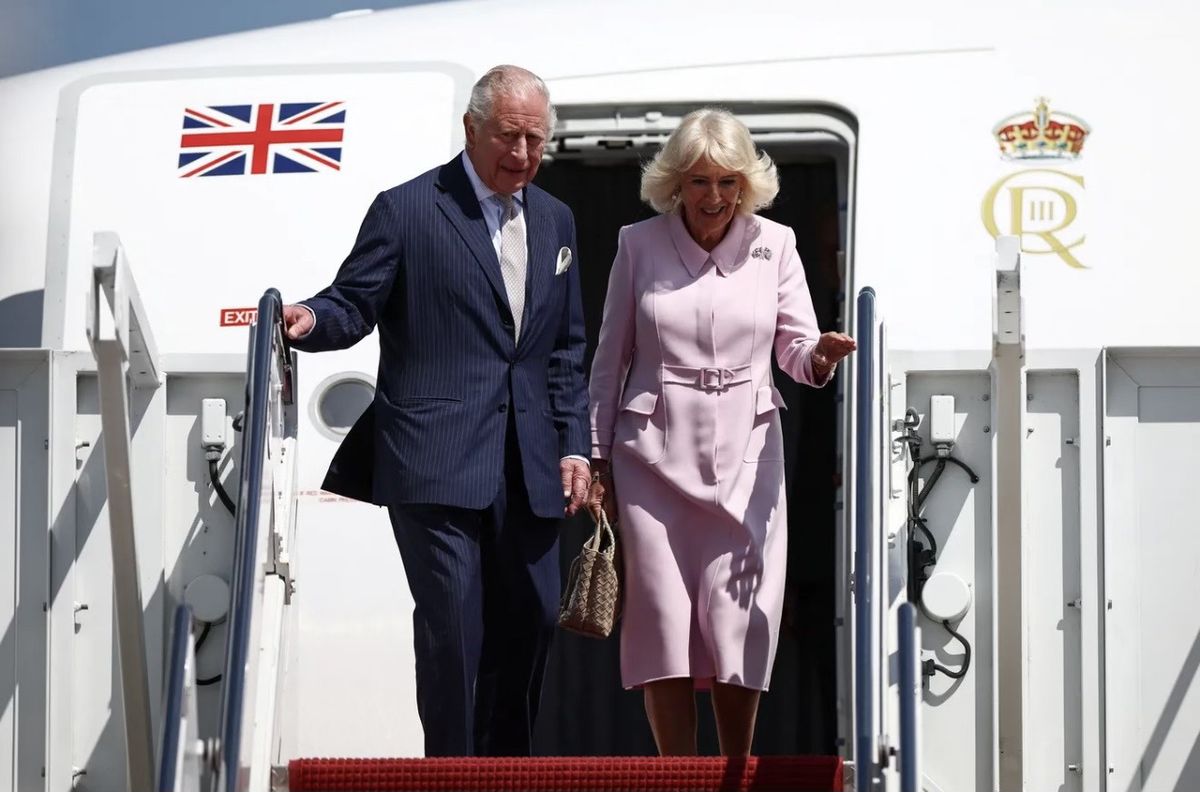
The image above was shot by an AFP photographer and distributed by Getty on April 27, 2026. The visit happened. That part is not in question.
What is in question is the photo itself.
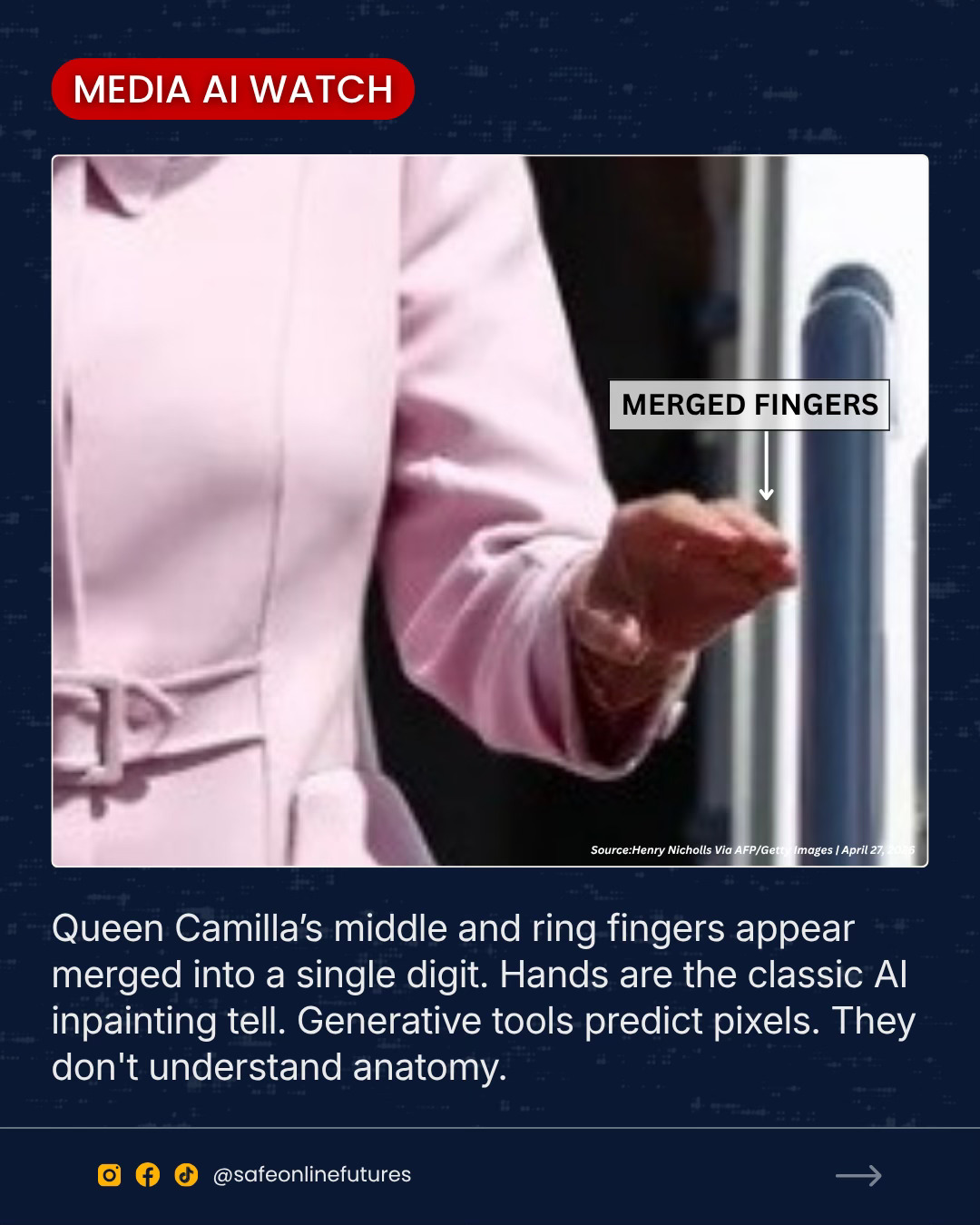
Look at Queen Camilla’s left hand. Her middle and ring fingers appear merged into a single digit.
Now look at King Charles’ jacket, below the pocket square on his left side. The pinstripes fade out mid-panel and dissolve into solid navy.
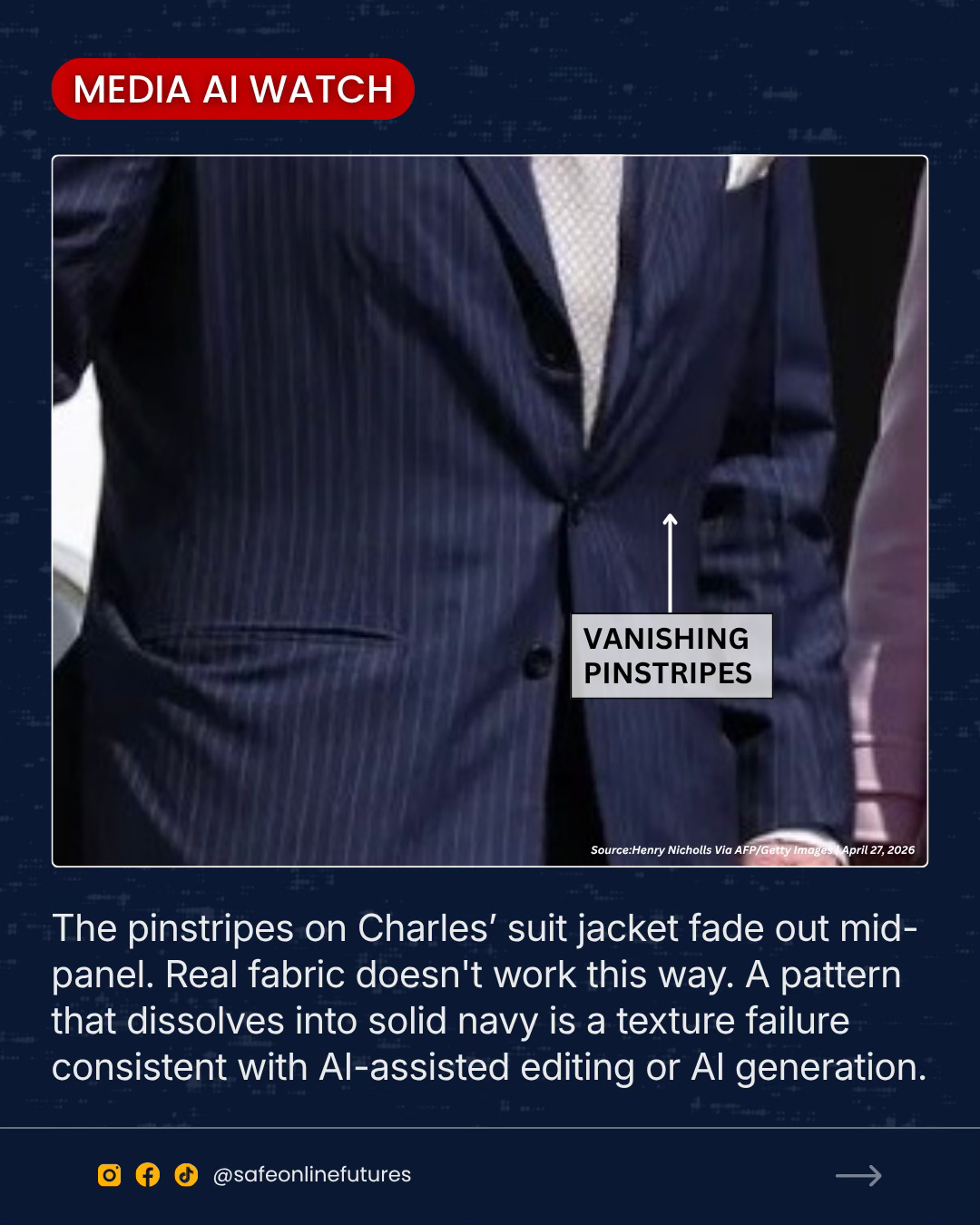
These are not random distortions. Merged fingers and broken repeating patterns are documented failure modes of generative AI tools. They show up because the underlying technology predicts pixels without understanding anatomy or fabric.
These same signatures appear whether AI was used to clean up a real photograph or to generate the entire image from scratch. The failure modes are identical. Without provenance metadata or a labeling requirement, there is no visual test that distinguishes one from the other.
Both wire services involved have explicit policies against this.
Getty’s editorial policy states that the company “does not produce or distribute editorial content that has been created or augmented using generative Artificial Intelligence models” and that “the distribution of imagery or caption text that has been synthetically created is strictly impermissible.”
AFP’s editorial standards, updated February 2025, state that AFP “does not publish content directly created by generative AI in text, images or other formats.”
So either the policies are not being enforced, or we have arrived at a moment where the distinction between a documented event and a digitally reconstructed one cannot be made by looking. Both possibilities are worth taking seriously. Neither is being disclosed.
If this piece helped you see what’s happening, share it with someone who should be paying attention. To stay ahead of how AI is reshaping editorial trust, subscribe below.