What Happens When Even Taylor Swift’s Reality Is Synthetic?
The masters are real. The moment is iconic. But the photos? Not so much.
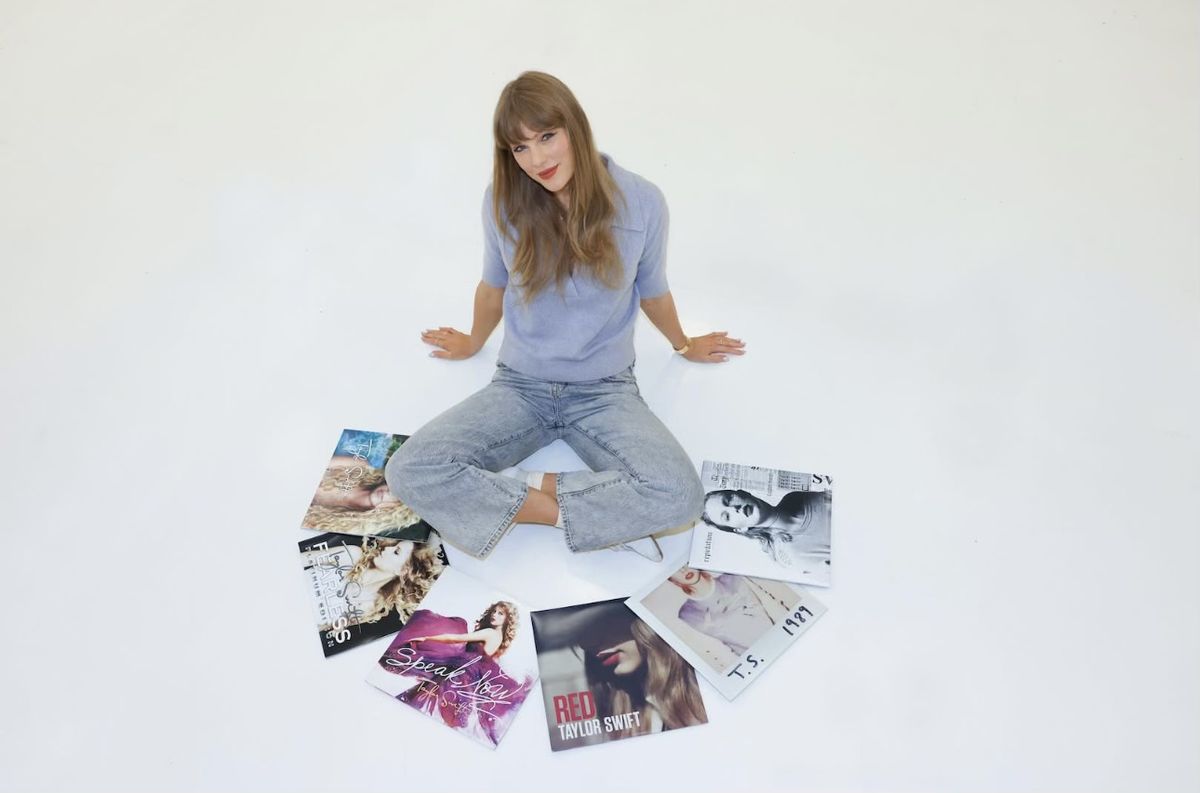
Taylor Swift announced this week that she now owns her master recordings. A milestone. A flex. A full-circle moment for one of the most powerful artists on the planet.
And then came the images.
To celebrate, Swift posted a series of photos to her official social channels — all highly stylized, all AI-generated. How do I know? Because the signs are there, plain as day: anatomically impossible poses, garbled album text, lighting and shadows that defy logic.
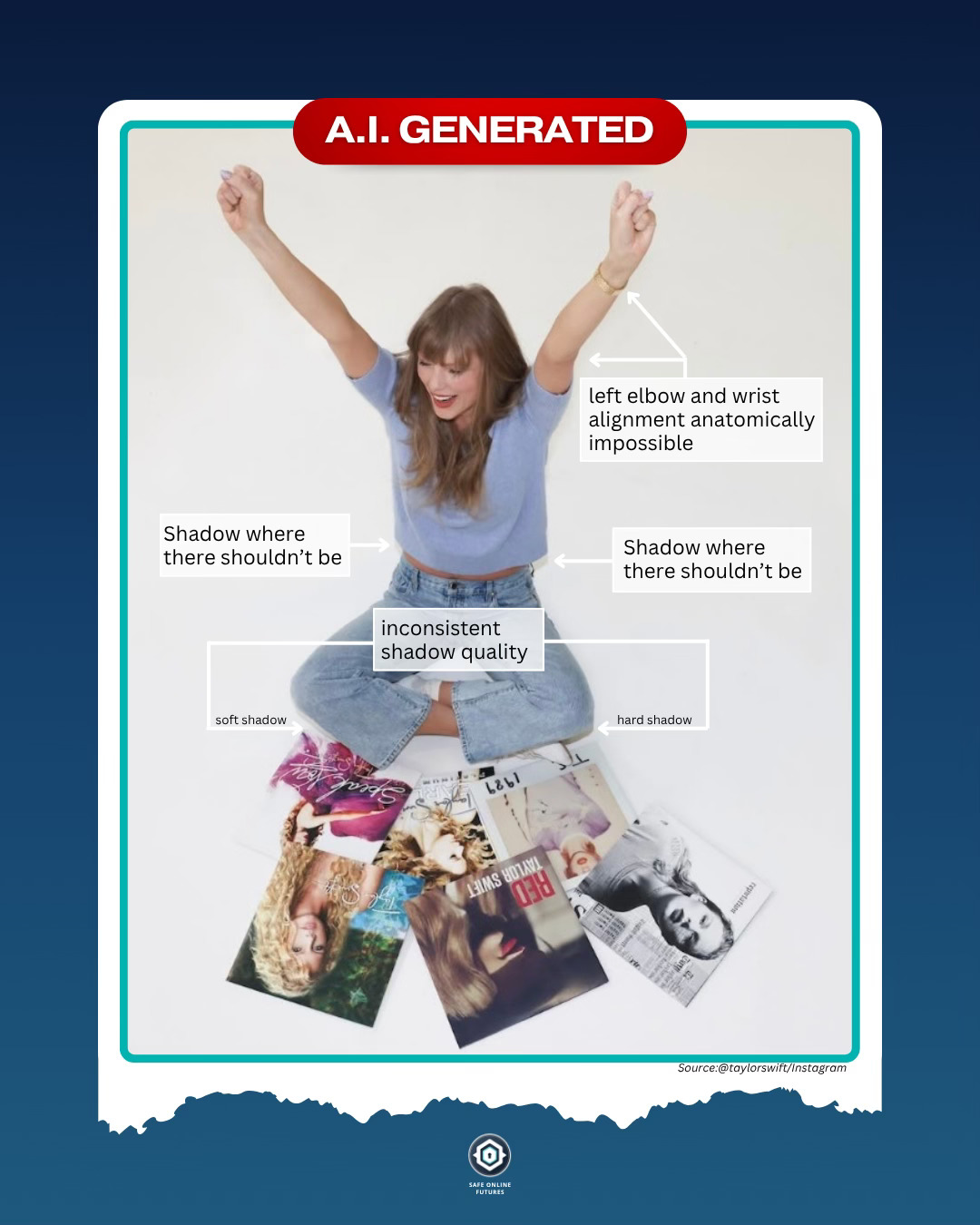
And yet nowhere in the post does it say the images were created using AI. No caption, no context, no disclosure. Just the photos — presented as fact.
Then the media picked them up. Rolling Stone. Billboard. The usual suspects. They amplified the story, embedded the images, and pushed the moment across every platform — also without acknowledging that what we were seeing wasn’t real.
This isn’t just about one artist. This is about normalization. A slow erosion of trust. As ASU professor Subbarao Kambhampati put it:
“You lull people into not double checking. Then you are shifted little by little from reality.”
That’s what makes this so insidious. AI-generated content is no longer a novelty — it’s being baked into public moments with no transparency, and passed through trusted channels without question.
The message Taylor sent was: “I own my art now.”
But the medium she used? It wasn’t hers. It wasn’t real.
And nobody thought they needed to tell us that.
That’s the Attention Economy in motion — performance over truth, reach over reality.
Stay sharp.
You can view all of Swift’s AI-generated photos from her masters announcement post here: Safe Online Futures