When Grief Is Algorithmically Generated
Synthetic images are now shaping public mourning — and no one is required to tell you.
Last weekend’s shooting in Minnesota left two people dead, a state senator and his wife wounded, and a digital trail of imagery that raises serious questions about what we’re being shown — and how it’s being constructed.
According to reports, Democratic state lawmaker Melissa Hortman and her husband Mark were both killed. Minnesota State Senator John Hoffman and his wife Yvette were also targeted. Both survived despite being shot a combined 17 times. The alleged gunman, Vance Boelter, is now in custody.
But while the news focused on the attack itself, another layer of the story went largely unnoticed: the visual content being used to frame the narrative shows unmistakable signs of AI manipulation.
Images of Rep. Hortman surfaced from official sources: her House bio, her own Instagram account, and her husband’s Facebook page. Photos of the suspect appeared across news broadcasts, police reports, and wire services. Many of them — across all sources — exhibit clear rendering errors and synthetic traits.
And I don’t mean “slight” errors. I mean:
- Clothing inconsistencies like vanishing pinstripes and blurred textures
- Inconsistent light and shadows
- Distorted facial features
- Warped lettering
This essay isn’t about whether the attack happened. It did. It’s about something just as important — and easier to miss: The tools of AI image generation are now fully embedded in the public-facing media pipeline, even in moments of violence, mourning, and political crisis.
The Photos That Don’t Add Up
Let’s look at just a handful of the images being used to tell this story. All five come from official or personal sources — government websites, family accounts, and news reports. All show clear signs of AI manipulation.
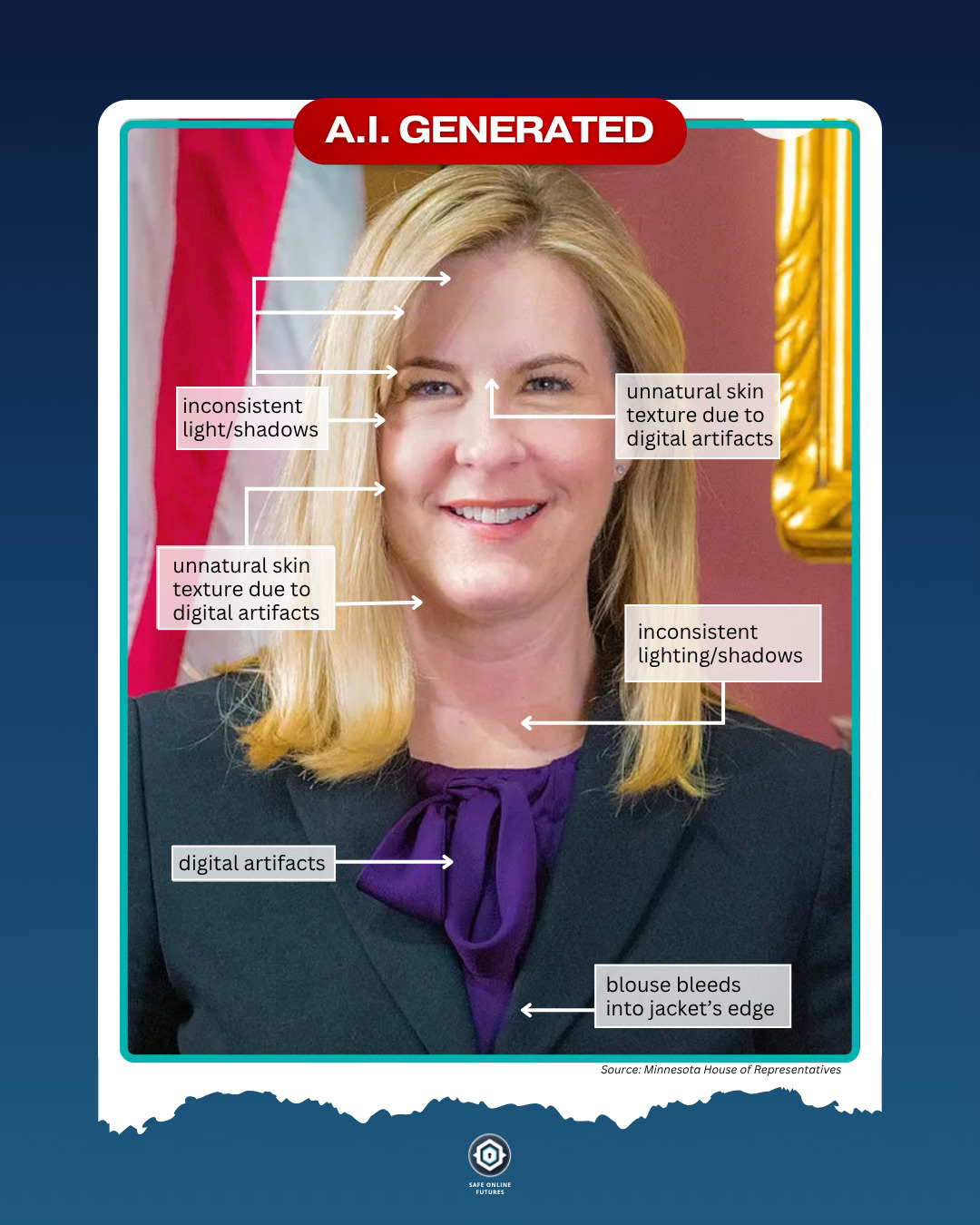
Melissa Hortman, official Minnesota House portrait
The lighting on her face doesn’t match the shadows, particularly on her neck and around her hairline. Her skin texture shows signs of digital artifacts, and her purple blouse bleeds into the edge of her jacket lapel.
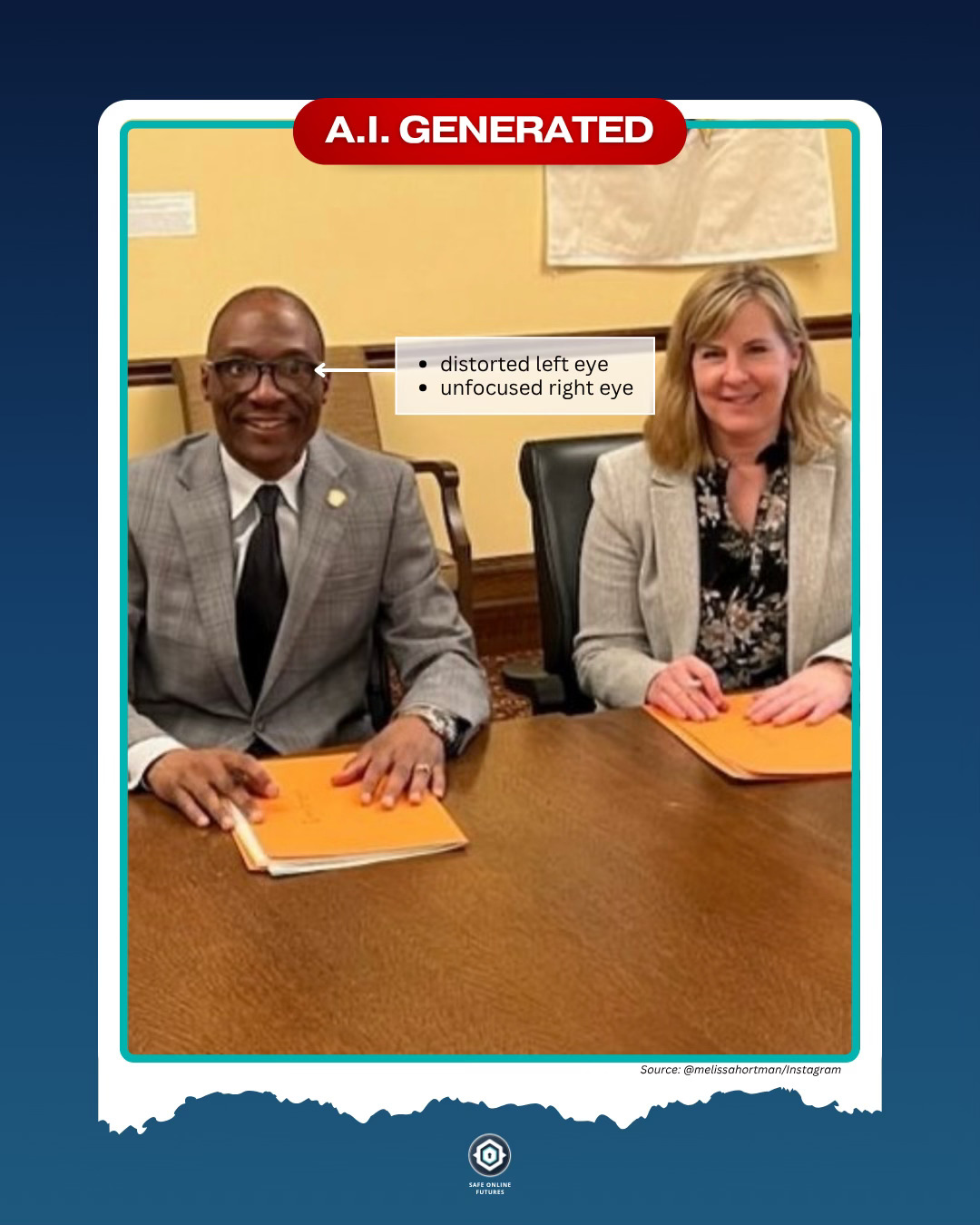
Melissa Hortman, Instagram photo
At first glance, it’s a routine photo: a lawmaker at work. But the details break down on inspection. Look closely at the man sitting beside Hortman. His left eye is distorted and his right eye is oddly unfocused, while Hortman appears more crisp and human. These aren’t camera errors. They’re rendering glitches.
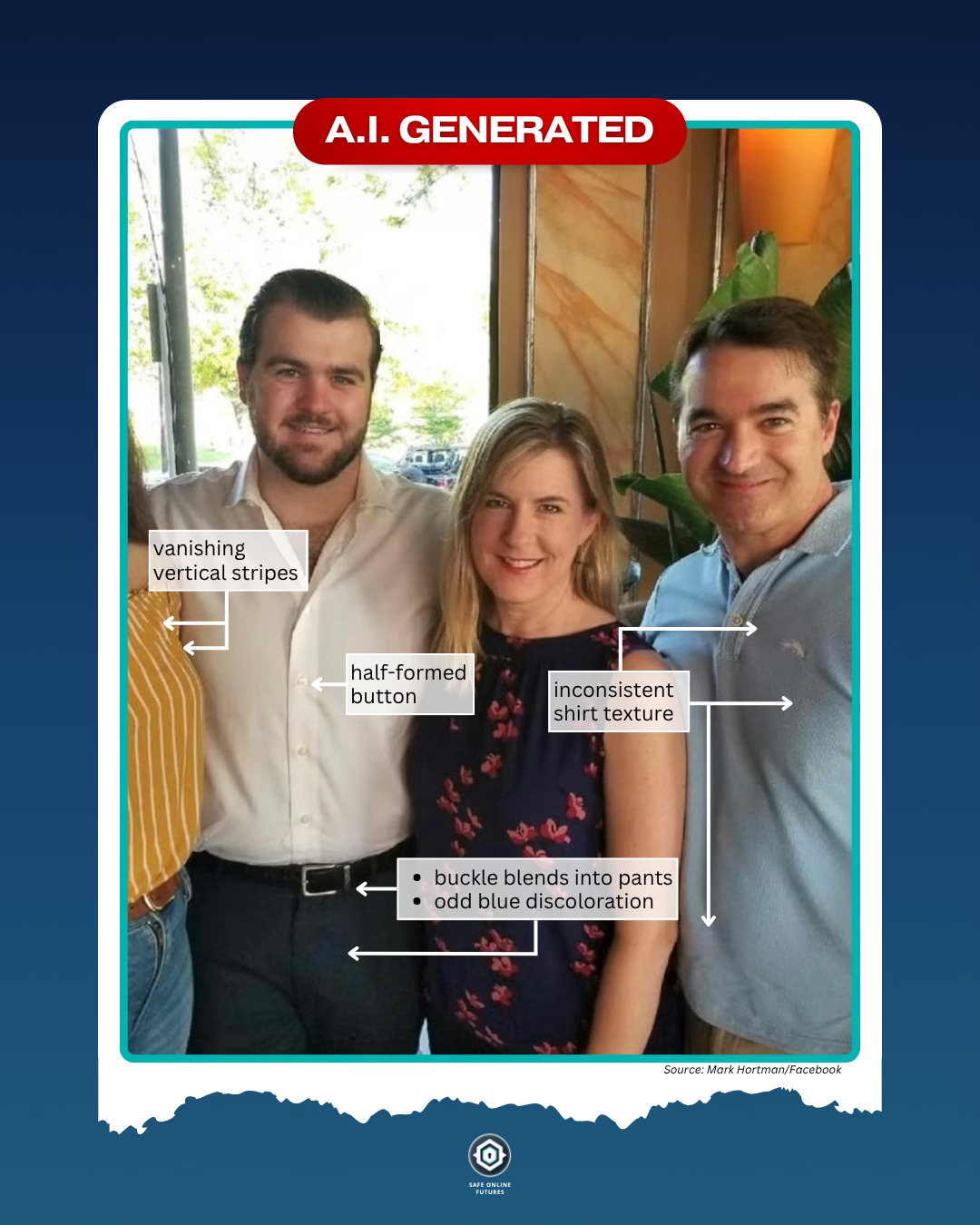
Mark Hortman, family photo from Facebook
At first glance, this family photo, reportedly from Mark Hortman’s Facebook page, looks warm and candid. But look closer. It’s riddled with inconsistencies: vertical stripes vanish partway down one of the blouses, a button disappears mid-fabric, and a belt buckle melts into dark pants. Even the texture of Mark Hortman’s shirt is inconsistent. These aren’t signs of compression. They’re visual artifacts.
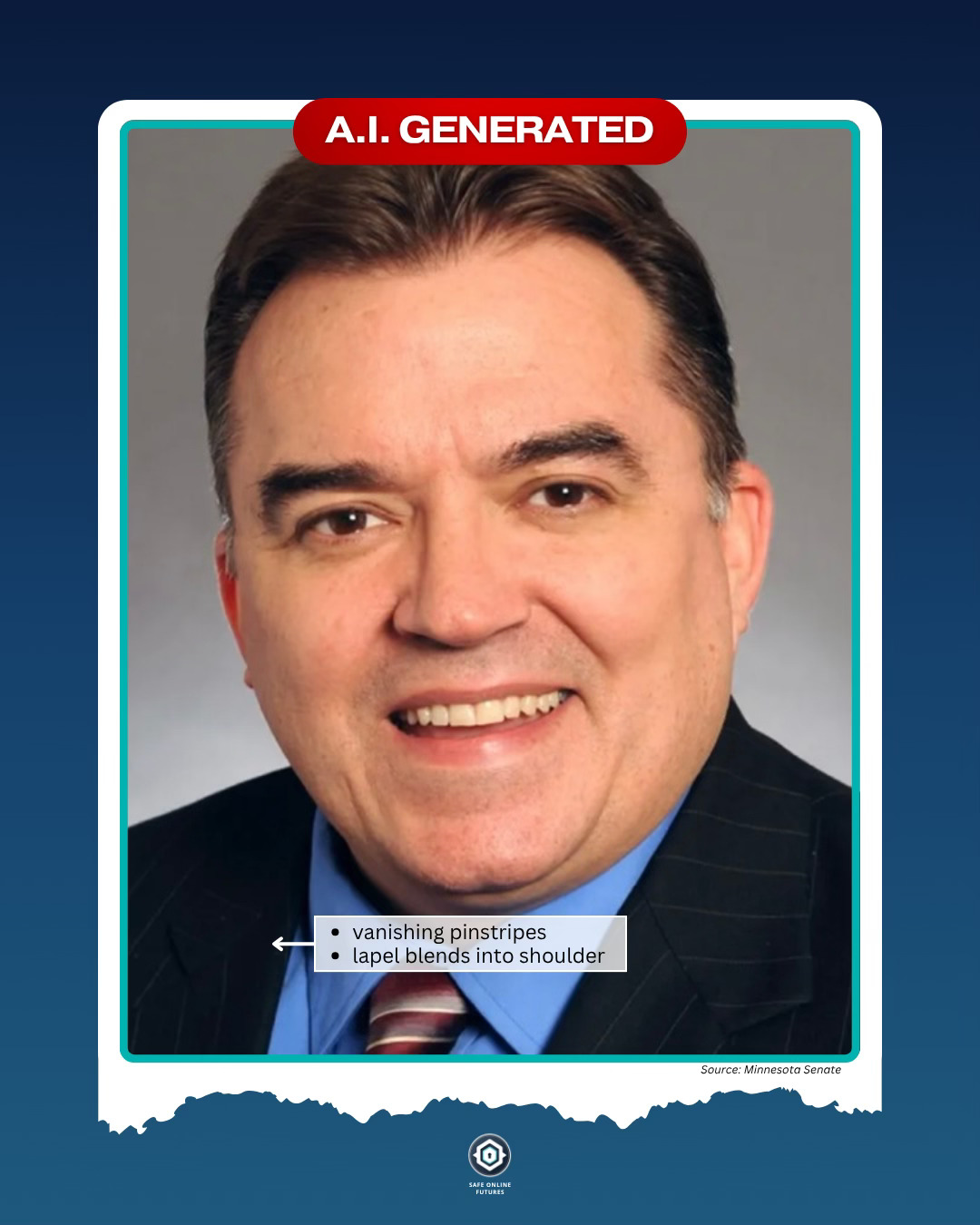
State Senator John Hoffman, official portrait
His professional portrait includes a pinstriped suit that starts off clean — but the stripes vanish partway down the jacket and blend into his shoulder. It’s a small detail, but pinstripes don’t just fade in real life. That’s a generation error, not a lens issue.
Vance Boelter, Ramsey County Sheriff’s Office photo
In the most widely circulated image of the alleged shooter after his arrest, the lighting falls flat and harsh. Facial features appear unnaturally even. But the most obvious tell? A gray swath of mystery fabric that wraps under his jacket and doesn’t seem to connect to anything he’s wearing. The image feels staged — like a rendering frozen mid-iteration.
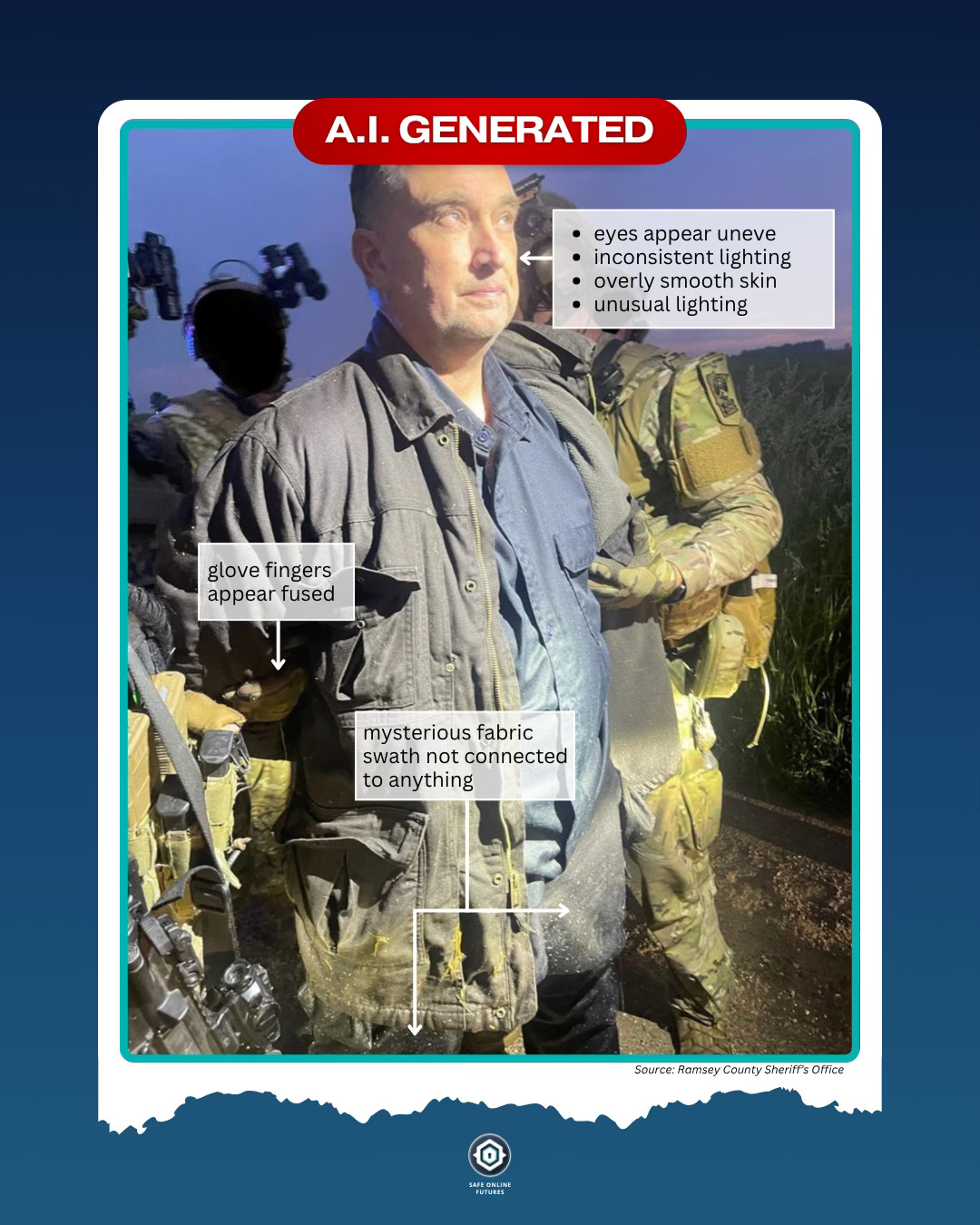
These photos weren’t captured. They were constructed. And once you see the signs, it’s hard to unsee them.
The Stakes Aren’t Just Visual
Most people scroll past these images without a second thought. They see a grieving family, a mugshot, a biography photo — and they trust what they’re shown. But in 2025, trust has become programmable. Synthetic imagery isn’t just flooding social media and influencer feeds. It’s now embedded in breaking news, official obituaries, even statements from elected officials. Whether by accident or by design, AI is now part of the grief machine.
This matters because:
- AI-generated images can shape emotional responses
- They can overwrite memory with manufactured visuals
- They create a version of events that can’t be verified — but feels real
And when the people shown in those images are dead, there’s no one left to correct the record.
There Are No Rules
If you’re wondering how this is allowed to happen — how AI-generated portraits of public figures can quietly replace real ones without pushback, here’s the answer:
There are no laws against it. No industry standards. No disclosure requirements.
No news outlet is required to tell you that a photo is AI-generated. No government agency is obligated to label synthetic images — even when they’re releasing them to the public. And social media platforms? They’re optimized to promote whatever gets the most engagement, not whatever’s authentic. This isn’t a glitch in the system. This is the system.
And as long as it stays unregulated, the people with the most power — governments, media companies, tech giants — will keep using AI to control how events look, and by extension, how we feel about them. When there are no guardrails, synthetic grief becomes just another tool in the narrative toolbox.
What Happens When We Mourn a Rendered Person?
This isn’t just about one lawmaker or one suspect. It’s about a slow erosion of what we think is real. The public is being conditioned to accept AI-generated imagery without question — especially when it's paired with emotion-heavy narratives like violence, loss, or heroism. Because when we’re in mourning, we’re vulnerable. When we’re shocked, we’re less likely to scrutinize. And when we’re shown something over and over — whether it’s real or not — we start to believe it.
That’s the danger. And that’s the point. We’re not just being misled. We’re being softened — so we stop asking questions.